
8 Dutch climate innovations for the future
These Dutch innovations demonstrate how materials, design, and technology can work together to contribute to a climate-resilient future.
Published on July 24, 2026
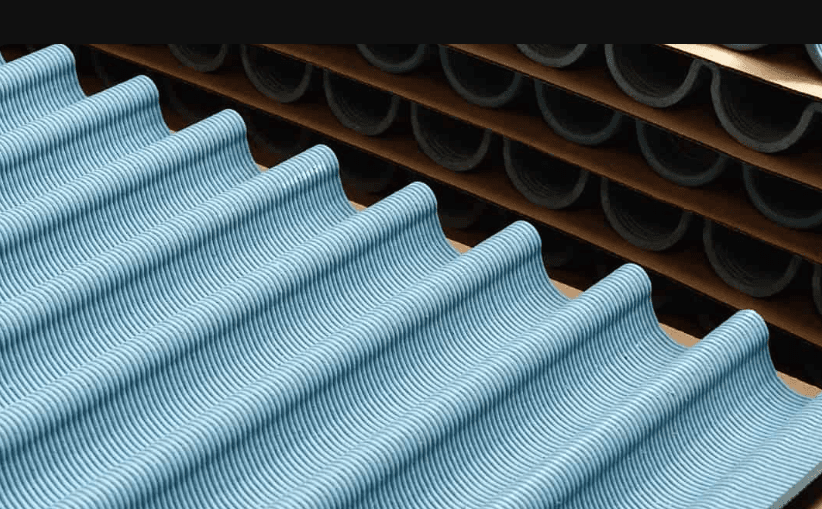
Photo: Aectual

Team IO+ selects and features the most important news stories on innovation and technology, carefully curated by our editors.
From mushroom leather and 3D-printed interiors to algae pearls, CO₂ removal, and biobased chemistry: these Dutch innovations show how materials, design, and technology can help build a climate-resilient future.
Climate innovation is no longer just about wind turbines, solar panels, and electric cars. Equally important is the question of what our products, buildings, clothing, interiors, chemical feedstocks, and infrastructure are made of. Can we produce without waste? Can we build without endless amounts of concrete, steel, and fossil-based raw materials? Can we purify water using living systems? And can we not only avoid CO₂ emissions but also remove CO₂ from the air altogether?
.png&w=2048&q=75)
In the Netherlands, new answers are emerging on all those fronts. Some are already commercially active; others are still at an early stage. But together they show how broad climate innovation has become: from high-tech machines to natural materials, from circular architecture to algae in water purification systems.
The principles behind the circular economy are not new to the Netherlands. The Cradle to Cradle concept, introduced in 2006, set off a wave of activity. The Netherlands explicitly promoted that philosophy and put it on the EU agenda, placing itself in a pioneering role. This ultimately also led to the National Circular Economy Programme, which aims to make the Netherlands fully circular by 2050.
That is precisely why these eight examples are so encouraging. Not because they solve the entire climate problem at once, but because they fit within a tradition that has already created fertile ground.
1. Mycotex by NEFFA: materials that grow instead of being made
The fashion and interior industries are major consumers of materials, energy, water, and chemicals. Mycotex by NEFFA takes a radically different route: instead of starting with woven textiles, leather, or plastic, it starts with mycelium, the root network of mushrooms. From this, the company develops bio-based materials for use in fashion, accessories, shoes, lighting, and sculptural interior objects.
The innovation lies not only in the material but also in the production chain. Mycotex is developing an automated process that combines patented mycelium formulations with 3D robotic manufacturing. This allows products to be formed without traditional cutting, sewing, and assembly steps. For designers, that means more freedom of form; for the planet, less waste and a compostable end-of-life.
Mycotex shows that biomaterials do not necessarily have to return to an artisanal niche. Its ambition is industrial: an automated supply chain for products that grow from biological raw materials and can return to nature after use. In this way, design is not only made more beautiful or more sustainable, but also organised in a fundamentally different way.
2. Aectual: circular interiors from the 3D printer
Aectual makes circularity visible. The company uses XL 3D-printing technology and digital design software to make architectural and interior products from recycled waste materials. Think walls, floors, screens, furniture, and other spatial elements. After use, the products can be taken back, shredded, and printed again.
That may sound like a technical process, but Aectual’s strength lies precisely in the combination of technology and aesthetics. Circularity is not a limitation here, but a design principle. Thanks to digital production, products can be made locally and to measure, without every adjustment leading to additional waste. The company works for international brands, showing that circular design does not have to remain an experiment at the edge of the market.
Aectual is fully New Dutch: open, digital, scalable, and design-driven. The company is making a popular product more sustainable while building a new system for designing, producing, using, and reusing interiors and architectural elements. Its promise reveals the ambition: waste becomes raw material, customisation becomes scalable, and design gets a second, third, or fourth life.
3. JiTiBa: algae as allies in clean water
Algae are often seen as a problem. In ditches, lakes, and ponds, they can indicate pollution, excessive nutrients, and poor water quality. JiTiBa Algae Technologies turns that image on its head. The startup-in-the-making uses microalgae precisely as a tool to purify water.
The technology focuses on effluent from wastewater treatment plants. That water has been treated, but often still contains dissolved nutrients such as nitrogen and phosphorus, and sometimes heavy metals such as copper. It is precisely this residual pollution that contributes to poor water quality in the Netherlands. JiTiBa is developing modular systems with so-called algae pearls: gel-like beads containing safe microalgae that absorb nutrients with relatively little energy.
The story becomes even more interesting because the harvested biomass can gain new value. It can then serve as a raw material for biofuels or for carbon-negative materials, such as biochar concrete. In this way, JiTiBa links water quality with circularity. It is still early days: the technology needs pilot validation and scaling. But its recognition as one of the winners of the 2025 Most Innovative Student of the Netherlands competition shows that this idea has social urgency. The enemy in the water becomes a green ally.
4. Loop Biotech: funeral products made from mycelium
Even the final product a person uses can be redesigned. Delft-based Loop Biotech does this with the coffin. Not from hardwood, chipboard, or metal, but from mycelium: the root network of mushrooms. The Loop Living Cocoon grows, as it were, instead of being hammered together. After use, it breaks down and returns to the soil.
With this, Loop Biotech turns funerals into an unexpected place for climate innovation. The company describes its products as 100% natural, biodegradable, and soil-enriching, and produces, in addition to coffins, urns and other funeral products. The Living Cocoon is suitable for natural burial, traditional burial, and cremation.
The power of this story lies in the cultural shift. Circularity here is not about a building, jacket, or packaging, but about a ritual deeply embedded in our society. Loop Biotech asks an uncomfortable question: if we want to make our lives more sustainable, why should that stop when we die?
5. Carbyon: removing CO₂ from the air
The most radical climate innovations sometimes begin with a simple thought: what if we not only emit less CO₂, but also clean up past emissions? That is Carbyon’s field. The Eindhoven-based climate-tech startup is developing direct air capture technology: machines that remove CO₂ from ambient air. Carbyon is not the first to achieve this, but it is doing so in a way that consumes far less energy than before. That makes its product, the Carbyon GO, more efficient and scalable than all others.
The company positions the Carbyon GO as proof that its technology is technically feasible and as a precursor to affordable, scalable carbon removal. An outdoor demonstrator at the High Tech Campus is the first result.
Carbyon fits the Brainport story: complex technology, manufacturability, scaling, and systemic ambition. The company addresses climate change not only through behavioural change or material choices, but also with a device that literally treats air as a raw material. And then sets its CO₂ vacuum cleaner loose on it.
6. Superuse Studios: circular architecture begins with what already exists
In traditional construction, a project begins with a design, after which materials are ordered to implement that design. Superuse Studios turns that logic around. The Rotterdam-based architects first ask: what is already there? Which steel profiles, window frames, wood flows, facade panels, or industrial residual materials nearby are waiting for a second life?
Villa Welpeloo became an early and famous proof point for that method. For this house in Enschede, scouts investigated which materials were available in the surrounding area; the design then emerged partly from those findings. The Ellen MacArthur Foundation calls the project an example of building with locally harvested waste materials and notes that the home consists to a significant extent of reused materials.
Superuse demonstrates that circular architecture need not be an aesthetic limitation. On the contrary, found materials can produce new forms, new structures, and new stories. The architect becomes not a buyer of new materials, but a director of existing value.
7. SaXcell: from old clothing to new fibres
The textile industry is one of the greatest material consumers of our time. Clothing is produced cheaply, worn briefly, and often downcycled or thrown away. SaXcell from Enschede is trying to make that line circular. The company converts old and used cotton into new cellulose fibres through a sustainable recycling process, after which those fibres can be turned into textiles again.
At its pilot plant in Enschede, SaXcell aims to convert 750 tonnes of old and used cotton into cellulose fibres each year. In doing so, the company builds on knowledge from Saxion and Twente’s textile tradition, but with a very different purpose: no longer producing more from new raw materials, but recovering high-quality fibres from what already exists.
SaXcell turns textile waste from a source of guilt into a raw material. It shows that circularity can also begin in the wardrobe: yesterday’s fibre becomes tomorrow’s yarn.
8. Vertoro / Chemelot Circular Hub: biobased chemistry as material transition
Not all climate innovations are visible on the outside of a building or product. Sometimes change begins much deeper, at the level of the molecules from which materials are made. Vertoro, based at Brightlands Chemelot Campus in Geleen, develops technology to convert woody and agricultural residual streams into biobased chemicals, materials, and fuels. The company works with lignin, among other things: a complex substance from biomass that for a long time was mainly seen as a waste product.
This places Vertoro within the broader ambition of Chemelot Circular Hub: the transition from fossil-based to circular and biobased chemistry. While circular construction often begins with visible materials, this story begins with the raw-material base of industry itself. If plastics, resins, coatings, and fuels no longer have to come from petroleum, the entire chain behind them changes.
Vertoro is therefore not a quick design story, but a systems story. It shows that the material transition is as much about reusing what we already have, as it is about asking where new materials come from in the first place. In Limburg, that question is not posed abstractly but in chemical, industrial, and scalable terms.
Climate innovation begins with material choices
Together, these examples show that climate innovation increasingly begins with the material basis of our society. Where does a product come from? How is it made? How much energy and waste does that process require? What happens after use? And can what we now still call waste become tomorrow’s raw material?
Mycotex, Aectual, and SaXcell show how materials and design can become circular. Superuse Studios turns architecture into an exercise in reuse. JiTiBa focuses on the hidden infrastructure of water. Carbyon tackles the climate challenge at the level of the atmosphere itself. Vertoro shows that even the chemical basis of materials can be redesigned. And Loop takes sustainability beyond life itself.
The common thread is that sustainability is not added to existing systems here but is built into the design: raw materials, processes, supply chains, and business models. That may well be the most important Dutch climate innovation: not one product that saves the world, but a completely new way of making things. And with every New Dutch link, the chain grows stronger.