
A brilliant idea is worthless if no one can use it
In a series of blog posts, Marco Coolen offers a glimpse into his work as a Dutch and European patent attorney at AOMB.
Published on August 16, 2026

Marco, a patent attorney at AOMB since 2013, shares his expertise on IO+ about patents—how they work, why they matter, and when they lose their value.
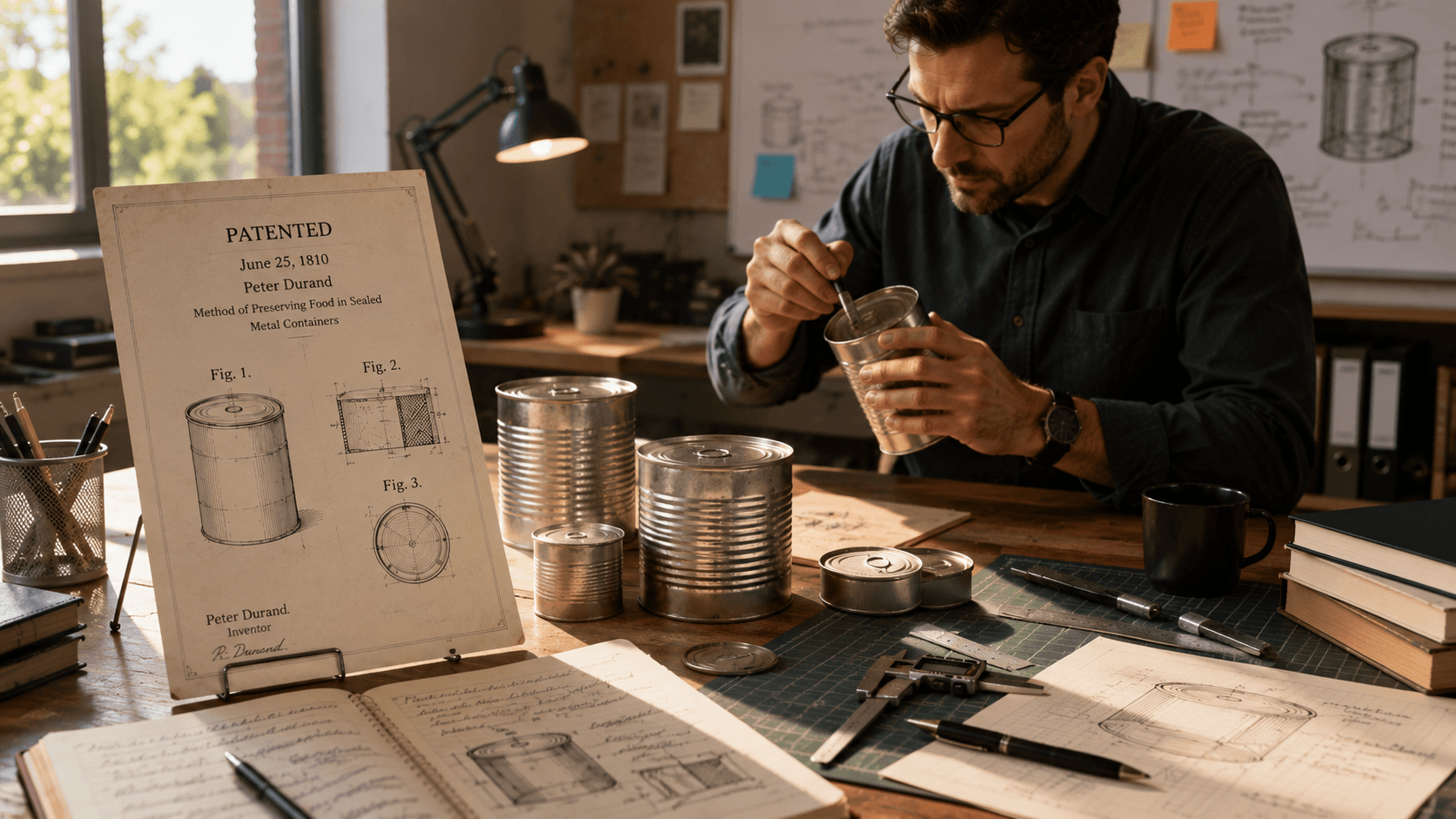
The tin can was a brilliant idea. In the early nineteenth century, preserving food was still a huge challenge. Armies had to be supplied, ships were at sea for months, and fresh produce was often scarce. In 1810, Peter Durand was granted a patent for a method of preserving food for years in sealed metal containers.
That was a breakthrough. On paper, the problem was solved. Food stayed fresh longer, transportation became easier, and supply chains suddenly had a much greater reach. But one small detail had been overlooked: no one could open the can properly.
.png&w=2048&q=75)

Marco Coolen, photo © Bart van Overbeeke
The first tin cans were designed for durability, not ease of use. They were heavy, sturdy, and built to withstand extreme conditions. Anyone who wanted to eat often had to pull out a hammer, chisel, or knife to get to the contents.
That might have worked on a ship or a military base. But for everyday use, it was far from ideal. The technology was there. The user experience was not. And that’s a common pattern with innovations.
Inventors fall in love with the solution. Customers, on the other hand, focus primarily on what they have to do with it to get results. When that takes too much effort, even a brilliant idea can easily fade into the background.
It wasn’t until decades later that the first true can opener appeared. In 1870, William Lyman developed a rotating cutting mechanism that made opening cans much easier. For the first time, the packaging became not only durable but also practical.
From that moment on, something fundamental changed. Not the can itself. Not the preservation technique. But the way people could handle it.
As a result, the tin can shifted from being a specialized solution for shipping and defense to a product for households. It became part of everyday life. Not because the technology had improved, but because the barrier to use had disappeared.
That’s a lesson that’s just as relevant today. Many innovations fail not because the technology is lacking. They fail because users have to do too much to use them. A complicated setup, an unclear interface, a cumbersome process, or a product that only works if you first read a twenty-page manual.
The market rarely rewards the most advanced technology. The market rewards technology that people actually want to use. That doesn’t mean technology is unimportant. Without Durand’s invention, the canning industry would never have emerged. But history shows that a technical breakthrough is only half the story.
The other half lies in adoption. In ease of use. In removing friction.
A patent can protect an invention. It can keep competitors at bay and create a competitive edge. But protection alone does not make an innovation successful. Only when a solution aligns with people’s behavior does true value emerge. Or as the can teaches us: a brilliant idea is great. But it helps if you can actually open it.
The World of Patents
With the help of Dutch and European patent attorney Marco Coolen (AOMB), we can better understand the world of patents. How do they work, why are they important, and when do they lose their usefulness?