

Team IO+ selects and features the most important news stories on innovation and technology, carefully curated by our editors.
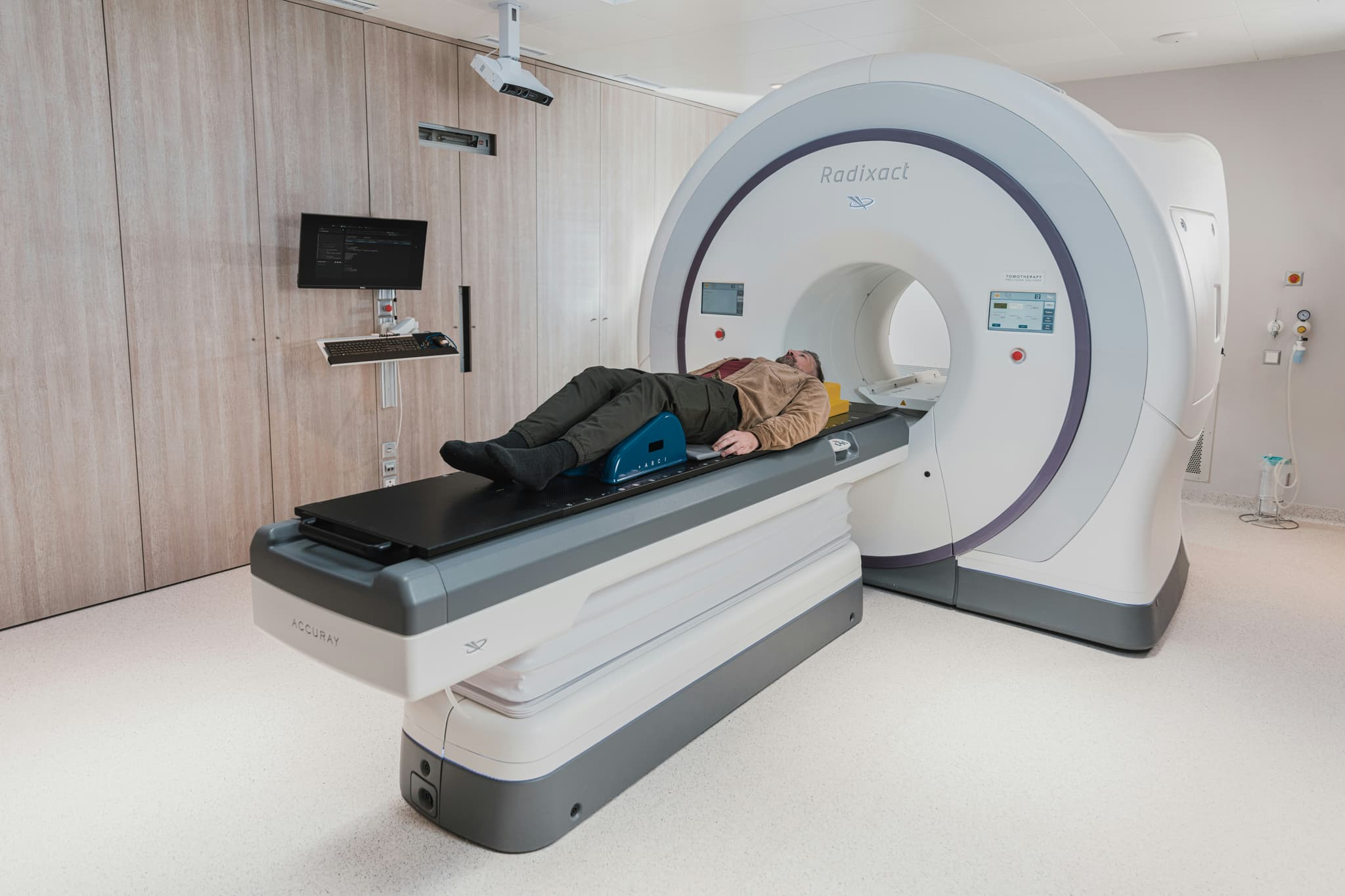
Thanks to the introduction of a new AI software, magnetic resonance imaging (MRI) scan times at Amsterdam's Antoni van Leeuwenhoek (AVL) hospital have been reduced from 23 to 9 minutes. This reduction represents a major shift in clinical efficiency, allowing the oncology center to handle a higher volume of patients while significantly improving the diagnostic experience.
Unlike traditional methods that require the machine to capture every data point through multiple time-consuming passes, this AI-driven system utilizes predictive modeling to reconstruct high-resolution images from less raw data. The software effectively 'fills in the blanks' between image slices by generating synthetic data that matches the surrounding anatomical structures. This process allows the scanner to complete its task in a fraction of the time without sacrificing clarity. In fact, the AI often produces sharper images than traditional scans.
For patients undergoing cancer treatment, the physical demands of a long MRI scan can be significant. Patients often find it difficult to remain perfectly still for nearly half an hour while inside a confined, noisy space. Reducing the scan window to nine minutes drastically lowers the cognitive and physical burden on these individuals.
Better scan accuracy, more examinations
Beyond mere comfort, the new system's speed directly contributes to clinical accuracy. Because the AI can predict missing image data and mitigate the effects of internal bodily movements—such as respiration or cardiac rhythm—the resulting scans are frequently higher in quality than those produced by longer, conventional methods. This improvement is particularly vital in oncology, where the ability to detect minute changes in tissue structure can determine the success of a treatment plan. Radiologist Doenja Lambregts told RTL that while the AI handles the technical reconstruction, human experts remain the final authority on the diagnosis, ensuring a balance between machine efficiency and clinical expertise.
The implementation of AI software has also yielded immediate benefits for AVL. By shortening each scan, the facility has increased its capacity by 18 additional examinations per week without adding new physical scanners or expanding its footprint. This throughput increase is critical for a specialized cancer center where timely diagnosis is often a matter of life and death.
Furthermore, the efficiency gains have allowed the hospital to reorganize its scheduling. Previously, the high demand for MRI services forced the radiology department to schedule appointments in the evenings and on weekends to manage the patient load. The new AI-enhanced workflow allows more scans to be completed during standard daytime hours, significantly improving work-life balance for medical technicians and radiologists. This operational shift demonstrates that AI in healthcare is not just about diagnostic speed; it is also a powerful tool for workforce management and for reducing burnout in high-volume clinical environments.