
Analysis: demand for scandium rises due to 5G and fuel cells
Demand for scandium is rising due to 5G and fuel cells. Europe currently has no domestic production and is looking for solutions.
Published on July 25, 2026

Team IO+ selects and features the most important news stories on innovation and technology, carefully curated by our editors.
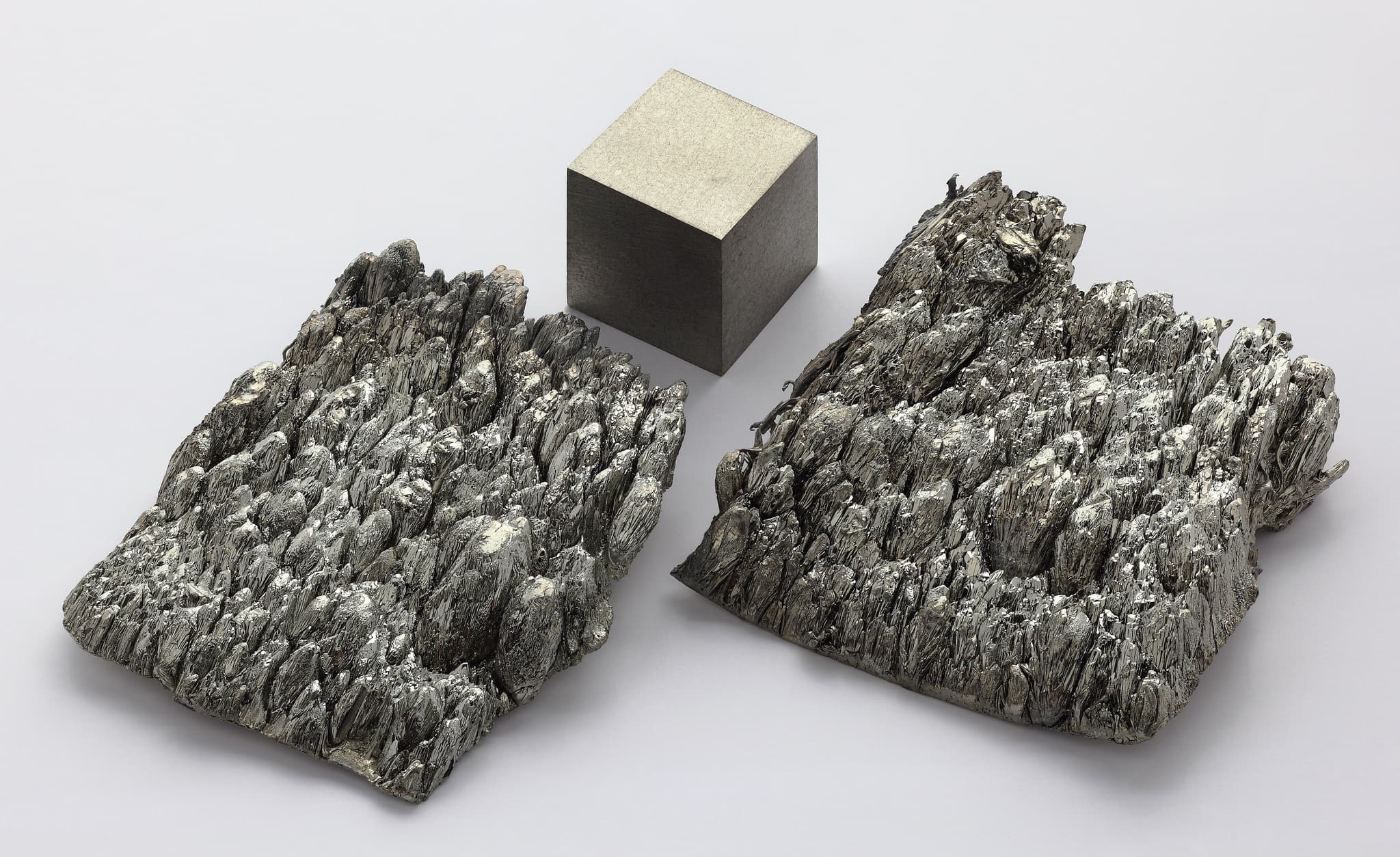
Global demand for the rare element scandium is rising, according to a new analysis. Scandium is an indispensable metal for our technological future. It is crucial for the production of advanced fuel cells and high-speed telecommunications networks. Europe, however, finds itself in an extremely vulnerable position. The region currently does not produce a single gram of this strategic raw material itself 🔗︎.
The explosive growth of the global market
Global demand for scandium sulfate is rising rapidly. Between 2026 and 2035, this market is expected to grow by 7 to 11 percent annually 🔗︎. In 2026, the total market size is estimated to be 35 to 55 metric tons of pure scandium equivalent 🔗︎. Two specific sectors are driving this growth: the electronics and energy sectors 🔗︎. Together, they account for more than 70 percent of global consumption 🔗︎. Manufacturers use scandium for applications such as solid oxide fuel cells (SOFCs) 🔗︎. These advanced fuel cells supply clean power to data centers. In addition, the metal is needed for filters in new 5G and 6G networks 🔗︎. These high-tech applications require extremely pure material 🔗︎. The required purity is at least 99.99 percent 🔗︎. Due to the tight market, prices fluctuate significantly. Over the past two years, spot prices have ranged between $1,200 and $2,800 per kilogram 🔗︎. This volatility is causing significant uncertainty among European technology companies.
.png&w=2048&q=75)
Europe's dangerous dependence
Europe accounts for a significant share of global demand for scandium. The region is responsible for approximately 15 percent of global consumption 🔗︎. Yet Europe currently produces none at all 🔗︎. The region is 100 percent dependent on imports 🔗︎. Global production, however, is extremely concentrated. China controls 66 percent of the market 🔗︎. Russia accounts for 26 percent, and Ukraine supplies 7 percent 🔗︎. This means that Europe depends on Russia for a large portion of its imports 🔗︎. This geopolitical situation poses significant risks. Political tensions could directly disrupt the supply of this critical raw material. Furthermore, strict European regulations, such as the REACH Regulation, make imports administratively complex 🔗︎. European companies are therefore urgently seeking more transparent supply chains. Without a reliable and secure supply line, the transition to clean energy and high-speed networks is directly jeopardized.
Extracting from industrial waste
Europe is opting for an innovative approach to extracting its own scandium. Instead of traditional mining, the region is focusing on industrial waste streams. A key initiative is underway in Finland. The mining company Terrafame is currently conducting a feasibility study there. They aim to extract scandium from byproducts of their existing uranium and metal extraction operations. In addition, two major European research projects—SCALEUP and SCAVANGER—are underway. These projects are entirely focused on the circular economy. Researchers are working to extract scandium from bauxite residue, a byproduct also known as “red mud” from the aluminum industry. The researchers are also examining the acid waste left over from titanium production. In the long term, these methods could provide Europe with its own source of scandium. The major advantage is that no new mines need to be opened. This protects the environment and circumvents public resistance to mining.
The reality of legislation and recycling
The European Union is attempting to address the raw materials crisis with new legislation. The Critical Raw Materials Act (CRMA) is intended to help strategic projects get off the ground more quickly. Approved projects will now be subject to shorter procedures. A permit for extraction may take up to 24 months to process. For processing and recycling, the maximum is 12 months. This helps domestic industry scale up more quickly. The EU is also looking with great interest at e-waste 🔗︎. In 2022, there were 14.4 million metric tons of electronic waste on the European market 🔗︎. This process of “urban mining” seems like a promising solution to the raw materials shortage. Unfortunately, the reality is more challenging. In the short term, recycling electronics will yield very little scandium. The metal is present in extremely small quantities in devices. The technology to recover it profitably is not yet available. For the time being, the recycling sector is therefore focusing on larger volumes of metals such as copper and gold.
The path forward
The coming years will be crucial for Europe’s scandium supply. Fortunately, new production capacity will become available in Canada and Australia between 2028 and 2030 🔗︎. This will offer European buyers more alternatives outside of China and Russia. Meanwhile, European manufacturers are not sitting idly by. Within the European NewSOC project, six major fuel cell manufacturers are collaborating 🔗︎. They are working to improve the technology 🔗︎. Their primary goal is to drastically reduce the amount of scandium required per fuel cell. This will reduce direct dependence on imports. At the same time, the recycling sector must mature in the coming years. Experts expect that by 2030, recycling could cover about 5 to 10 percent of the market 🔗︎. This share could grow to 10 to 15 percent by 2035 🔗︎. Until then, the European industry will continue to walk a tightrope. Innovation and diversification are the only paths to true strategic autonomy.