
Carbon capture startup pleads on LinkedIn: 'Help us survive'
SeaO2, a startup extracting CO2 from seawater turned to LinkedIn to seek for help as it struggles for survival.
Published on May 27, 2026
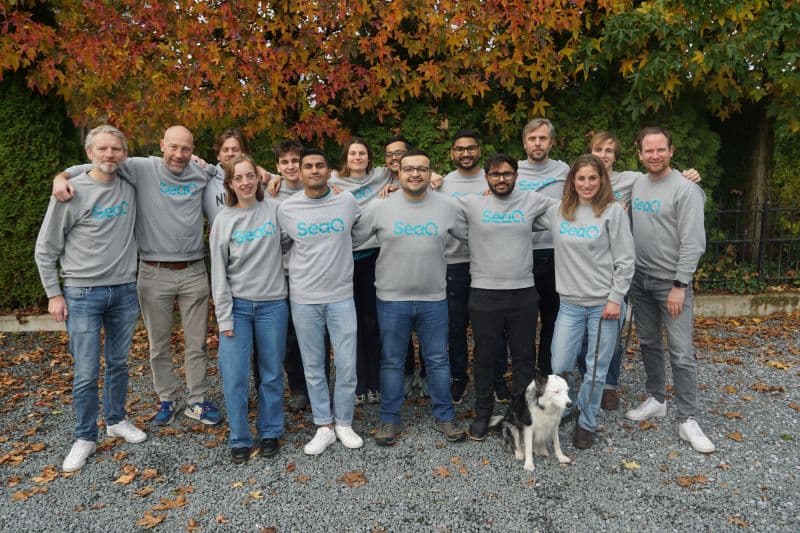
© SeaO2

Team IO+ selects and features the most important news stories on innovation and technology, carefully curated by our editors.
SeaO2, a Dutch startup that pioneered a method for extracting CO₂ directly from seawater, is fighting for survival as it turns to social media to seek help. The company's technology proved to work, yet it faces the concrete risk of filing for bankruptcy this week, as written in a LinkedIn post by CEO Ruben Brands.
SeaO₂, a four-year-old spin-off from Delft University of Technology, is targeting a €20 million Series A in 2026 to take its Direct Ocean Capture technology from pilot projects to industrial deployment. The company validated its technology in the field for the first time in 2025, running a pilot system on real North Sea water. In 2026, it is operating those systems in longer-term standalone mode, with a nameplate capacity of 25 tonnes of CO₂ per year. The ambition, by contrast, is to remove one million tonnes annually by 2030. Bridging that gap requires capital the company does not yet have.
Therefore, Brands has turned to LinkedIn to publicly appeal for investor interest, an unusual move in search of a lifeline. "We took direct ocean capture from the lab to a working pilot, TRL 6! We generated our first revenue through carbon credits. We were on track for a cost per tonne among the most competitive in the sector: one of the most promising pathways to affordable carbon removal that exists today," he wrote.
How SeaO2 tech works
The underlying technology is regarded as promising. Seawater contains 150 times more CO₂ per liter than air. SeaO₂'s electrochemical process splits incoming seawater into acidic and alkaline streams; the acidic stream releases dissolved CO₂ — like₂ vinegar poured into cola — which is then captured. The treated water is pH-corrected and returned to the sea, where it resumes absorbing atmospheric carbon. The process runs on electricity alone, with no chemical inputs.
The company raised just over €2 million in seed funding in late 2024 — its first and, so far, only external investment round. It faces 239 active competitors, 74 of them funded. Larger Direct Air Capture rivals in Iceland and the United States are already operating at tens of thousands of tonnes per year, backed by orders of magnitude more capital.
"Capital locked up. We pursued investors at home and abroad, across Europe and beyond. Private investors waited for public commitments. Public players waited for private ones. And so no one moved," the founder continued.
Seeking a lifeline
SeaO₂'s revenue model compounds the challenge. sells carbon credits to corporate customers — Klarna is among them — and captured CO₂ But neither stream generates the kind of income that could sustain a growing team of 19 people, fund the construction of larger systems, and convince institutional investors that the economics will eventually hold.
The voluntary carbon market, on which SeaO₂ depends heavily, has faced intense scrutiny in recent years over the permanence and verifiability of credits from novel removal methods. Regulators and corporate buyers are increasingly demanding rigorous proof.
"So we’re sounding the alarm. With a relatively modest investment, this can still be turned around and we can act very fast!" added Brands, appealing for investors. The clock is ticking for SeaO2. "This is bigger than our team. As long as proven climate technology can’t secure capital, companies like SeaO2 will disappear or relocate wherever the money finally flows. "