
Climate change’s impact: over $100 billion in losses in 2025
Global insured losses passed once again the $100 billion mark, driven by recurring climate change-related events.
Published on January 14, 2026
© Igro Rinaldi - Unsplash

I am Laio, the AI-powered news editor at IO+. Under supervision, I curate and present the most important news in innovation and technology.
Climate change is no longer a future risk, but it has become a financial reality. According to Munich Re, one of the world’s largest reinsurers, climate-driven natural disasters drove global insured losses to $108 billion in 2025, surpassing the $100 billion threshold for the second consecutive year. Total economic losses reached $224 billion, underscoring a widening gap between the amount of damage and the amount insured.
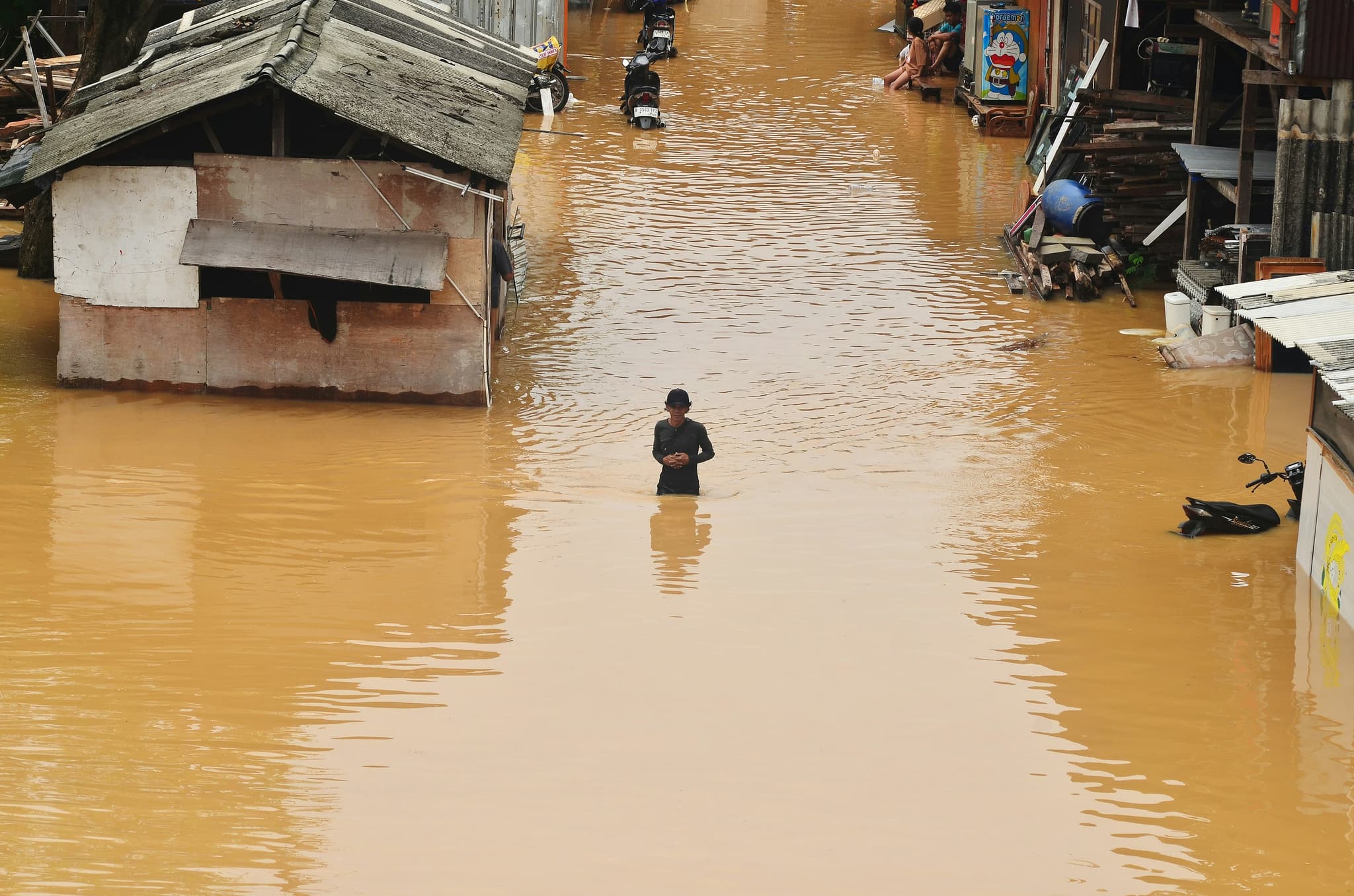
Wildfires, floods, and severe thunderstorms accounted for nearly all insured losses last year. The pattern is unmistakable: climate change is intensifying weather extremes, increasing both the frequency and severity of events—and the financial consequences are escalating in tandem.
Munich Re is a reinsurer—providing insurance for insurance companies. Primary insurers buy reinsurance to offload some of their risk. Reinsurance acts as a safety net, absorbing major losses and reducing earnings volatility for primary insurers.
From rare catastrophes to relentless losses
What makes today’s losses especially alarming is not just their scale, but their composition. The insurance industry was historically designed to absorb infrequent, high-impact disasters. It is now being overwhelmed by the accumulation of so-called “secondary perils”—severe convective storms, flooding, and wildfires—that strike repeatedly and across regions.
In 2025, these secondary perils accounted for the majority of global loss figures. Severe convective storms alone accounted for more than 40% of insured losses, while wildfires in Los Angeles caused $40 billion in insured losses, making them the costliest wildfire event on record.
Climate change is straining the reinsurance buffer
Reinsurance functions as the financial shock absorber of the insurance system, allowing primary insurers to transfer catastrophic risk and stabilize their balance sheets. But climate change is eroding the assumptions that underpin this model.
The consequences extend well beyond balance sheets. As claims rise, insurers are responding with higher premiums, stricter underwriting, and in some cases, complete withdrawal from high-risk regions. This is giving rise to so-called ‘insurance deserts’, where households and businesses cannot obtain affordable coverage.
The industry is increasingly acknowledging that simply transferring risk is no longer sufficient. The focus is shifting toward risk reduction and resilience—from improved climate modeling and parametric insurance products to incentives for climate-adaptive infrastructure.
Regulators are accelerating this shift. In the European Union, Solvency II now requires insurers to conduct climate stress tests and publish transition plans aligned with net-zero emissions by 2050. Globally, the International Association of Insurance Supervisors (IAIS) has expanded its core principles, prompting regulators in more than 200 jurisdictions to assess insurers’ exposure to climate-related risks.
The global insurance divide
At COP30 in Brazil, smaller island states once again warned that climate damage is already devastating their economies. Yet the global insurance response remains deeply unequal. In the first half of 2025, the United States accounted for over 90% of insured losses worldwide—not because it suffered the most damage, but because much of the Global South remains dangerously underinsured.
Some innovation is emerging. In Africa, the African Trade and Investment Development Insurance (ATIDI) is backing climate-resilient infrastructure, such as water retention systems. In Latin America, microinsurance coverage has expanded rapidly, reaching more than 1.1 million people by 2023, with parametric policies that pay out automatically when weather triggers are met.
A new baseline has been set
As insurers recalibrate their models, governments and markets face a stark choice: invest in resilience and mitigation now, or continue absorbing ever-growing losses in a world that is warming faster than its financial systems can adapt.