
Deploying a care robot gives staff more room for guidance
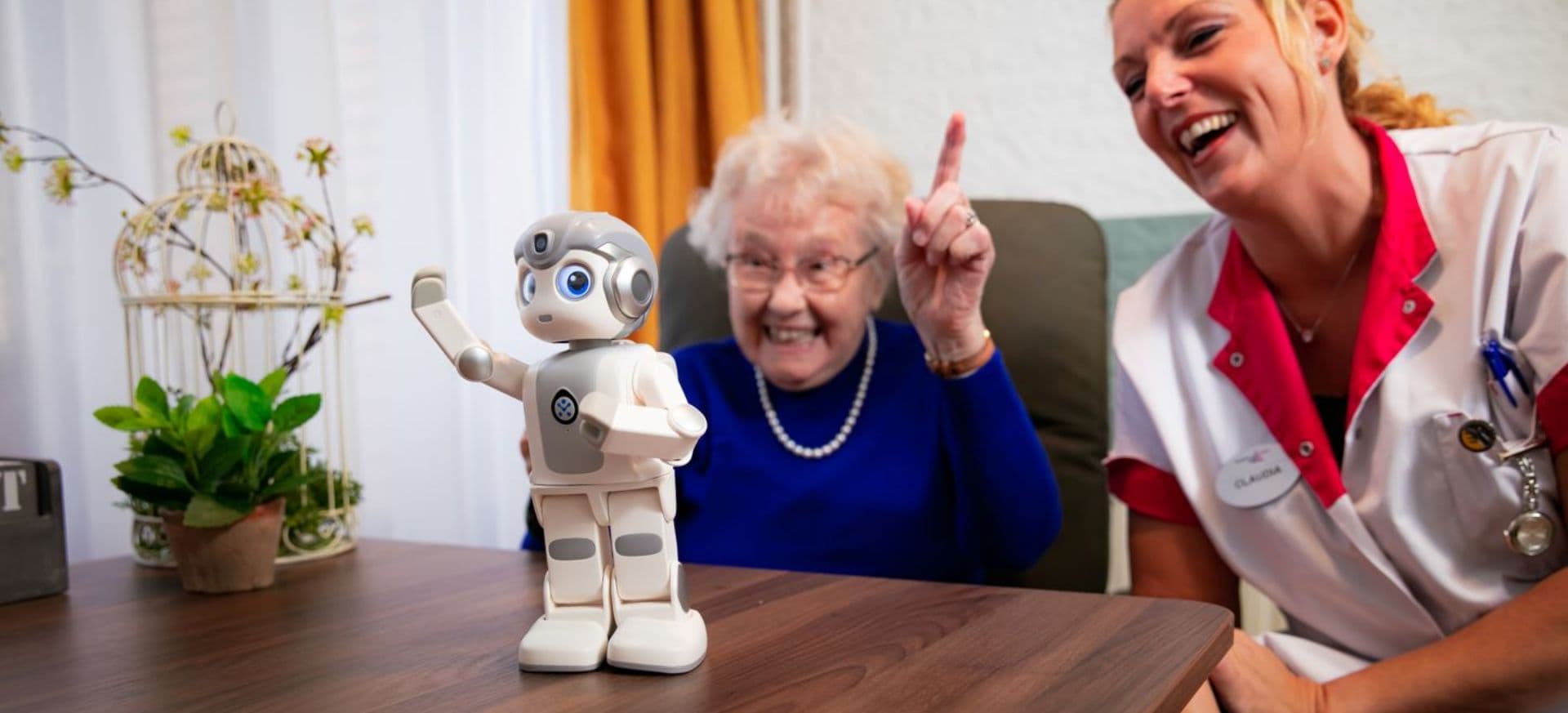
Robot Maatje is a social care robot used to support the daily structure of adult clients with autism.
Published on February 27, 2026

Team IO+ selects and features the most important news stories on innovation and technology, carefully curated by our editors.
Robots are increasingly being deployed to support healthcare. Over the past three years, researcher Ellen Janssen, together with the Regional Autism Center Helmond, studied the functioning and effects of Robot Maatje, a social care robot used to support the daily routines of adult clients with autism. One of the conclusions: “By deploying a care robot, staff have more time for intensive guidance and social-emotional support needs.”
Ellen Janssen works at the Fontys professorship Human and Technology, where innovations are examined from a human-centered perspective. Janssen: “This means that innovations must be aligned with what people actually need. We do this together with partners from professional practice.” During the three-year study, Janssen collaborated with the Regional Autism Center Helmond. She distributed questionnaires, organized meetings, and interviewed caregivers and clients about their experiences with Robot Maatje.
Increasing self-reliance
Brushing your teeth, taking medication at the right time, or making a grocery list, these are not self-evident tasks for everyone. Robot Maatje increases the self-reliance of people who struggle to maintain a fixed daily structure. But that is not all. Janssen: “The care robot also appears to help reduce loneliness and support people in coping with anxiety. Clients’ quality of life clearly improved during the study. That is because Robot Maatje fulfills a social function. For example, the robot can be programmed to say ‘call your mother’ or ‘listen to some music’ when a client indicates feeling stressed.”
The caregiver’s role is crucial
The way caregivers introduce Robot Maatje is crucial for client acceptance. Janssen: “Some clients love technology and immediately embrace it; others find the robot childish or are uncomfortable with the camera.” Once these initial hurdles are overcome, it makes a significant difference whether the robot is properly programmed by caregivers, using language and tasks tailored to the individual client. Janssen: “A great deal is asked of caregivers, and their commitment is essential for the success of this project. But they also gain a lot in return. The care robot is not a replacement for caregivers, but an extended arm that can be deployed 24/7. Caregivers indicated that Robot Maatje gives them more time to focus on intensive guidance and social-emotional support, because the robot takes over reminders for routine tasks. This also requires effort and courage from a care organization.”