
Don’t protect your product. Protect how it works.
In a series of blog posts, Marco Coolen offers a glimpse into his work as a Dutch and European patent attorney at AOMB.
Published on March 15, 2026

Marco, a patent attorney at AOMB since 2013, shares his expertise on IO+ about patents—how they work, why they matter, and when they lose their value.
Does this sound familiar? You invest years in developing a new product. Testing, prototypes, improvements. And just when it finally reaches the market, the first variants start appearing.
The inventor watches the value slowly leak away and wonders: how could this have been prevented? The answer usually doesn’t lie at the end of the process, but right at the very beginning.

Marco Coolen, photo © Bart van Overbeeke
The difference between a product and a principle
A good example is the bagless vacuum cleaner.
The first patented cyclonic separator dates back to 1885. The idea was simple: separate air and dust using centrifugal force. But for household use, it still didn’t work well enough.
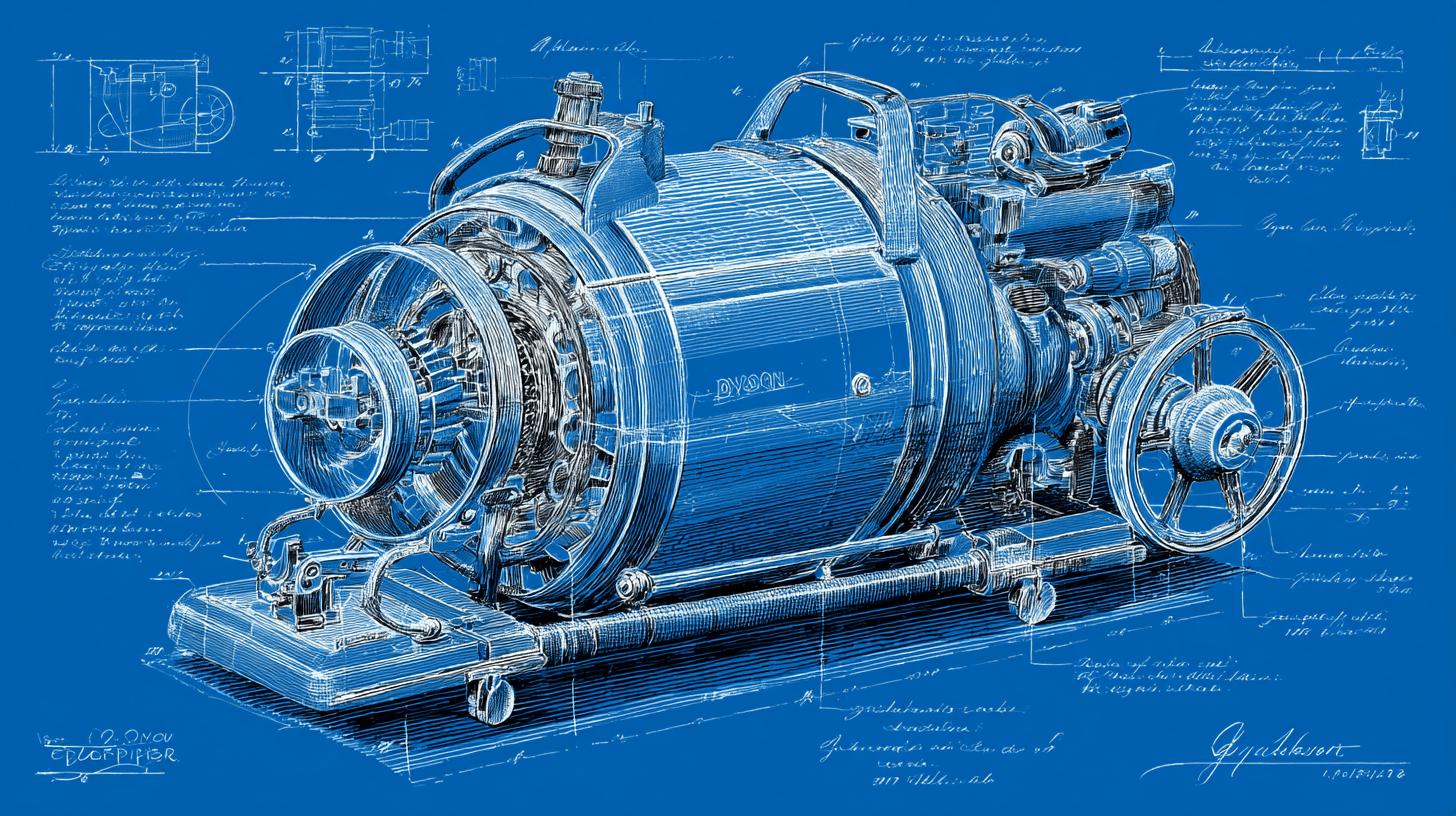
More than a century later, Dyson tackled the problem again. Not by patenting “a vacuum cleaner without a bag,” but by defining how the system worked. The airflow. The geometry of the cyclones. The ratios that ensure suction power remains constant.
Dyson didn’t protect the product itself, but the mechanism behind it. That difference may seem small, but strategically it is enormous. Competitors could still build a vacuum cleaner without a bag. But as soon as they tried to achieve the same performance, they came dangerously close to Dyson’s patents.
The mistake many entrepreneurs make
Many patent applications mainly describe what currently exists.
This product.
This version.
This shape.
That’s understandable, because it reflects what you have actually built at that moment. But in doing so, you mostly protect the present, while the market keeps moving.
Competitors change small details. Just enough to stay outside your claims. The result looks very similar to your product, but legally they slip past your protection.
The idea remains the same. Only the form shifts.
Protection is a process
Even the strongest patent protection loses its sharpness over time if you stand still. That’s why Dyson took a different approach: not a single patent, but an entire series.
Each generation introduced new improvements:
- More cyclones.
- Different airflow guidance.
- Better filters.
- Less noise.
Every improvement was patented again.
This created not a single standalone patent, but an entire landscape of protection, a portfolio in which each step built on the previous one.
The World of Patents
In a series of blog posts, Marco Coolen offers a glimpse into his work as a Dutch and European patent attorney at AOMB.
The power of continuous development
Competitors were therefore forced to make the same choice again and again. Follow? Then they run into patents. Take a different route? Then performance often suffers.
Continuous development pushes the market into a position where following becomes increasingly difficult. And whoever follows is always behind.
The real lesson
A patent is not an endpoint. It is the beginning of a strategy. Don’t just protect what you have built today. Above all, protect what makes it work, and keep improving afterwards.
Because innovation is not a single moment. It is a chain of small advantages. And those who keep extending that chain keep their competitors structurally at a distance.