
Dutch students unveil world's first solar ambulance
The world's first solar ambulance is a mobile clinic designed to bring life-saving medical care to remote, off-grid regions.
Published on July 22, 2026
© Bart van Overbeeke

Team IO+ selects and features the most important news stories on innovation and technology, carefully curated by our editors.
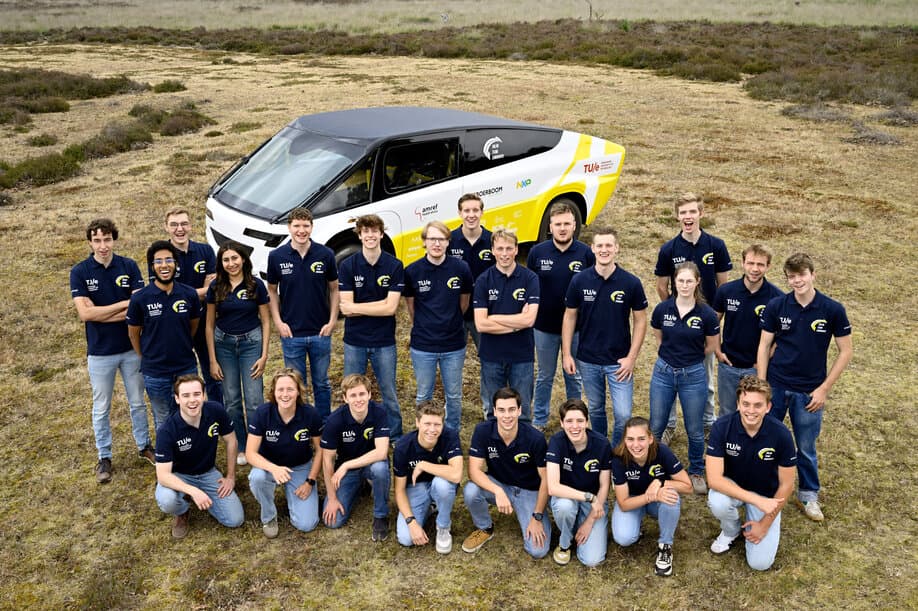
Solar Team Eindhoven, a student team of the Eindhoven University of Technology (TU/e), unveiled Stella Juva, the world's first solar-powered ambulance. This vehicle is not a standard patient transport unit. Instead, it operates as a fully equipped mobile clinic designed to deliver modern healthcare directly to remote, off-grid communities.
By generating its own electricity from the sun, the vehicle bypasses the fuel and power grid dependencies that often cripple rural healthcare delivery. This vehicle represents a major shift in medical logistics, proving that sustainable technology can solve critical humanitarian challenges. The student-led project, developed over a single year, showcases how decentralized, renewable energy can revolutionize emergency response and basic healthcare in developing regions. With a field-testing phase scheduled to begin immediately in East Africa, Stella Juva is poised to transition from an academic prototype into a real-world proof of concept.
.png&w=2048&q=75)
A mobile clinic built for off-grid care
Stella Juva differs fundamentally from traditional emergency vehicles. Rather than simply transporting patients to distant hospitals, it brings the hospital to the patient. The vehicle features a specialized off-road design to navigate rugged, unpaved terrains where conventional vehicles fail. It achieves a top speed of 120 kilometers per hour and boasts an operational range of 715 kilometers on a single sunny day.
This range is made possible by high-efficiency solar cells integrated directly into the vehicle's roof. Inside, the mobile clinic is stocked with vital diagnostic equipment, including tools for tuberculosis testing, malaria screenings, rapid blood tests, and ultrasound scans. It also features a secure, temperature-controlled vaccine storage unit. To ensure continuous operation during night hours or overcast conditions, the vehicle utilizes a solar-charged battery system. This battery powers both the electric drivetrain and the onboard medical devices, ensuring healthcare workers remain fully operational regardless of local infrastructure limitations.
Solar Team Eindhoven keeps innovating
Solar Team Eindhoven is a multidisciplinary team of 23 students from three Dutch universities who paused their academic careers for a year to develop the solar-powered ambulance. The team represents 12 distinct fields of study and three nationalities, bringing a diverse set of skills to the project.
The student team has a rich history of solar innovation, including four victories in the Cruiser class of the World Solar Challenge. Their previous projects include the Stella Vita solar camper in 2021 and the Stella Terra off-road solar car in 2023.
For Stella Juva, the students secured key technical partnerships to ensure commercial-grade reliability. The vehicle utilizes advanced back-contact solar cells provided by AIKO, which maximize energy absorption. Additionally, the team partnered with Tuningsupply to engineer specialized braking and control components, ensuring safe handling on unpredictable roads.
Addressing the global healthcare gap
In many developing nations, rural communities remain isolated from basic medical services due to poor road networks and a lack of reliable electricity. By partnering with Amref Health Africa, the student team ensured that the vehicle's design directly addresses these systemic healthcare gaps. Traditional diesel ambulances are expensive to operate and require a steady supply of fuel, which is often unavailable or prohibitively costly in remote regions.
Stella Juva eliminates these operational costs and fuel dependencies entirely. This shift to localized, self-sustaining medical infrastructure offers a blueprint for regional strategic autonomy in healthcare delivery. Developing nations can deploy these mobile clinics to establish resilient healthcare networks that operate independently of volatile global oil markets and fragile national power grids. By providing on-site diagnostics and preventative care, the vehicle helps prevent minor medical issues from escalating into life-threatening emergencies, ultimately reducing the burden on centralized urban hospitals.
Real-world testing in East Africa
To validate the vehicle's capabilities, the team is transitioning from laboratory simulations to rigorous field trials. In August, Stella Juva will begin a comprehensive testing phase in Kenya. Conducted in partnership with local healthcare professionals, these trials will subject the vehicle to challenging, real-world environments. The testing program will include simulated healthcare scenarios designed to evaluate the vehicle's off-road durability, solar charging efficiency, and overall medical utility.
Engineers will closely monitor how the solar-charged battery performs when simultaneously powering the vehicle's drivetrain and high-draw medical equipment under intense heat. While the exact kilowatt-hour capacity of the battery remains proprietary, the Kenyan trials will provide critical data on its real-world thermal management and energy retention. Additionally, the team will assess the usability of the onboard medical suite, ensuring that local doctors and nurses can easily operate the diagnostic tools and vaccine storage systems in remote field conditions.