
Eindhoven to Brussels: New momentum for direct train connections
Rover proposes 2027 rail changes aim to link Eindhoven directly to Brussels, fueling the Brainport technology corridor.
Published on April 5, 2026
© Rover

Team IO+ selects and features the most important news stories on innovation and technology, carefully curated by our editors.
The upcoming 2027 Dutch railway timetable represents more than a routine scheduling update; it could be a strategic realignment of cross-border connectivity. At the heart of this shift is Rover's proposal to link Eindhoven directly to Antwerp and Brussels, bypassing the traditional detour through Rotterdam. This move aims to correct long-standing design flaws in the current rail concession that have left the Netherlands’ primary technology hub, Brainport Eindhoven, poorly connected to the Belgian capital.
The Eindhoven Alderman Robert Strijk reacted with enthusiasm to the Rover proposals: "Brainport Eindhoven needs a strong international rail connection with Belgium. For an international knowledge and innovation region like Brainport Eindhoven, good and sustainable accessibility is crucial. A direct intercity connection to Antwerp and Brussels would strengthen our economic position, make international travel more attractive, and offer a sustainable alternative to cars and airplanes. I therefore fully support the recommendation of the travelers’ organization Rover for the 2027 timetable."
Rerouting
By rerouting international Eurocity services, the Dutch passenger association Rover hopes to slash travel times and support a burgeoning corridor of 15,000 daily commuters. However, realizing this vision requires overcoming significant infrastructure bottlenecks at Breda and managing the high-density traffic of the HSL-Zuid corridor.
The Rover initiative connects to a recent initiative by the Dutch and Belgian governments. The two countries signed a letter of intent in February to improve the train connection between Brainport Eindhoven and Brussels. The focus is on improving accessibility in the tech region, with the aim of reaching concrete agreements by summer 2026. This development appears to be a breakthrough for international travelers. The goal is clear: to improve the rail connection between the tech hub of Brainport Eindhoven and the political heart of Europe, Brussels.
Rethinking the Eurocity Route
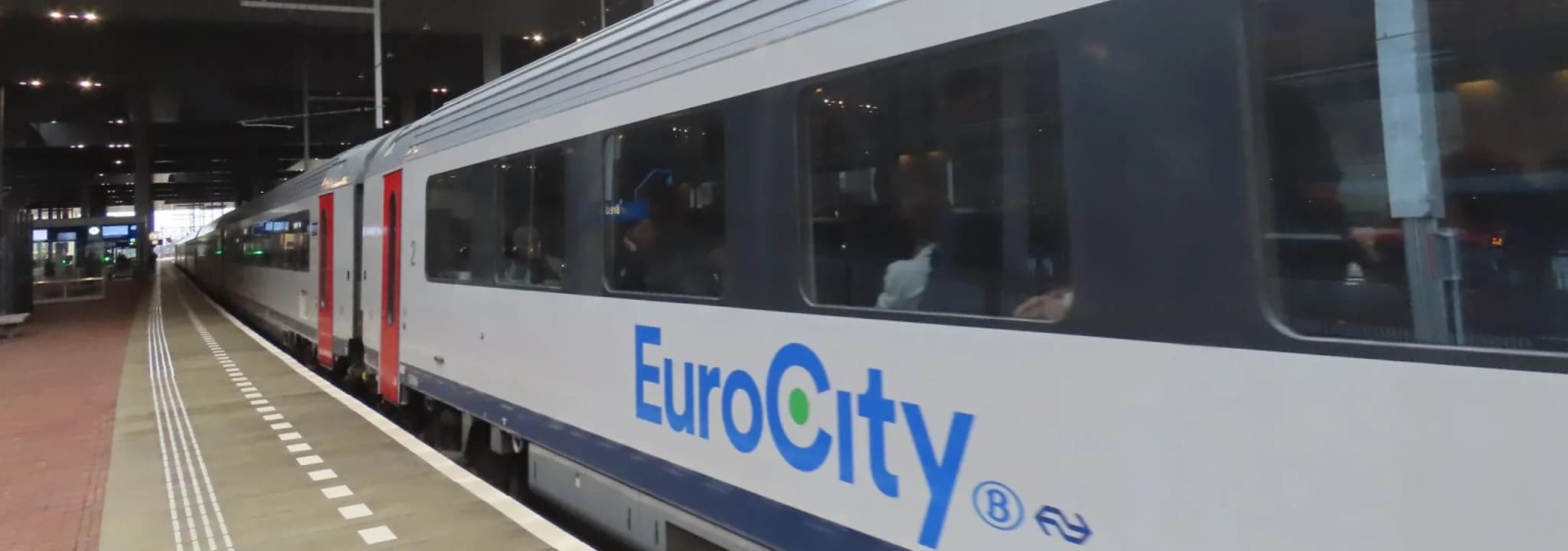
The Dutch passenger association Rover has formally proposed a significant modification to the international rail network for the 2027 timetable. The primary recommendation is to reroute the Eurocity (9200 series) train. Currently, this service travels from Brussels through Antwerp and Breda, then terminates in Rotterdam. Rover advocates extending or diverting this route from Breda to Eindhoven Centraal. This adjustment would provide the first direct link between the Eindhoven region and the Belgian rail network, addressing what planners call 'weeffouten' or design flaws in the existing concession.
Under the current system, passengers from Eindhoven traveling to Brussels face inefficient connections, involving multiple transfers or expensive high-speed supplements via Rotterdam. By shifting the Eurocity's northern terminus to Eindhoven, the Dutch railway operator NS can utilize existing tracks more effectively while providing a high-capacity international service to a region currently underserved by cross-border rail. The proposal suggests that passengers currently using the Eurocity to reach Rotterdam can switch to the Eurocity Direct service or transfer at Breda, ensuring that capacity remains balanced across the network.
This change is not merely about convenience; it is a response to growing passenger demand that the current domestic-focused timetable cannot meet. The NS is currently reviewing these proposals and plans to coordinate with the Belgian operator NMBS to finalize the application by the summer of 2026. If approved, this rerouting will fundamentally change how the southern Netherlands interacts with the Belgian economic heartland, turning Breda into a critical international interchange point rather than just a transit stop.
Technical hurdles and station upgrades
Implementing a direct Eindhoven-Brussels service is not as simple as changing a destination sign. It requires significant technical and infrastructure upgrades, particularly at Breda station. The Belgian operator NMBS plans to introduce new Siemens Vectron locomotives by mid-2027, capable of reaching 200 km/h. While these locomotives offer improved performance, they present operational challenges. Specifically, the turnaround times required for these new train sets currently exceed the 12-minute operational window available at Breda station. To accommodate these longer intervals and the physical length of the international trains, ProRail has identified the need for a 40-meter platform extension and signaling adjustments at Breda. These upgrades are essential to prevent international services from obstructing domestic traffic.
Furthermore, the transition between the high-speed line (HSL) and the conventional rail network at Breda is a known bottleneck. The 2027 plan must resolve scheduling conflicts between the proposed Eindhoven-Brussels service and the existing Intercity Direct (1800 series) that utilizes the same tracks. Engineers are currently working on signaling models to ensure that the introduction of the 9200 series into the Eindhoven-Breda corridor does not degrade the reliability of domestic services. The success of the 2027 timetable depends heavily on these localized infrastructure improvements being completed on schedule. Without the platform extensions and signaling tweaks, the operational friction at Breda could ripple through the entire southern rail network, causing delays that negate the time-saving benefits of the direct connection. These technical requirements highlight the complexity of integrating international standards with domestic infrastructure constraints.
The Brainport economic driver
The push for a direct rail link is driven by the rapid expansion of the Brainport Eindhoven technology cluster. As a global hub for semiconductor and high-tech manufacturing, Eindhoven requires seamless connectivity to international political and financial centers like Brussels. Current travel options are considered inefficient; a trip from Eindhoven to Brussels via Breda takes approximately 2 hours and 34 minutes, while a car journey takes roughly two hours. This disparity places rail at a competitive disadvantage.
Projections indicate that a direct service could support an additional 15,000 daily commuters between these two hubs, justifying the service as a strategic necessity for European technology autonomy.
Navigating HSL-Zuid congestion
A significant obstacle to the new service is the existing congestion on the HSL-Zuid, the high-speed corridor connecting Amsterdam to the Belgian border. The line is currently operating at 92% capacity, leaving very little margin for error or additional services. Introducing a direct Eindhoven-Brussels train risks displacing existing domestic Intercity Direct slots, which are crucial for north-south mobility within the Netherlands. The NS 2027 advisory report notes that any expansion must be balanced against the stability of the entire network.
Political alignment and implementation
The roadmap for the 2027 timetable is now entering a critical phase of political and operational alignment. Following the cooperation agreement signed in February 2026, the Dutch Ministry of Infrastructure and Water Management is working closely with NMBS and ProRail to resolve the remaining feasibility issues. A final decision on the rerouting of the Eurocity via Eindhoven is expected by September 2026, allowing the formal application to be submitted for the December 13, 2026, implementation date. This timeline is tight, leaving little room for delays in infrastructure work or bilateral negotiations. The project has gained significant political momentum, as it aligns with broader European goals for sustainable transport and reduced reliance on short-haul flights.
Beyond the Eindhoven-Brussels link, the 2027 plan also explores new connections between Weert and Belgian Limburg, signaling a broader commitment to cross-border integration.