
Europe's green jobs boom has a problem: not enough workers
Europe's clean energy sector is hiring fast, but too few electricians, installers and technicians could slow the rollout, the EEA says.
Published on September 22, 2026
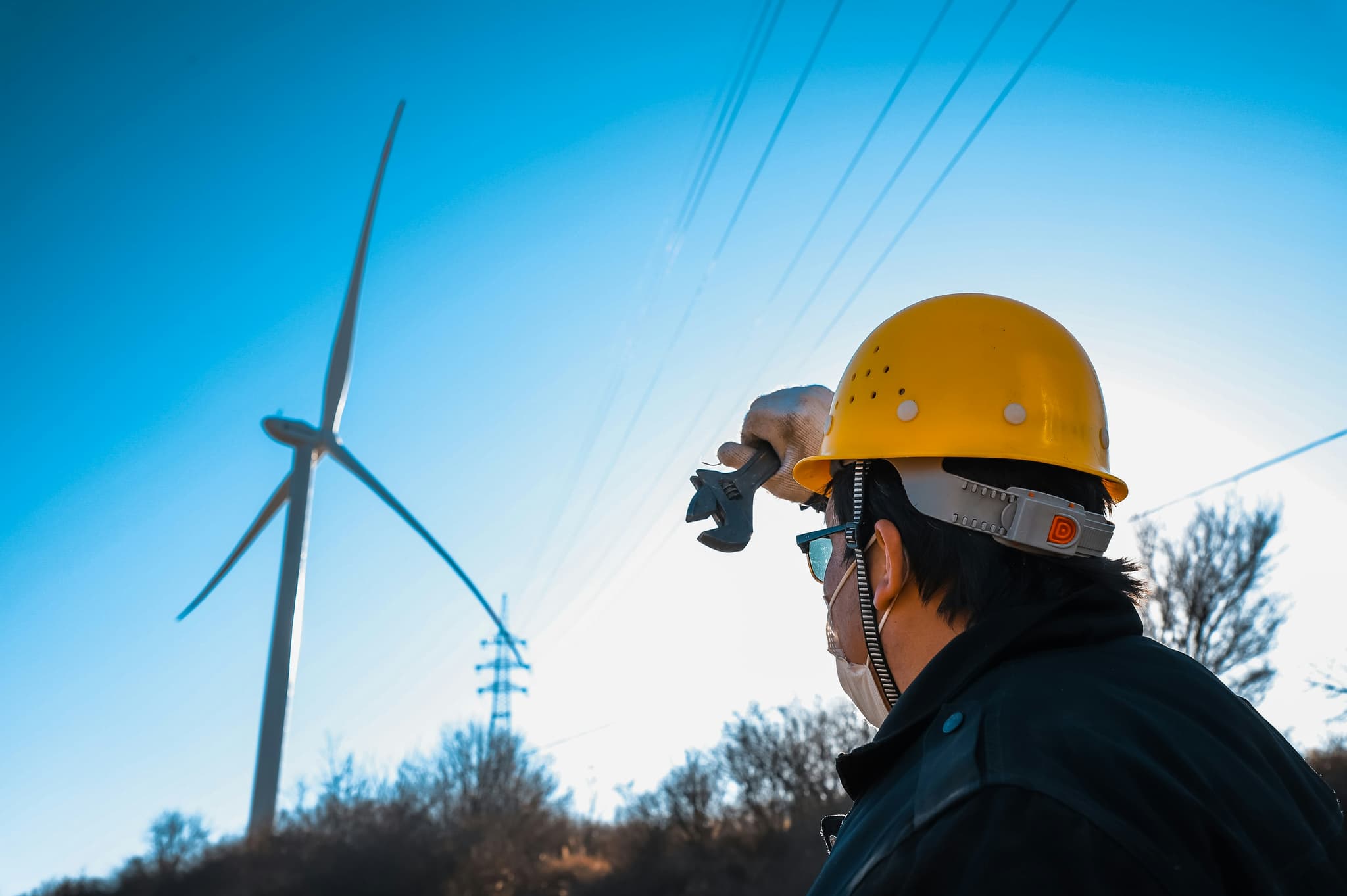
© Yang Dawei - Unsplash

Mauro swapped Sardinia for Eindhoven and has been an IO+ editor for 3 years. As a GREEN+ expert, he covers the energy transition with data-driven stories.
Europe’s clean energy industry is a growing source of employment, but it may struggle to find the people it needs. That is the main finding of a recently published European Environment Agency (EEA) report that examined jobs in the wind, solar photovoltaic (PV), heat pump, and battery industries.
The EEA reports that the clean energy sector employed close to one million people in 2023 and generated €138 billion in gross value. At the same time, the agency warns that these numbers cannot be taken for granted. The shortage of skilled workers, the uneven job quality across countries, and the under-representation of women and young people risk holding back progress.
Jobs are in the field more than in the factory
The analysis provides a snapshot of where the jobs are, challenging the idea that clean tech is primarily a manufacturing story.
Wind was the largest employer of the technologies. The industry employed 273,500 people directly, with more than three-quarters (77%) working in maintenance. Solar PV was the second-largest employer, with 227,300 direct jobs — half in operations and 36% in construction.
Heat pumps supported about 80,000 jobs, with nearly three-quarters in construction and installation. The battery sector is recorded as the smallest sector and the exception to the rule. The majority of the 33,000 employees work in manufacturing.
At the same time, batteries are also the fastest-growing sector. Employment rose by 35% between 2010 and 2023, and gross value added climbed to €2.2 billion in 2022 from nearly zero in 2018. The EEA underscores how fragile this progress is, highlighting the bankruptcy of Swedish manufacturer Northvolt and the reliance on foreign investment from Chinese and South Korean manufacturers.
Uneven job distribution
Employment is concentrated in a few countries. Germany has the largest workforces in wind (125,000 jobs), solar PV (nearly 84,000) and batteries (12,300), though it does not have the highest share of national employment. Portugal, Spain, and Italy lead in heat pump jobs, while Hungary and Poland are emerging as battery manufacturing hubs with the fastest growth — driven by investments from Chinese companies like BYD and CATL.
According to the EEA, this concentration follows existing industrial strengths but could also widen regional gaps unless policy intervenes to spread benefits more broadly. Analysts point out that regions that depend on carbon-intensive industries are particularly vulnerable to this widening gap.
A demand set to rise
The EEA forecasts that the solar and the wind industries could each employ over 500,000 people by 2030 — twice today’s headcount. The estimates for heat pumps and batteries aren’t as certain.
The heat pump industry could employ between 150,000 and 200,000 people. The industry trade association, European Heat Pump Association, says the sector will need no less than 500,000 skilled workers. Analysts suggest that heat pump demand can shift rapidly. The war in the Middle East boosted sales, and the European Commission’s Electrification Action Plan, published in July, aims to build on that.
Policy decisions will also be key to a homegrown battery industry. The battery sector could employ anywhere between 200,000 and 400,000 people, according to the EEA — depending on whether Europe secures its local supply chains.
Where the shortage is
The most widespread gaps are in building technicians, followed by plumbers and pipe fitters, electrical professionals and construction laborers, the report continues. Industry estimates cited by the agency point to a deficit of around 7,000 wind blade technicians by 2030. One estimate from the heating industry says installer numbers must double to meet the EU's 2030 targets, with at least half of existing installers needing to reskill for heat pumps.
The EEA argues that shortages and job quality are linked. Construction jobs, dominating solar and heat pump work, have the lowest average wages, the highest self-employment rate at 225, and heavy exposure to extreme temperatures. Manufacturing workers face significant chemical exposure. Heat pump wages are 40% lower than in wind — the best-paid sector. Both maintenance and operation positions in the wind industry offer more stable employment and training opportunities.
The hardest-to-fill jobs are the least attractive ones. The analysis concludes that improving working conditions and expanding training opportunities are equally important for the sector to recruit and retain workers.
Who is missing?
Women make up 26% of the workforce in wind and batteries, and only 14% in heat pumps. In construction roles, they account for just over 10%. They are better represented in research and development, but those jobs are a small share of employment. Women also remain scarce in leadership positions.
Workers aged 15 to 24 make up only 6% to 7% of the workforce in wind, solar and heat pumps. The agency says attracting more women and young people is essential for fairness and to ease shortages, particularly as Europe's workforce ages and digital skills and artificial intelligence become more important to the sector.
The EEA's message is that workers will shape the clean energy transition as much as technology. It calls for wages, secure contracts, and health and safety to be built into industrial policy and EU funding; for training capacity to expand at scale; and for regions and groups at risk of being left behind to get targeted support.
If Europe gets this right, wind, solar, heat pumps and batteries could become lasting pillars of the economy. If not, a shortage of people could slow the rollout of the technologies themselves.