
From cutting-edge technology to impact
The Netherlands has the technology and expertise to develop innovations, but the challenge is to put them into practice.
Published on July 25, 2026

Team IO+ selects and features the most important news stories on innovation and technology, carefully curated by our editors.
The Netherlands is capable of developing world-class technology. The crucial question is: Will we be able to put it into practice in a timely manner, at scale, and with broad public support? That’s where TNO Vector comes in.
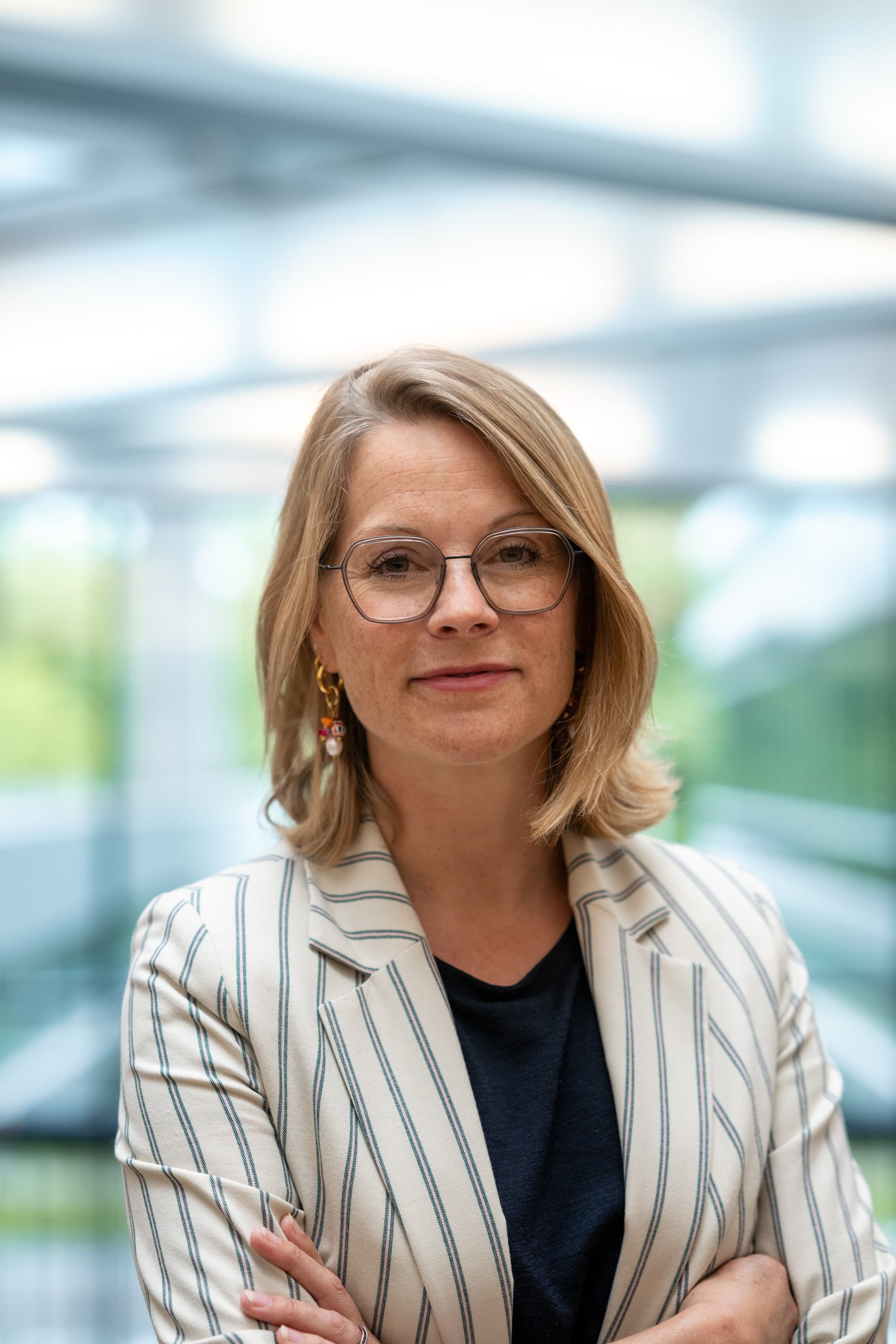
By Lotte de Groen *)
.png&w=2048&q=75)
Lotte de Groen
The Netherlands has everything it needs to lead the way. We have strong research institutions, entrepreneurial companies, a high-quality manufacturing sector, and technology that can make a difference worldwide. From energy storage and digital security to medical innovation, defense technology, and the circular economy: the solutions are there.
But technology alone is not enough to bring about a transition. Between a successful pilot project and widespread societal adoption lies the most difficult phase: scaling up. That’s where innovations get bogged down by overloaded power grids, slow permitting processes, fragmented financing, outdated regulations, and stakeholders who each hold a piece of the puzzle but no one who sees the whole picture.
It is this combination of barriers and objections that threatens to cause the Netherlands to lose its lead. A new battery technology is of little use without capacity on the grid, a scalable production chain, and a clear revenue model. A smart healthcare application remains just a nice project without integration into work processes, funding, privacy regulations, and the trust of patients and professionals. And defense innovation is only relevant when it aligns with procurement, operations, and maintenance.
TNO Vector is here to kickstart that movement. Not by adding yet another roundtable, but by bridging the missing link between technological possibilities, economic choices, public interests, and social reality. We connect parties that need each other but don’t naturally find one another. And we help turn isolated initiatives into a viable course of action.
That starts with asking the right questions. In which areas does the Netherlands want to be strategically indispensable? Which value chains do we need to build or strengthen here? What obstacles must be removed now to ensure we aren’t playing catch-up again in five years? And what societal conditions must be in place from day one? These are the questions that determine whether an innovation remains a pilot project or grows into a force for economic and societal impact.
That is why the Netherlands must not only develop more technology; we must also get better at implementing it. This requires a joint agenda, clear roles, smart financing, and a willingness to adapt systems when they hinder progress. Sometimes that means accelerating the process. Sometimes it means redesigning it. And sometimes it means having the courage to abandon solutions that are technically interesting but prove to be socially or economically unsustainable.
That is precisely where TNO Vector’s strength lies: technology-agnostic, but not noncommittal. Vector does not focus on a single solution, a single organization, or a single interest, but rather on the conditions under which sectors or supply chains can actually develop. That is ambitious, but if there is one organization that can make it happen, it is TNO Vector.
TNO possesses deep technological expertise in virtually all domains that are strategically relevant to the Netherlands. Vector ensures that this expertise is channeled effectively into our economy and society. It synthesizes lessons from complex innovation processes, develops methodologies for collaboration, and helps ecosystems transition from isolated initiatives to scalable impact.
We are aware of the interdependencies. A growing technology cluster can generate jobs, knowledge, and economic potential, but it can also put pressure on the housing market, healthcare, and accessibility. New energy infrastructure is needed for the transition, but it requires a fair distribution of the benefits and burdens. Digital applications can make the world more efficient and safer, but only when people can trust them. Public support, therefore, is not built during the final phase of communication. It is established when interests, risks, and impacts are taken seriously from the very beginning.
To this end, TNO Vector works along four lines. First comes strategic exploration: which sectors, supply chains, and technology areas deserve priority? This is followed by agenda-setting: which public and private parties need to collaborate, on which problem, and with what action plan? Next comes the public-private partnership phase: shaping a portfolio of technological, economic, and societal interventions. The final phase revolves around implementation and adoption: financial decisions, policy interventions, legislation, market introduction, and impact monitoring.
That sequence sounds logical, but is often overlooked in practice. The Netherlands tends to jump from promise to implementation, from hype to subsidies, from pilot to scale. However, the real work lies between potential and impact: organizing, connecting, choosing, financing, adapting, and persevering.
TNO Vector helps translate complexity into actionable insights. By laying out facts, scenarios, and options on the table before positions harden. By connecting public and private stakeholders around a challenge that extends beyond their own organizations. And by ensuring that technology is not only conceived but also truly becomes part of society.
That is the challenge the Netherlands now faces. Not: Do we have enough ideas? But: Are we capable of organizing, funding, and implementing our best ideas quickly enough?
The Netherlands has the knowledge. TNO Vector helps turn that into real impact.
*) Lotte de Groen is Market Director at TNO Vector. She has worked at TNO for over seventeen years at the intersection of innovation, market development, and societal transitions. Previously, she served, among other roles, as TNO-wide coordinator of the Orchestrating Innovation program.