
Going camping? Choose a tent made from recycled jeans!
Discover how old jeans, plastic bottles, and fabric scraps are transformed into innovative tents.
Published on March 31, 2026
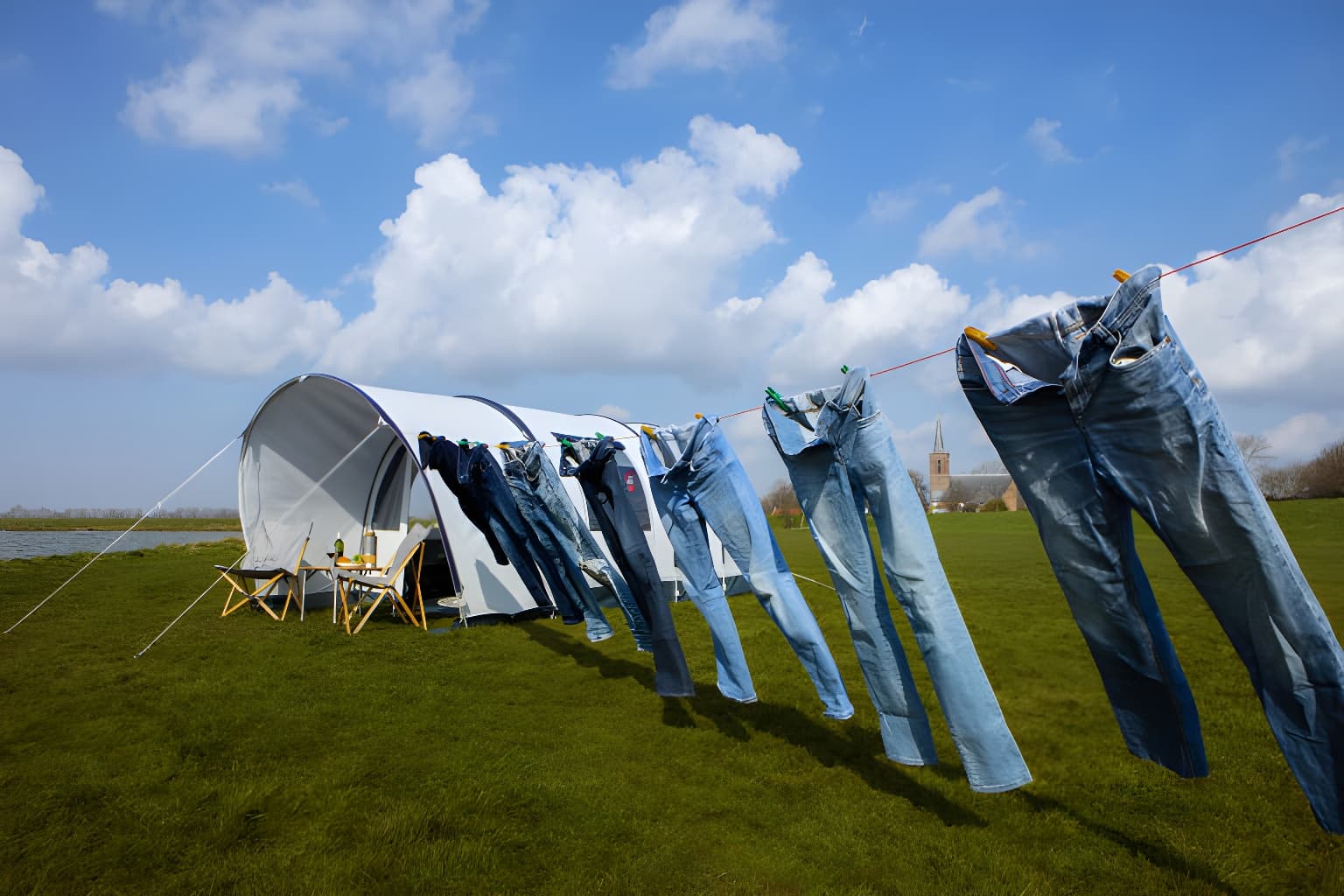
Photo: Karsten Tenten

Team IO+ selects and features the most important news stories on innovation and technology, carefully curated by our editors.
Every year, 640 million pairs of jeans end up in the trash in Europe. The camping industry is now showing that there’s another way. Innovative companies are transforming discarded clothing and plastic waste into high-quality camping gear. Planning a camping trip soon? Then consider a tent made from your old jeans.
Tent fabric made from jeans
Every year, we collectively throw away about 640 million pairs of jeans in Europe. This enormous mountain of textiles often ends up in incinerators or landfills. The Dutch company Karsten Tenten is tackling this problem with their Blueline tents.
The showpiece of this sustainable innovation is the tent fabric. It has a striking, light blue color 🔗︎. This color isn’t created using chemical dyes. The shade is the direct result of the processed blue jeans 🔗︎. The production process is fascinating. Old jeans are collected, cleaned, and completely shredded into loose fibers 🔗︎. These fibers are then spun into new yarn 🔗︎. The final tent fabric consists of 25 percent recycled denim. Depending on the size of the tent, the manufacturer processes five to eight pairs of old jeans into a single piece of fabric. The rest of the fabric consists of a mix of materials. They use 25 percent new cotton and 50 percent polyester. Part of this polyester is also recycled.
The environmental benefits of this approach are impressive. Eliminating new cotton and chemical dyes results in enormous water savings. On average, 50,000 liters of water are saved per tent produced.
From plastic bottle to super-strong zipper
A tent consists of more than just fabric. The smaller components also require a critical eye. Traditional tents contain zippers made from newly produced plastic or metal. The makers of Blueline tents are addressing this detail as well. The zippers in these tents are made from recycled plastic bottles. This may seem like a small change. Yet the impact on a large scale is significant. Reusing PET bottles reduces the demand for new petroleum. Petroleum is the base raw material for new plastic. By giving waste plastic a second life, we prevent it from ending up in nature. It reduces the plastic soup in our oceans.
Reusing waste materials
The third type of discarded material can be found at the bottom of the tent. The groundsheet is a crucial part of any camping kit. It must be completely waterproof, durable, and impermeable. Manufacturers often use new PVC or bisonyl for this purpose. These are heavy, environmentally harmful plastics.
The Blueline collection opts for an innovative, circular solution here. The groundsheet is made from scrap material from regular production. When cutting standard groundsheets, there is always leftover material. Normally, this scrap ends up directly in the incinerator. Karsten Tents now carefully collects this waste 🔗︎. These scraps are processed into a new substance called recupasta. This recupasta forms the basis for the new groundsheets of the sustainable tents. Plastic scrap material from other sources also finds its way into the groundsheets 🔗︎. This process closes the material loop within the factory walls, minimizing industrial waste to virtually zero.
Looking to the future
The jeans tent is just the beginning. It proves that we can design complex consumer products to be fully circular. If the entire outdoor industry embraces this standard, the environmental benefits will be enormous. Planning to go camping in the future? Then there’s a good chance you’ll be sleeping in your own discarded clothing.