
Intelic tops Deloitte’s Dutch Fast 50 with 10,404% revenue growth
LeydenJar and eyeo also among the winners in the Dutch Fast 50 lists. Fairphone picked up the Sustainability Pioneer Award.
Published on November 7, 2026
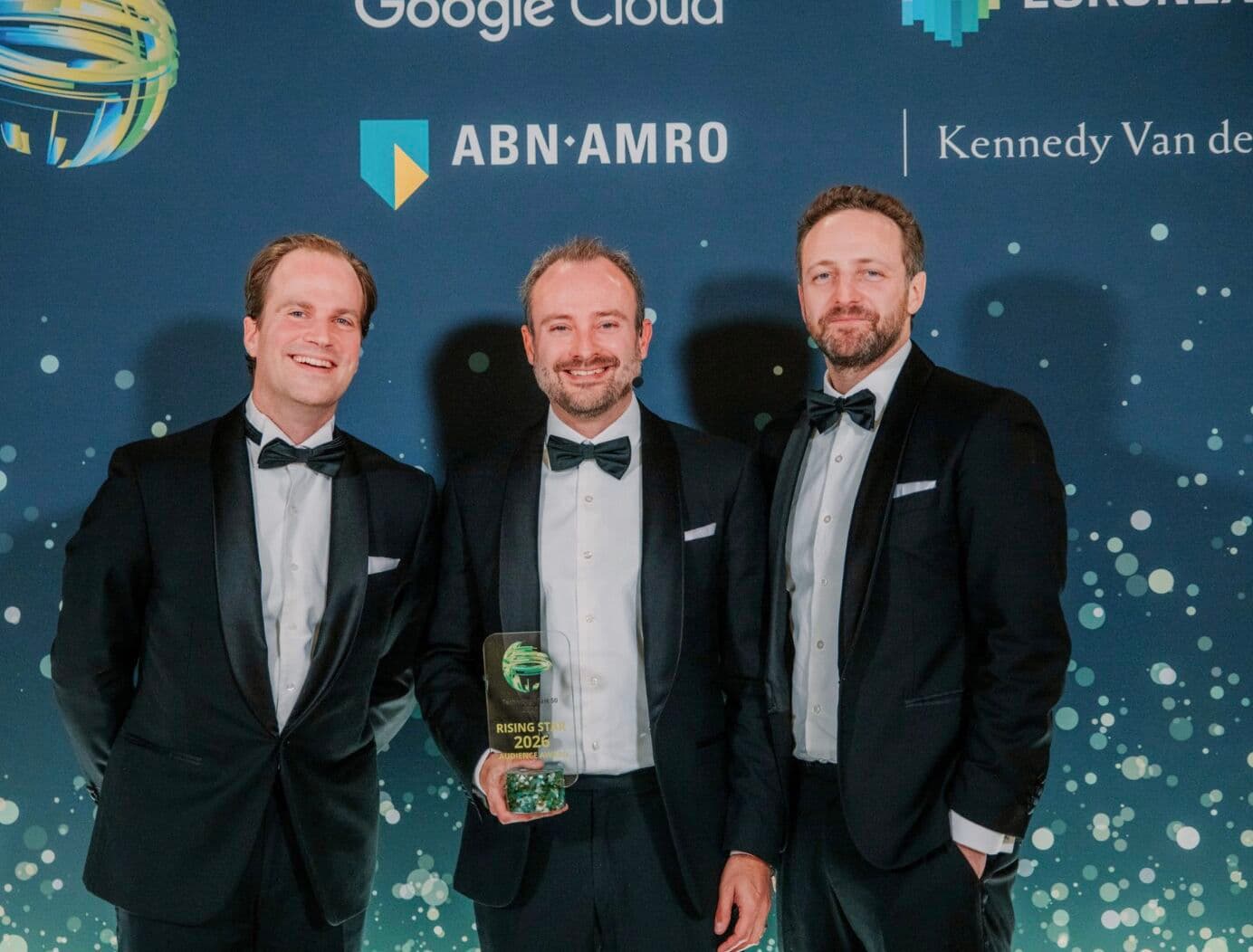
Rising star eyeo © Deloitte

Team IO+ selects and features the most important news stories on innovation and technology, carefully curated by our editors.
The Amsterdam defence software company beat freelance platform Sweav and drinks dispenser maker Aquablu. Battery developer LeydenJar took the Deep-Tech Award, while camera sensor startup eyeo won both Rising Star prizes.
A military unit can buy drones from several suppliers and still struggle to use them together. Each system can come with its own controls, leaving operators to juggle interfaces during a mission. Amsterdam-based Intelic built its business around that problem. On 5 November, Deloitte named it the winner of the 2026 Dutch Technology Fast 50 after its revenue grew by 10,404% over four years.
Sweav came second with 9,768% growth, and Aquablu, last year’s runner-up, finished third with 3,859%. Helmond-based DENS ended in fourth place. Deloitte announced the results of its 27th Dutch edition at the National Maritime Museum in Amsterdam. The ranking compares how quickly revenue grew over four years from each company’s own starting point.
One interface for drones from different suppliers
Intelic’s Nexus software lets operators control different types of unmanned aircraft and ground vehicles from a shared interface and connect them to military command systems. The company started in 2021 as Avalor AI. It says it secured its first operational contract for deployment in Ukraine in late 2024, opened an office there in 2025 and adopted the Intelic name later that year.
That approach is now shaping how the Dutch military plans to buy drones. In July, the Dutch Ministry of Defence signed an agreement with Intelic to develop a shared software environment for unmanned systems. The ministry described a reversal of the usual purchasing sequence. It will build the software environment first, then bring in hardware that works with it. For a military trying to keep up with fast-moving drone development, that gives it a way to add new aircraft to a system operators already know.
Intelic has also built a procurement business around Nexus. Its BASE platform lets defence ministries compare and buy unmanned systems that have already been integrated with the software. The idea is to give ministries a choice of suppliers while reducing the integration work that follows each purchase.
Freelance dealmakers and connected water dispensers
Sweav applies software to a different kind of search. A company that needs help with an acquisition or a strategy project can use its platform to find an independent specialist for the assignment. Deloitte says the network includes more than 450 freelancers across strategy, business transformation, and mergers and acquisitions. Sweav earns revenue when a match turns into a project.
Aquablu’s business starts at the tap. Its connected dispensers turn tap water into still, sparkling or flavoured drinks, giving offices an alternative to stocking single-use bottles and cans. The company’s software tracks dispenser performance across locations. Its next machine, BOLD, is part of an effort to reach customers outside the office, including in gyms.
From the lab to the production line
LeydenJar won the Deep-Tech Award for replacing the graphite anode in lithium-ion batteries with a thin foil made of pure silicon. The company says its anode can help a battery store up to 50% more energy in the same space. The next test is whether LeydenJar can make the material consistently in volume. Its first commercial factory, PlantOne at Eindhoven’s Strijp-T, is scheduled to start production in 2027. “Making it the same way every time, at volume, is a different discipline,” CTO Paul van den Broek said this week.
The imec spin-off eyeo won both the Rising Star Award and the Rising Star Audience Award for its work on camera sensors. Conventional colour filters absorb much of the light that reaches a sensor. Eyeo uses tiny optical structures to separate incoming light by colour and route it to the appropriate pixels. The company raised €40 million in May to move the technology towards commercial production.
Fairphone picked up the Sustainability Pioneer Award for designing modular electronics whose owners can replace worn-out parts and keep using their devices for longer. The Diverse & Inclusive Leadership Award went to The Selection Lab, an Amsterdam company that combines AI-assisted screening with skills assessments in recruitment. Deloitte’s jury cited how the company had embedded diversity, equity and inclusion in its own organisation, including the involvement of its founders and management team.