
Ivory: a European alternative to Instagram that rewards experts
A new Italian social media platform prioritises content from verified experts, aiming to be a space for conscious, meaningful scrolling.
Published on October 8, 2026
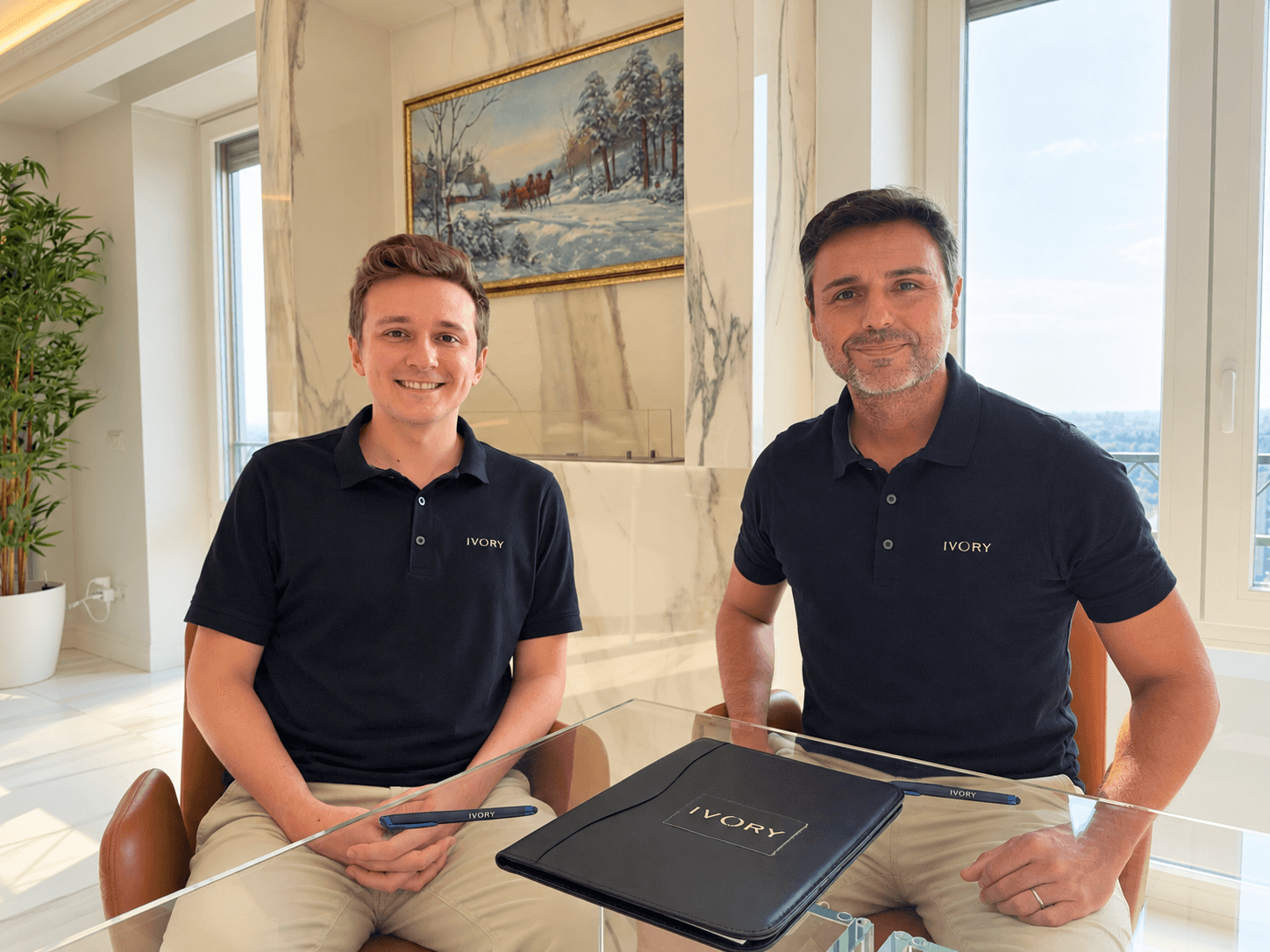
Ivory's co-founders, Adam Nettles and Uel Bertin - © Ivory
Mauro swapped Sardinia for Eindhoven and has been an IO+ editor for 3 years. As a GREEN+ expert, he covers the energy transition with data-driven stories.
“Treating all social media users equally and all content as equal lowers content value. Think about an academic conference: a professor's or speaker's words naturally carry more weight than a contributor's. That isn't reflected in the digital space,” says Adam Nettles. The platform he co-founded, Ivory, aims to create an online space with quality content — and where expertise matters.
Nettles, an American citizen who has lived in Italy for years, founded the platform with Uel Bertin. Ivory sets itself apart from Instagram, X, and Facebook by design: its algorithm prioritises experts when they talk about their subject.
Initially, the idea was to create a space for academics to connect and discuss their work, given their spotty online presence. But then, why not make a social network open to anyone where qualifications matter? After months of development, Ivory is now live in Brazil, Europe, and the United States.
“They [social media] start serving poor, bad information: whatever is shocking, whatever plays to the worst of people’s impulses,” he says, reaffirming that Ivory’s intention is different.
Making experience count
Ivory draws inspiration from Reddit. Users can join towers — broad topics such as art, finance, or history — and open subtowers, such as modern art under the umbrella of art. The community decides whether that new subtower is relevant.
Expert status isn't self-declared. Inside each tower, users can click "Become an Expert" and submit their credentials: degrees, certifications, and work experience. A point system scores each submission, and only those who reach a set threshold are recognised as experts in that subject. Because Ivory covers almost every field, the founders kept the system simple and the same across all subjects. The requirements are listed openly in the app.
“Once you are an expert and you talk about that subject, you are automatically weighted substantially higher in the algorithm, not just in posting but also in commenting. Everything across the board in your subject matter carries more weight, which allows expert opinions to rise to the top,” explains Nettles, who is also a former international relations academic.
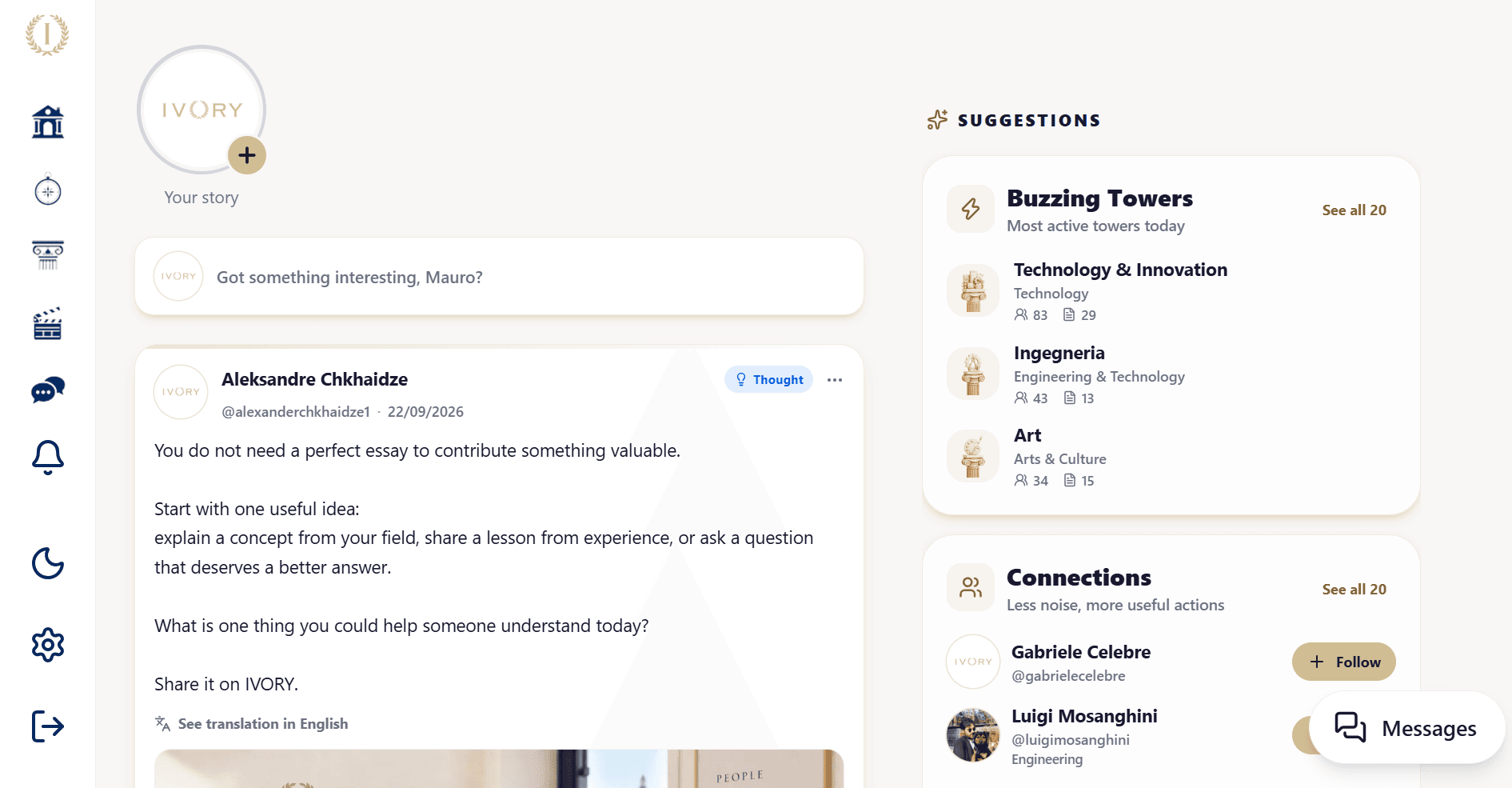
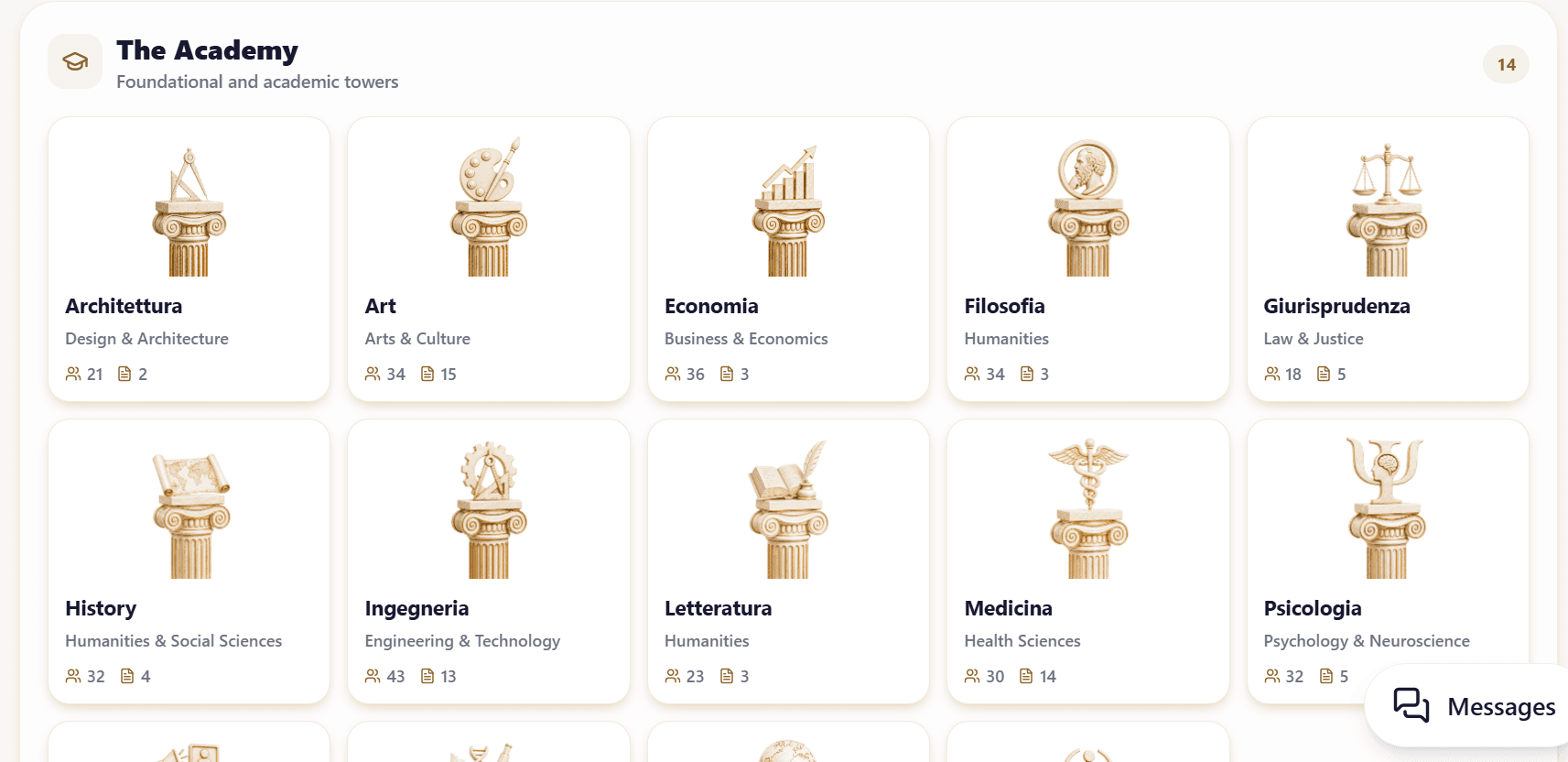
Two snapshots of Ivory, the feed page and the towers section
Meaningful short-form content
Short-form video content has taken over the main social media platforms. Multiple studies have shown the adverse effects of this content format, including shrinking attention spans, fragmented focus, and dopamine reward loops.
Despite wanting to distinguish itself from the main social media platforms, Ivory also features a short-form section called Briefs. “Short-form content can be turned into something positive,” says Nettles, who also notes that this kind of content is a major driver of engagement.
“Making people stop scrolling is a bit unrealistic. Our goal there is instead to have people scrolling positively,” he states. Briefs can also be filtered to show only expert content, or experts in one subject.
Right now, users can’t upload long-form video content on Ivory because of storage constraints. The feature might come in the future, as many experts and creators prefer long-form content.
Ivory’s business model
Signing up is free, while a premium plan is also available. Features include an AI fact-checking tool that can scan both text and video content on the platform, create a report citing sources for claims, and assess whether each claim holds up. “If people want to immediately research something that they hear online, then they can,” adds Nettles.
A premium membership costs €8.99 per month, includes 40 fact-checks, and removes ads, which, at this stage, are necessary for the platform’s economics. “Philosophically, if we can get enough subscribers over time, I lean toward a subscription model rather than running advertising,” says Ivory’s co-founder.
Ivory was bootstrapped by its founders, who have worked on the platform's development for the past eight months. An American investor then bought a 1% stake in the company. The company is open to investor inquiries and is considering crowdfunding campaigns.
European privacy standards
Given its European roots, Ivory is fully compliant with the General Data Protection Regulation (GDPR). When signing up for the platform, users must verify themselves, either through a face scan paired with their ID card, or by manually uploading information.
Nettles clarifies that the platform doesn’t keep this information; the data is only stored until identity is verified.
Profiling is done within EU limits. For instance, the platform shows users ads based on their activity. Right now, the only ads are about Ivory itself — an opt-out option, costs €0.99 per month, removes them.
Not another LinkedIn
With the first users in, one of the very first pieces of feedback the founders received is that the platform looks similar to LinkedIn. The founding team isn’t happy about it, as Ivory doesn’t want to be another place for professional networking.
“We really want to keep the balance between entertainment, media, the social media side of things, and more elevated content, because that's where we identify the problem. The problem isn't so much LinkedIn; it's Instagram and Facebook. Striking that balance is critical: people can come in, still feel like it's social media, and use it to scroll,” underlines Nettles.
Built in Europe to stay
The focus is now on attracting more people to the platform. A desktop version of Ivory is available as well as the mobile apps on the App Store and Google Play.
Why should more people join? “For Europeans in particular, it is critical to have a viable social media alternative on this continent that will remain here forever,” wraps up Nettles.