
Limburg named the “world’s smartest region”
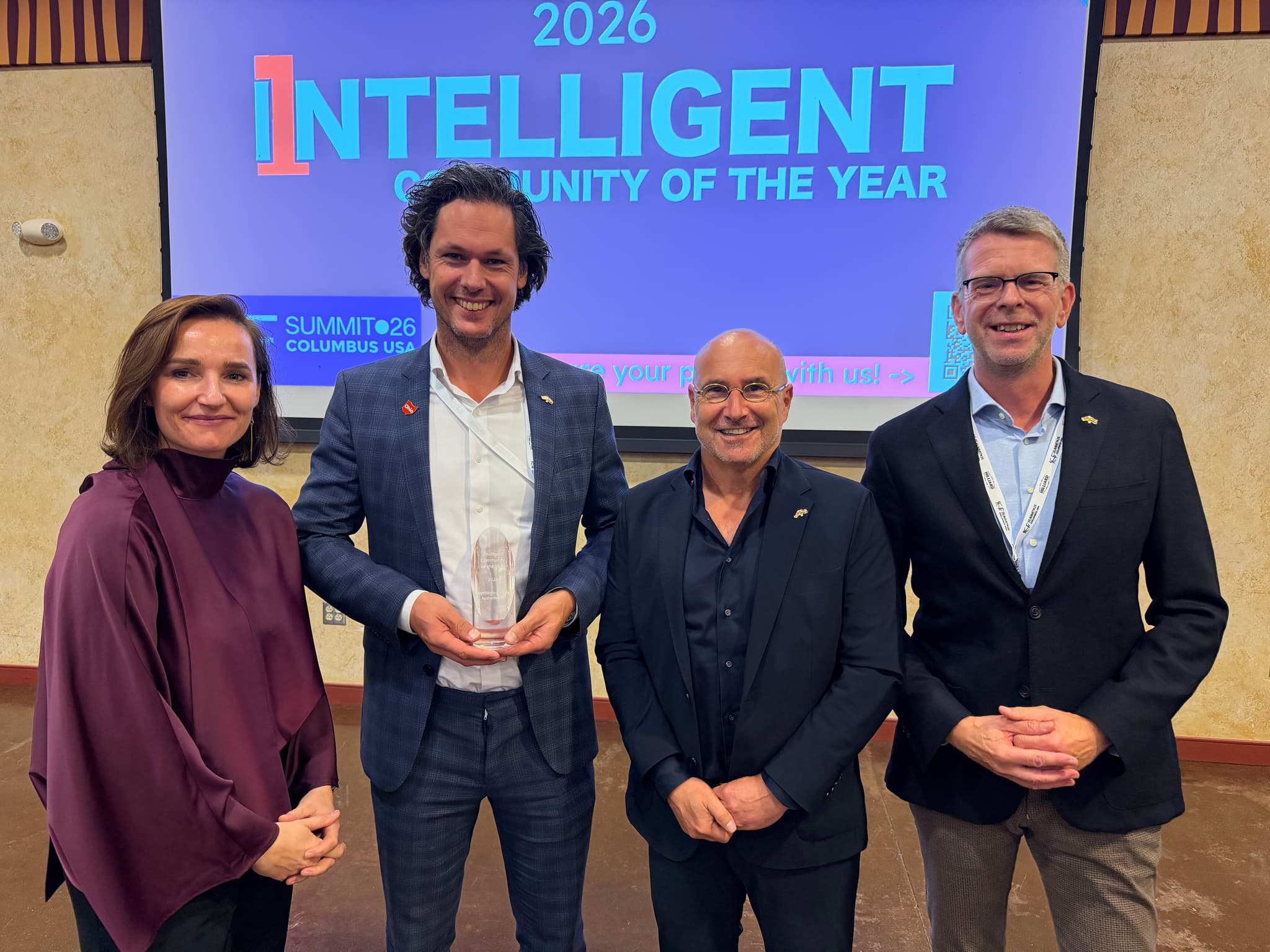
Following Brainport Eindhoven in 2011, Brightlands Limburg is now the second Dutch region to be named Intelligent Community of the Year.
Published on October 16, 2026
Bart, co-founder of Media52 and Professor of Journalism oversees IO+, events, and Laio. A journalist at heart, he keeps writing as many stories as possible.
The Intelligent Community Forum (ICF) has named Brightlands-Limburg Intelligent Community of the Year 2026. According to the assessment, the former mining region, once dependent on coal mining and agriculture, has transformed into a leading innovation ecosystem. The award highlights Limburg’s economic and social renewal, driven by collaboration between government, businesses, educational institutions and citizens. A network that acts as an invisible engine for growth, sustainability and new jobs.
For Brainport Eindhoven, the award in 2011 was an important factor in its further development into an economically strong region. Recognition from an internationally respected institution visibly strengthened residents’ belief that something special was being built. Brightlands Limburg hopes for a similar effect.
Limburg’s economic transformation began after the discovery of the Groningen gas field in 1959, when tens of thousands of coal jobs disappeared. Through trial and error, the province subsequently embarked on a radical change of direction. Many years later, the result was Brightlands-Limburg: a province-wide open innovation ecosystem with four campuses focused on circular chemistry, nutrition, healthcare, AI and smart digital services. Together, these campuses — Chemelot in Sittard-Geleen, Greenport Venlo, Maastricht Health Campus and Smart Services Campus in Heerlen — are home to 32,000 entrepreneurs, researchers and students working on breakthroughs in sustainability, health and digitalisation.
The triple helix model as a driving force
Brightlands-Limburg’s success rests on the “triple helix”: close collaboration between government, businesses and knowledge institutions. This model creates a flywheel effect. Governments create favourable conditions, businesses invest in innovation, and universities contribute knowledge and talent. The ICF identifies this network as the primary driver of the region’s economic, social, and cultural progress. The award assessment was based on six factors, including inclusive growth, social connection and cultural enrichment. Limburg scored highly across the board, partly thanks to projects such as the Einstein Telescope and the Brightlands Startup League.
To accelerate growth, Limburg is launching the €100 million Brightlands Future Fund. The fund aims to improve access to growth capital for innovative companies. It covers the entire innovation chain: from early-stage development and knowledge commercialisation to scaling up. Particular attention will go to areas such as AI, defence-related innovations and the Einstein Telescope cluster. It is a revolving fund: money flowing back into it will be reinvested, with the aim of mobilising at least €2.50 in external investment for every euro of public funding. The province has also been investing for years in funds such as the Limburg Startup Capital Fund (€33 million) and various SME grant schemes.
Investments in infrastructure and jobs
The Brightlands Health Campus in Maastricht is also receiving a €116 million investment from the municipality of Maastricht, Maastricht University, Maastricht UMC+ and the province of Limburg. This is expected to create 250 to 300 new jobs over the next five years. The campus will then serve as South Limburg’s second economic engine. Total investment in the campus is estimated at €650 million over ten years. Infrastructure investment will also include redesigned streets, more green spaces and improved access via the A2 motorway. Since Brightlands was established, the province has invested more than €700 million in the campuses and related projects.
Despite these successes, the campuses’ financial health remains a challenge. Only Brightlands Chemelot Campus in Geleen is financially self-sufficient. The other three campuses — Greenport Venlo, Maastricht Health Campus and Smart Services Campus — remain dependent on substantial government support. The province guarantees financial support for the Smart Services Campus until 2029, while €67 million has secured Chemelot’s funding through 2033. Nevertheless, the number of businesses and jobs continues to grow steadily: more than 23,000 people now work across the four campuses. The province remains optimistic, but dependence on public funding remains a concern.