
No home battery needed: Ona stores cheap heat in your walls
Heat your home in the afternoon, stay warm at night. Ona’s €165 kit makes aircos smart and turns your walls into a battery.
Published on October 29, 2026
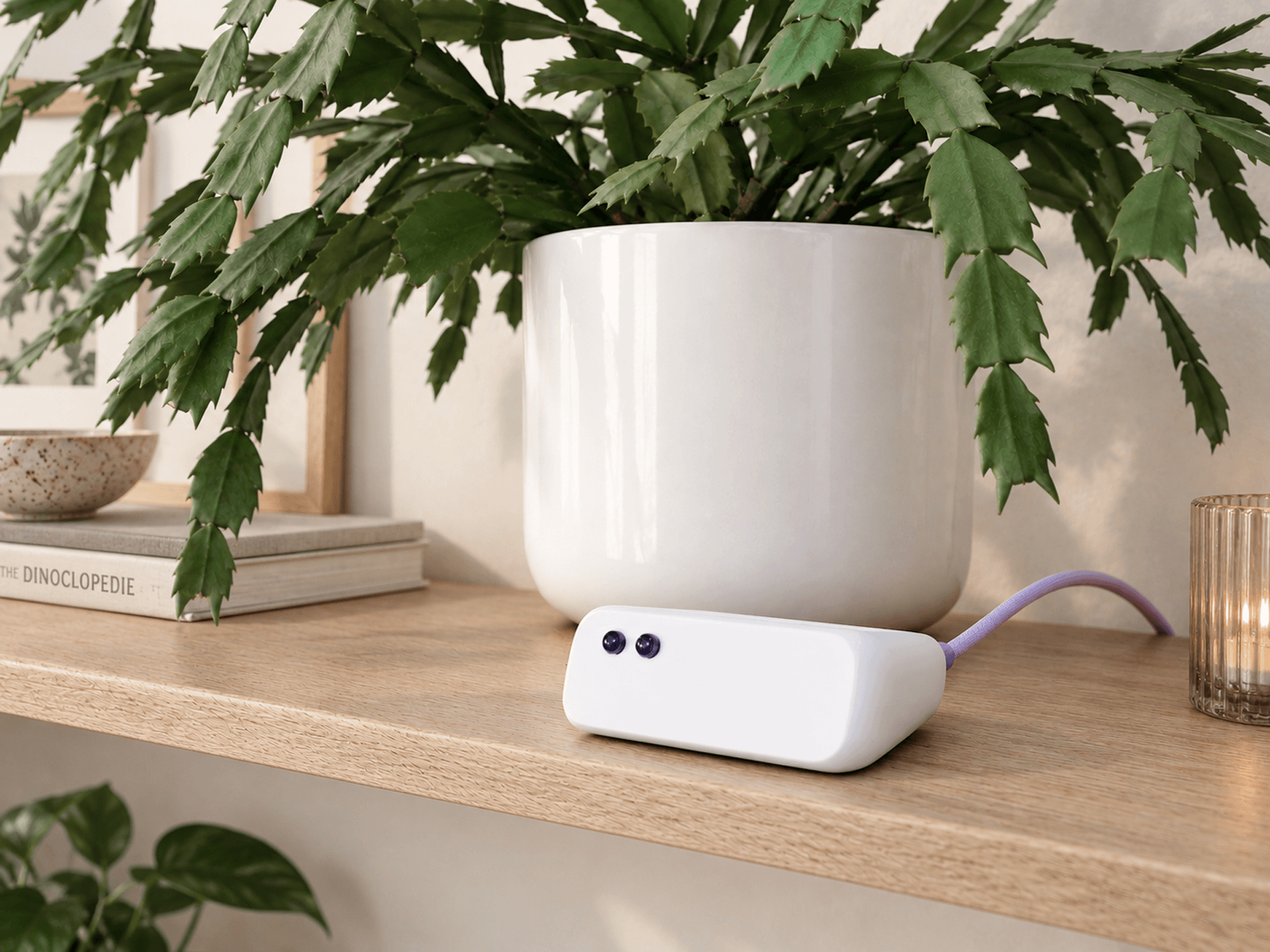
Ona's controller - © Ona

Mauro swapped Sardinia for Eindhoven and has been an IO+ editor for 3 years. As a GREEN+ expert, he covers the energy transition with data-driven stories.
You might not know it, but your house can already act as a battery. The walls, ceilings, and floors can store heat and release it when needed. Startup Ona bets this concept can help more Dutch households use energy smarter — and save money — with as little as a €165 investment.
The company, founded by Alexander van der Linden, Bart Kramer and Stefhan van der Kemp, launched a system that turns your house into a concrete battery. Their system lets air conditioning systems run when electricity prices are lower, store heat in your house walls, and release it in the evening, when electricity costs are higher.
“We saw that the simulated house could retain a lot of its heat on its own,” says Van der Kemp. “You don’t necessarily need a water tank or an electrical battery.”
The timing is no accident. On January 1, 2027, the Dutch net metering scheme for solar panels ends, and solar power produced at midday will be worth far less to the households producing it. Gas, meanwhile, has become expensive: according to Van der Kemp, a cubic metre cost around €1.20 when the team started, and is now closer to €1.70–1.80. Even at average electricity prices, he says, heating with an airco is one and a half to two times cheaper than a gas boiler.
Displacing gas
The system comes in two pieces. One is the Energy Hub, the system’s brain, which plugs directly into the meter cupboard. From there, it knows how much energy is being used and produced. Over the Internet, it checks for electricity prices, as well as weather and solar irradiance forecasts.
The Hub controls the Airco Controller, a smart remote for the air-conditioning split unit. “It’s actually a hack to make those devices smart,” says Van der Linden. The kit is plug-and-play, and pairs with a mobile app to customize settings and usage.
Ona estimates it saves an average terraced €275 per year, as compared to the same household without smart control. Half of this comes from consistent automatic control, the other half from heating and cooling during the cheapest hours. If the air conditioner also replaces heating by the gas boiler, savings can double to around €540 per year, says the company.
A savings simulator on their website lets you calculate potential savings by entering parameters such as the house's energy label, energy contract, and whether solar panels are installed. Ona says the simulation model covers 108 house setups, and in none of them did first-year savings fall below the price of the kit.
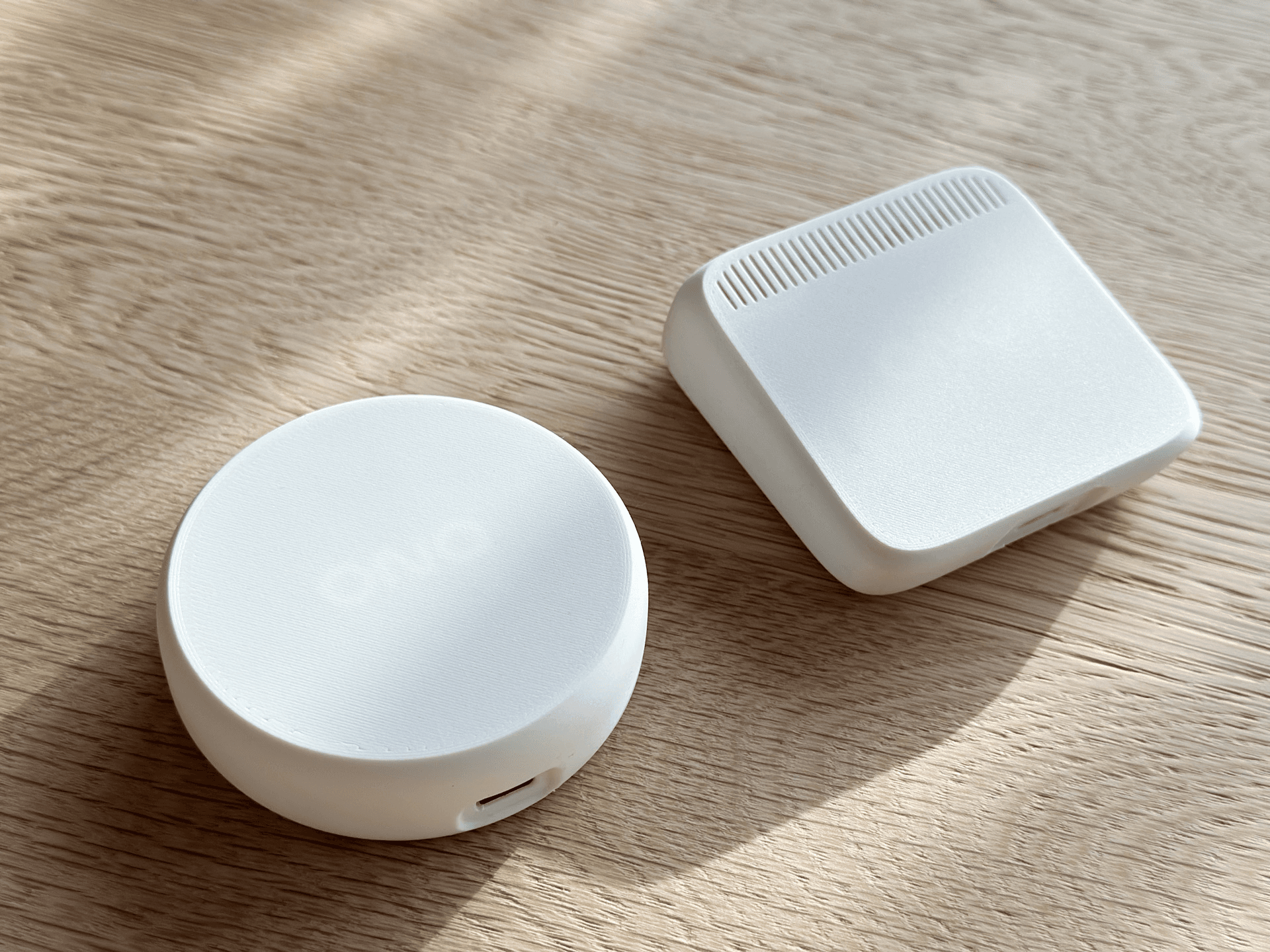
Ona's Energy Hub and the Controller - © Ona
Staying comfortable while saving money
Comfort is not negotiable, the founders underscore. Users can set their preferred temperature range in the app, and the system operates within it. "We want you to be comfortable, and while you're comfortable, we want to save you money," says Van der Linden. The Energy Hub also learns how quickly each house loses heat and adjusts how far ahead it starts heating.
The system has been tested for more than a year in several houses, including a large freestanding house from the late 1990s and a corner terraced house. One couple depended on it all last winter after their gas boiler broke down. "They were completely relying on us controlling it correctly," Van der Kemp says. "And it worked."
The founders clarify that heat losses depend heavily on a house’s insulation. In its simulation. “But the price difference between the afternoon and the evening can easily be tenfold, especially in summer, when midday power is worth very little,” says Van der Kemp.
Smarter aircos
According to research institute TNO, 19% of Dutch households, roughly 1.6 million, use their air conditioning system for heating. Van der Linden notes that only a small share of households using their airco to heat their homes employ smart control, reaching for the remote only on cold evenings, when prices peak.
Ona caters to households that can’t afford another thousand-euro investment in a home battery, nor think about smart home automation, but still want better control over their energy consumption. Although the interest is high, a recent survey commissioned by home battery manufacturer Zendure showed that half of respondents still find solar panels and home batteries too expensive.
Longing for a mission
The startup was founded in 2025 when the three founders, who had met at Lightyear, decided to pursue the idea. They missed the mission-driven culture they had shared, and before long they were sketching ideas around a kitchen table.
The concept emerged almost by accident. The team was running physical simulations of other ideas, such as storing heat in a water tank, when they noticed how much warmth an ordinary house keeps in its concrete. A water tank system would have cost thousands of euros.

Ona's founders: Alexander van der Linden, Bart Kramer en Stefhan van der Kemp - © Ona
A new relationship with energy
The set is only the start. Ona founders have a grander vision of helping households make smarter energy use while customizing their experience. The team is already working on an energy thermostat that could become a central control point for the whole home’s energy use.
Van der Kemp also sees the thermostat becoming a central control point for the whole home's energy use. "What if you could walk up to it and say: 'I want to charge my car right away, because friends called and we're going to the Ardennes tomorrow'?" he says.
For now, the founders say their focus is on steady growth. "The goal is a low-threshold solution for a lot of people," says Van der Linden. For Van der Kemp, the pitch comes down to using what households already own: "It's a clever way to make better use of what you already have, rather than making another big investment right away."