
NVIDIA's RTX Spark and the race for the ultimate AI chip
The new RTX Spark brings local AI to your PC. But behind the scenes, Nvidia and the Dutch company Euclyd are battling it out for the future.
Published on June 4, 2026

Team IO+ selects and features the most important news stories on innovation and technology, carefully curated by our editors.
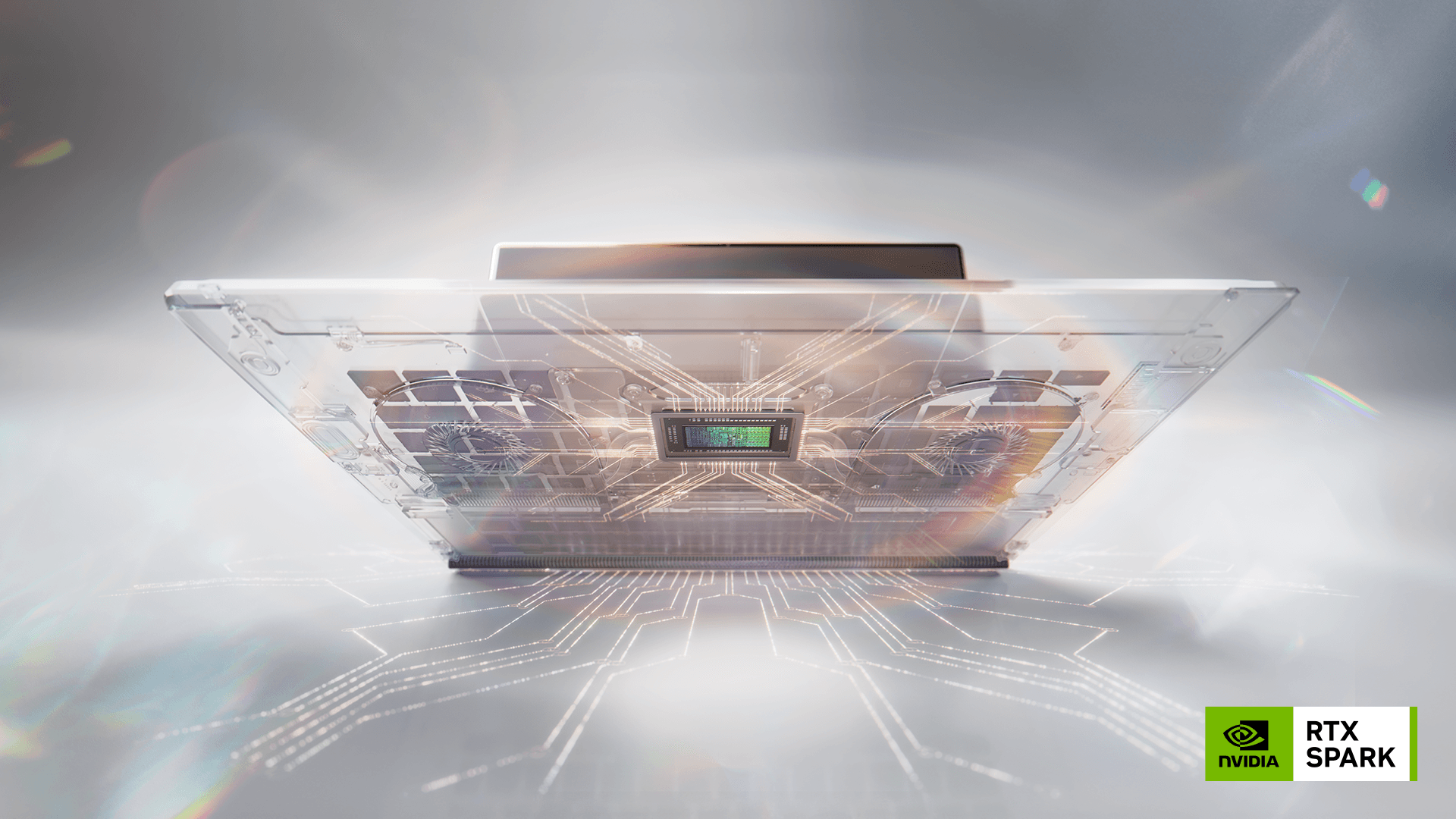
With the launch of the RTX Spark, Nvidia has introduced the first generation of AI PCs specifically designed to run advanced AI locally. This allows users to run large language models, AI agents, and creative AI applications efficiently and directly on their own laptop or desktop. Meanwhile, Nvidia is already looking ahead. Future generations of RTX are expected to be powered by the much more powerful Vera Rubin architecture, which is currently in development. But in the race for tomorrow’s chip, the American tech giant is facing unexpected competition from the Netherlands. The startup Euclyd is working on an alternative chip architecture that could be up to a hundred times more energy-efficient.
The RTX Spark brings AI to your desktop
The RTX Spark is now officially on sale. This system runs complex AI models entirely locally on the computer. As a result, users are no longer dependent on slow cloud connections. All data remains securely on the user’s own device. This ensures maximum privacy and unprecedented speed. The market is responding enthusiastically to this new standard.
.png&w=2048&q=75)
The promise of Vera Rubin
Meanwhile, Nvidia is working hard on the successor to its current chip technology. This new architecture is called Vera Rubin. The technology is set to form the foundation for future Spark systems. The specifications of this chip are impressive. The architecture combines powerful Vera processors with Rubin graphics cards. Nvidia manufactures the chips on an extremely small 3-nanometer platform. The chip features no less than 288 gigabytes of ultra-fast HBM4 memory. This allows the system to process enormous amounts of data simultaneously.
With this modular design, Nvidia is targeting massive AI factories. Mass production of these chips is set to begin in late 2026. This means consumers will soon reap the benefits of this leap in computing power.
The Dutch challenger Euclyd
However, Nvidia’s American dominance is not uncontested. In the Netherlands, the startup Euclyd is working on an extremely ambitious alternative. The company was founded by Bernardo Kastrup. They are developing the so-called Craftwerk architecture. Euclyd claims that its technology is up to a hundred times more energy-efficient than Nvidia’s Vera Rubin chips. This is a bold claim in a market that is desperate for energy-efficient solutions. Euclyd’s system utilizes no fewer than 16,384 processors that work closely together. Together, these chips are expected to deliver a computing power of 32 petaflops.
The company is currently in talks to raise 100 million euros in growth capital. The first commercial production is scheduled for the year 2028. If these claims hold true, this could completely turn the chip industry upside down.