
One overlooked inventor can cause an entire patent to disappear
In a series of blog posts, Marco Coolen offers a glimpse into his work as a Dutch and European patent attorney at AOMB.
Published on September 6, 2026

Marco, a patent attorney at AOMB since 2013, shares his expertise on IO+ about patents—how they work, why they matter, and when they lose their value.
Most entrepreneurs associate patents with technology. Does the invention work? Is it new? Is it inventive enough? These are logical questions. But sometimes a patent is invalidated not at all because of its content. Sometimes the problem lies in something much simpler.
A name.
This was recently demonstrated in a U.S. court case: Fortress Iron v. Digger Specialties. In that case, the debate did not revolve around whether the invention was new. Nor was it about whether the patent was properly drafted. The problem lay elsewhere.
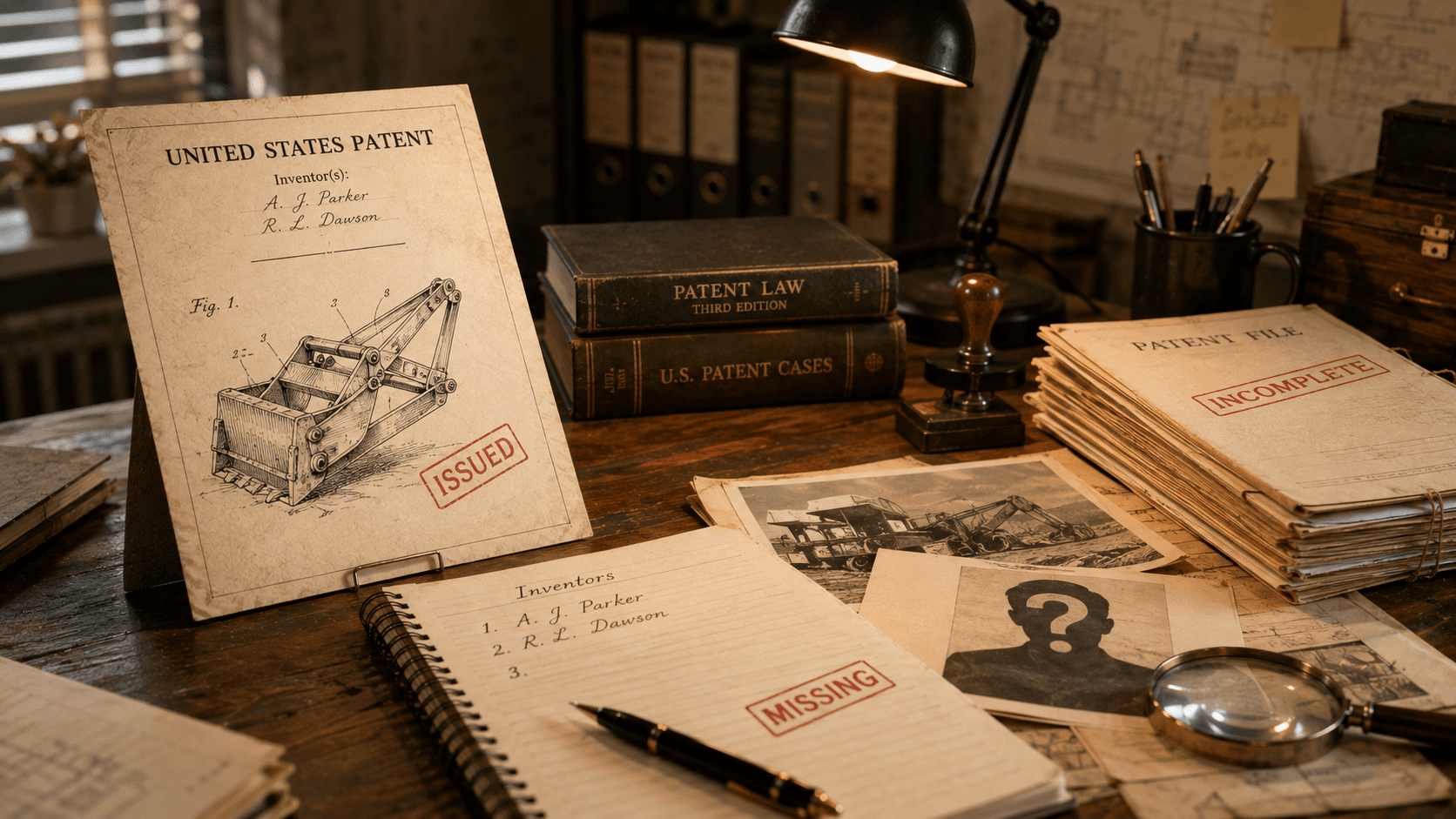
One co-inventor was missing from the patent.
That sounds like an administrative error that could be corrected later. But it turned out not to be that simple. Years later, the person in question could no longer be located. As a result, the error could no longer be corrected.
The consequence was far-reaching: the patent was declared invalid. Not because the technology was flawed. Not because the application was poorly drafted. But because not all inventors had been correctly listed. That may seem harsh, but from the perspective of the patent system, it makes sense. After all, a patent begins with the inventor. Anyone who has made a substantive contribution to the creation of an invention has the right to be named as an inventor.
No more. But also no less.

Marco Coolen, photo © Bart van Overbeeke
This is separate from ownership. An inventor does not have to be the owner of the patent. The rights may simply belong to an employer. Nor does an inventor need to have a financial interest. Recognition as an inventor is a legal fact that does not disappear simply because someone is employed or has waived their rights.
That is precisely why this story is also relevant to Dutch companies. Many Dutch entrepreneurs apply for patents in the United States in addition to seeking European protection. Different rules and consequences may apply there than what one is accustomed to. Especially when collaborating with external parties—such as suppliers, consultants, researchers, or temporary staff—it can become complicated to determine afterward exactly who made which contribution.
And that is precisely where the risk arises. Mistakes like these rarely stem from malicious intent. They usually happen amid the hustle and bustle of innovation. Ideas fly across the table during meetings. A supplier makes a clever suggestion. An engineer solves a technical problem. A consultant contributes a crucial insight.
Months later, a successful invention is born. But no one remembers exactly who provided which piece of the puzzle. At that moment, it may seem like a minor detail—until the patent becomes truly important. For example, when a competitor emerges; when an investor conducts due diligence; or when a lawsuit arises and the patent’s protection must actually be enforced.
Suddenly, the fundamentals of the patent come under scrutiny. And then, a single missing name can be enough to undermine years of work. The lesson, therefore, is surprisingly simple: During development, document not only what you invent, but also who contributed to it. Not because everyone has to become an owner of the patent, but because you’ll want to be able to demonstrate later how the invention came about.
Because sometimes the greatest risk of a patent isn’t in the technology itself, but in a missing name.
The World of Patents
With the help of Dutch and European patent attorney Marco Coolen (AOMB), we can better understand the world of patents. How do they work, why are they important, and when do they lose their usefulness?