
Podcast: Netherlands a powerhouse in tech but needs to scale up
In this three-part podcast series, we speak with leading experts about the state of the high-tech sector in Europe.
Published on July 15, 2026
.png&w=2048&q=75)
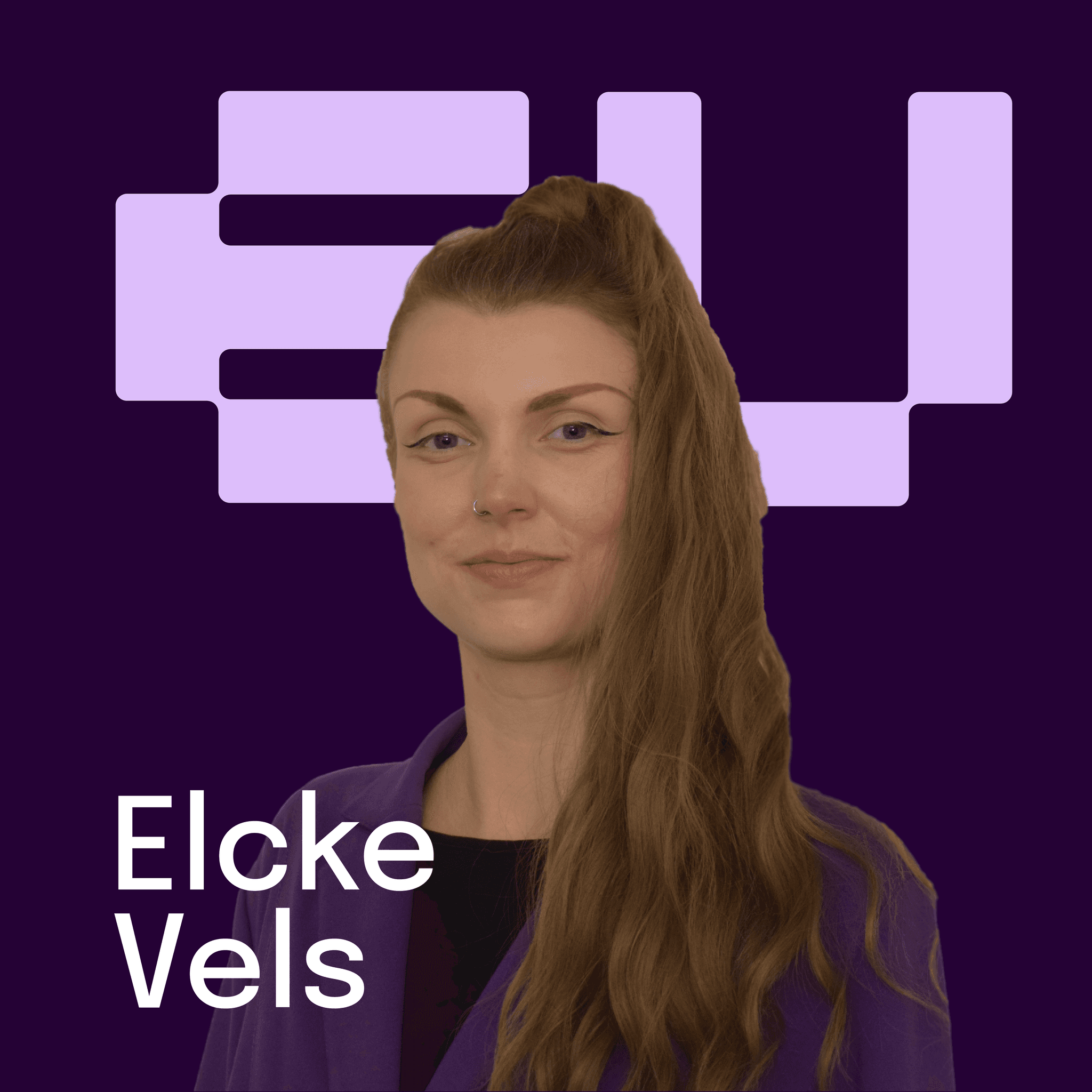
Our DATA+ expert and Editor-in-Chief, Elcke Vels, explores AI, cyber security, and Dutch innovation. Her "What if..." column imagines bold scenarios beyond the norm.
The Netherlands is among the global leaders in key technologies such as semiconductors, quantum technology, photonics, and biotech. But to maintain that position, close collaboration with other European countries is essential. According to Tjerk Opmeer, Director of Innovation and Knowledge at the Ministry of Economic Affairs and Climate Policy, there are still plenty of opportunities to further strengthen the European high-tech value chain. During the Holland High Tech Networking Event, podcast host Elcke Vels spoke with Opmeer about the opportunities and challenges in the Netherlands and Europe.
External Content
This content is from youtube. To protect your privacy, it'ts not loaded until you accept.
Or listen to the episode on Spotify.
In your opinion, what is the Netherlands really good at?
“I think we excel in various areas. If you look at the National Technology Strategy, we’ve identified ten key technologies in which the Netherlands has a great deal of knowledge and expertise. For example, we’re strong in the semiconductor industry, with companies like ASML. But in the fields of quantum technology and photonics as well, you see new players attracting global attention. At the same time, there are promising developments in biotechnology. These are areas where we’re making a difference, and where we need to invest even more in the coming years to remain competitive on the global stage.”
What exactly could be improved in the Netherlands?
“I see a lot of optimism among entrepreneurs and other stakeholders in the Netherlands. That’s something we really need to hold onto. At the same time, as a government, we must work with our partners to determine how we can improve the enabling conditions. Think, for example, of talent, but also of an electricity grid that must be available in the right place at the right time. We must also continue to attract international talent. We’ve missed opportunities in this area recently. We need to figure out how we can do that better.”
How important is collaboration between the government, businesses, and research institutions in this regard?
“Many countries are watching with interest the strong ‘triple helix’ collaboration that characterizes the Netherlands. That is one of our great strengths. As a government, we strive to foster collaboration between the government, the business community, and research institutions. We also need to involve the funding side much earlier in the process. That is, after all, a key prerequisite for getting innovations off the ground. Whether the funding comes from the government, private parties, or a combination of both, the most important thing is that it’s available on time.”
How do you view collaboration with other countries within Europe?
“We already collaborate extensively with partners in border regions. Take, for example, the collaboration between ASML and imec in Leuven. You see collaborations emerging most frequently between partners in Western European countries.
There are opportunities to collaborate more intensively, for example with ICT specialists in Romania. Or consider countries like the Czech Republic and Poland. We can find partners there as well. The question is: how can we, as Europe, ensure that we can handle a larger portion of the value chain ourselves? Instead of turning to Asia or other regions, we need to take a closer look at what we can do together in Europe.”
Europe is known for good innovations, but less so for successful scale-ups. Do you recognize that?
“Yes. That applies to both the Netherlands and Europe. In the Netherlands, we have a lot of knowledge, but it’s sometimes difficult to actually commercialize the knowledge developed at research institutions. You see that in other countries as well. Europe is also still very fragmented. If you look at medical technology or biotechnology, you have to apply for a license or pass a specific test in each country separately to enter the market. That’s a big difference from the U.S., where a drug is approved by the FDA and you then have access to the entire U.S. market. That fragmentation of the European market is a problem. We need to work hard to build a stronger single market. The same applies to the Capital Markets Union. It’s still difficult for investors to have confidence that a company in Europe can scale up and grow effectively.”
Are you optimistic about the future of high-tech in the Netherlands?
“Absolutely. Otherwise, I wouldn’t be sitting here. We need to move away from the idea that everything is just difficult. At events like Holland High Tech, you see how much talent there is in the Netherlands and how many innovative companies there are. We should be prouder of that.
We’re also taking important steps with the National Technology Strategy. I’m confident that the Netherlands can play a major role within Europe in fields such as biotechnology, quantum technology, and photonics. Even neuromorphic computing is cautiously emerging here. As a small country, we really do have some strong assets. And I’m quite positive about that.”
Why is Holland High Tech important for the Dutch ecosystem?
“What we’ve seen recently, while working on the top sectors, is that Holland High Tech has truly played a key role in bringing all parties together, acting as a system integrator. Building that ecosystem is incredibly important, and so is maintaining it.
In addition, it’s important to expand that ecosystem to include international partners, both within Europe and beyond. Holland High Tech could also play a key role in this going forward—as a system integrator that can connect all those networks and organize internationalization.”
Do you have a message for the reader?
“I think we should be hopeful about the future that lies ahead. We often talk about what isn’t possible, but the enthusiasm for what is possible—taking steps forward and working together to figure out how we can make things happen—is very important. I see that reflected in this new cabinet as well. So let’s above all remain hopeful.”
Sponsored
This story is the result of a collaboration between Holland High Tech and our editorial team. IO+ is an independent journalism platform that carefully chooses its partners and only cooperates with companies and institutions that share our mission: spreading the story of innovation. This way we can offer our readers valuable stories that are created according to journalistic guidelines.
Want to know more about how IO+ works with other companies? Click here