
Supercomputing Brabant is live: a boost to the local AI ecosystem
The Supercomputing Brabant is a project to deliver AI capabilities to local entrepreneurs. The computing infrastructure is now live.
Published on September 24, 2026

Team IO+ selects and features the most important news stories on innovation and technology, carefully curated by our editors.
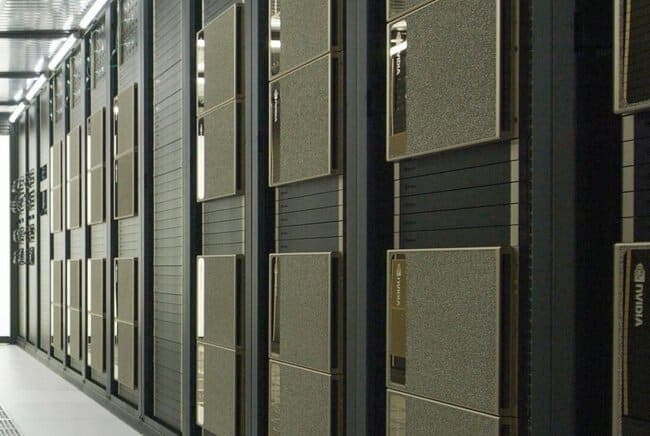
The Supercomputing Brabant infrastructure is live. The official launch took place yesterday at the Jheronimus Academy of Data Science (JADS) in 's-Hertogenbosch, marking a strategic leap for the Netherlands’ AI infrastructure. The initiative is backed by a €4 million investment and deploys NVIDIA supercomputers to empower local businesses, researchers, and public institutions with sovereign AI capabilities.
This setup enables SMEs and startups to develop AI models without relying on foreign providers, ensuring data sovereignty and control. The €4 million investment covers staffing and computing capacity for two years, with a focus on scaling AI applications in sectors like healthcare, manufacturing, and traffic optimization.
The project is backed by the province of North Brabant, Eindhoven University of Technology (TU/e), Tilburg University, and the Brabant Development Agency (BOM).
Patrick Groothuis, Vice-President of TU/e's Executive Board, said: "This initiative brings together top computing power and competencies to enable the broad Brabant ecosystem to make an impact with AI. In this way, we want to contribute to a stronger position for the Netherlands and Europe, and less dependence on China and the US in terms of AI. We are proud that we can make an important contribution to this with our knowledge and experience."
Collaborative ecosystem for AI Adoption
Supercomputing Brabant is built on a public-private-academic partnership, pooling resources from the province, universities, and BOM to create a self-sustaining AI ecosystem. A team of six experts will work directly with participants to optimize code, manage data, and navigate AI ethics and regulations.
The initiative also includes training programs, a public knowledge base, and innovation roundtables to foster collaboration between entrepreneurs, governments, and researchers. Early results are promising: organizers report a 60% reduction in AI model training time, demonstrating the infrastructure’s immediate impact.
Early wins and digital sovereignty
Supercomputing Brabant targets high-impact sectors where AI can drive immediate value. In healthcare, the initiative builds on TU/e’s prior work with NVIDIA hardware, which has already advanced cancer research. In manufacturing, AI models will optimize production lines, while in agriculture, real-time crop analysis and weed prediction are key focus areas.
The initiative prioritizes digital sovereignty, allowing participants to retain full control over their data and AI models. This contrasts with reliance on U.S. or Chinese AI providers, which often impose restrictions on data usage and model ownership.
By localizing AI infrastructure, Supercomputing Brabant strengthens the region’s economic competitiveness, enabling businesses to develop proprietary solutions for production, healthcare, and logistics. The province’s investment aligns with broader European goals to reduce dependency on external AI technologies while accelerating innovation in key industries.