
The brain molecule we lose with age — now made in a lab
A research project is assessing the relevance of a key human milk component in newborn's brain development.
Published on March 26, 2026
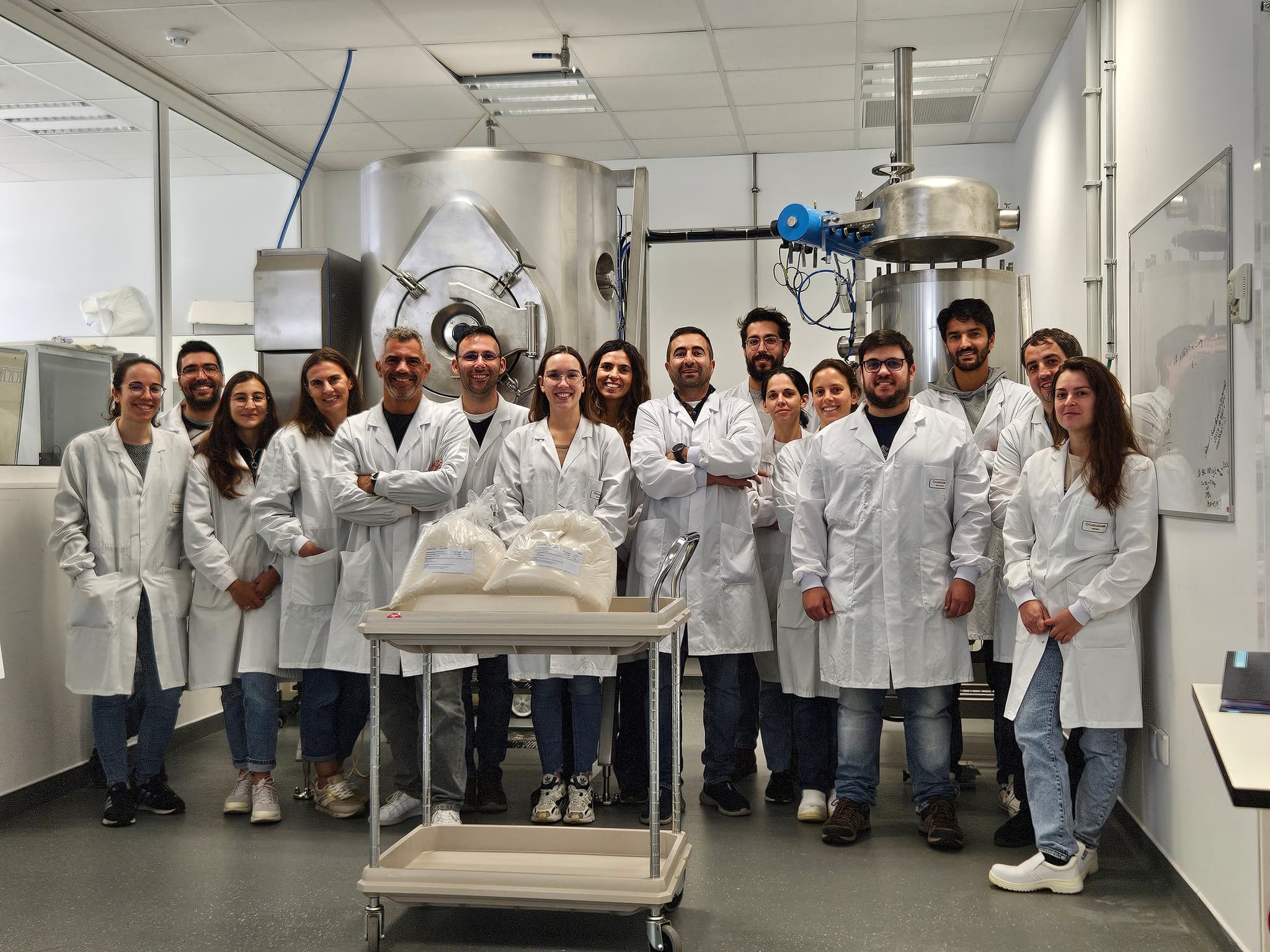
CarboCode's team - © CarboCode

Mauro swapped Sardinia for Eindhoven and has been an IO+ editor for 3 years. As a GREEN+ expert, he covers the energy transition with data-driven stories.
The mother’s milk is essential for newborns’ development: it contains nutrients, compounds, and immune factors essential for growth. Among all of these elements is the ganglioside GM3. As important as this compound is for infants, it is for adults’ brain health, too. CarboCode has found a way to make them in the lab. “Through our technology, we are now able to deliver these components. It is now time to test and validate their effectiveness,” says Jorge Santos, CEO of the Portuguese company.
Gangliosides are a class of lipids, organic compounds containing fats. They are instrumental for newborns' gut health, immune response, and brain development. Research on their influence on brain development has been limited so far. Extracting them from the body is challenging, as well as creating them artificially—until now.
A collaboration project between the Dutch University of Twente (UT), NIZO Food Research, and CarboCode is studying the influence of GM3 in brain development. In their international research with UT and NIZO, they will, for the first time, use an in vitro approach to map the ingestion and absorption of GM3 and track its effects on brain development.
Pioneering ganglioside production
GM3 is the most abundant ganglioside in human milk. Yet, they are present in small quantities in the human body. Synthesizing them has been challenging, as well as sourcing them. When needed for clinical studies, they are usually extracted from bovine brains.
Since its founding in 2017, CarboCode has spent years developing an efficient process to produce these components. Using technologies like precision fermentation—in short, engineered bacteria development—and biocatalysis—the use of natural components to drive chemical reactions—they produced the first small batches of GM3 at their pilot plant.
“Starting from simple feedstocks, such as glucose—one of the simplest sugars, ed.---we can manufacture fully functioning ingredients. It now takes two weeks to complete a batch’s production,” explains Santos.
Producing these compounds at scale was the main hurdle. Until recently, labs around the world could only produce gangliosides in quantities of around 500 grams–barely enough for research purposes. CarboCode’s platform has broken that ceiling, aiming at a production capacity of 100 tonnes per year by 2029.
Insightful tests
At NIZO facilities in Ede, the component can be tested under various human body processes. The entire digestion process can be simulated, as can the interaction with the blood-brain barrier. This barrier is a highly selective membrane that acts as a filter, letting beneficial substances in and protecting against harmful compounds, such as pathogenic bacteria.
“The beauty of it is that we can truly simulate what happens when ingesting GM3,” underlines CarboCode’s CEO. The project, partially funded by the non-profit Biostime Institute, will run for a year.
Another crucial check will be the interaction of GM3 with brain organoids. This test will be particularly relevant, as these organoids are three-dimensional cellular structures that replicate features of brain tissue. “One can really see how a molecule would impact the actual cell,” he adds.

Jorge Santos
CEO at CarboCode
He leads CarboCode after contributing to the exit of Glycom A/S, a company that developed human milk ingredients.
Good ganglioside levels are a signal of a healthy brain
Gangliosides are important to the brain’s adult health, too. Research has noted that there is a great imbalance in the ganglioside levels of the elderly, and especially in individuals suffering from neurodegenerative diseases, including Parkinson’s and Alzheimer’s—a 22 and 45% decline, respectively. In short, having sufficient quantities of gangliosides is key to a healthy brain.
Professor Jay Schneider at Jefferson University in the US has been studying the role of gangliosides in Parkinson’s disease. In an experiment, patients who received the compounds showed slower symptom progression.
Due to supply constraints, research stalled. CarboCode supplied the researcher with its material, and the results in mouse models held up, suggesting that the compound is valid.
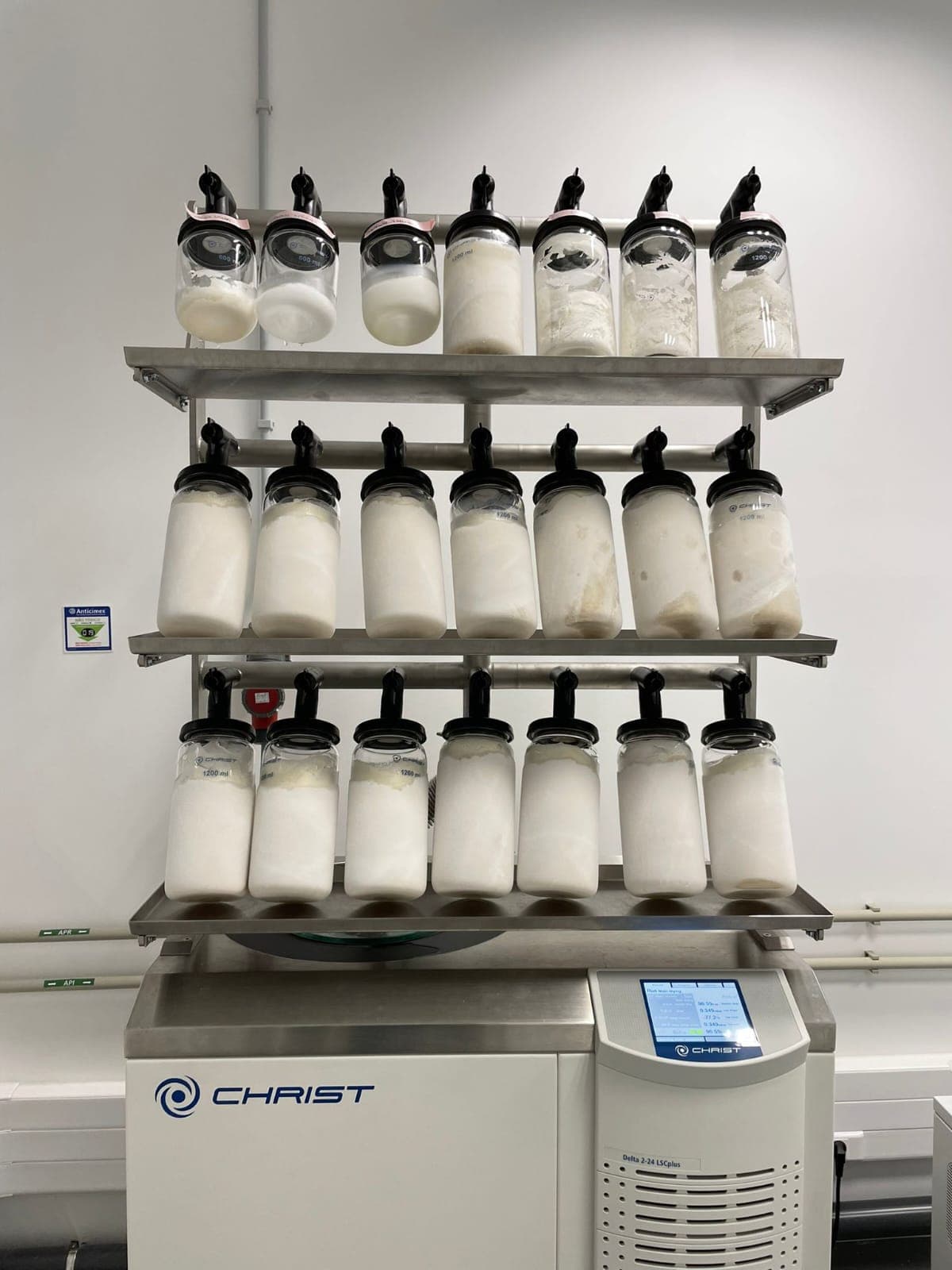
A batch of lab-made gangliosides - © CarboCode
Making it into the market
CarboCode’s team, which has 35 people across Portugal and Germany, has already brought a component to market. Some of the current members were previously part of Glycom A/S, a company that developed human milk oligosaccharides. The company was sold to the Dutch multinational Royal DSM, and the ingredient is now used in Nestlé's infant nutrition products.
Santos is determined to replicate the success with CarboCode again. “In terms of ingredient safety, I have no doubt. The main challenge before us is scaling production to industrial levels while maintaining the right quality. To this end, constructing our own production plant is one of our current priorities.”
The CEO emphasizes that having full control over production is essential—that can only happen with a fully in-house setup. Food ingredients, and even more so those specifically for newborn nutrition, must comply with high-quality and safety standards. Having a full grip on the production process certainly helps.
A solution for the brain’s health—for all ages
Toxicology studies on rats yielded positive results. The outcome of the stability studies — essential to understanding an ingredient’s quality and safety—is set to be published soon. Upon approval, CarboCode will file for the acceptance of its GM3 in the United States, Europe, and Australia. Santos hopes to enter the American market by this year. Europe will have to wait until 2028.
The company plans to enter the infant nutrition space first. Future plans also include targeting the neurodegenerative disease space, possibly formulating nutrition supplements for those suffering from Alzheimer’s and Parkinson’s.
"If we can prove that ingesting GM3 increases the amount of brain gangliosides, that opens a very good avenue for improving cognition — not just in babies, but in elderly people, in the context of Alzheimer's, Parkinson's, and normal cognitive decline," Santos says. He also notes emerging evidence of GM3's anti-inflammatory properties, which could make it relevant in conditions such as Crohn's disease.