
The European alternative for in-store payments
How Spain and Sweden preserve payment autonomy while the Netherlands remains dependent on Visa and Mastercard.
Published on October 8, 2026
.jpg&w=2048&q=75)
© Blake Wisz - Unplash

Merien co-founded E52 in 2015 and envisioned AI in journalism, leading to Laio. He writes bold columns on hydrogen and mobility—often with a sharp edge.
The Netherlands has not had its own payment system since 2012. Where PIN was once a national symbol of simple, secure payments, banks switched to Maestro and V PAY, both owned by American companies. Those networks are now being phased out as well.
Since July 1, 2023, no new Maestro or V PAY cards have been issued, and the last remnants will disappear by 2030. At that point, the Netherlands will have surrendered completely to Visa and Mastercard. But is there another way? Yes: Spain and Sweden show that things can be done differently. With Swish and Bizum, these countries prove that sovereign payments are not only possible, but also more modern and cheaper.
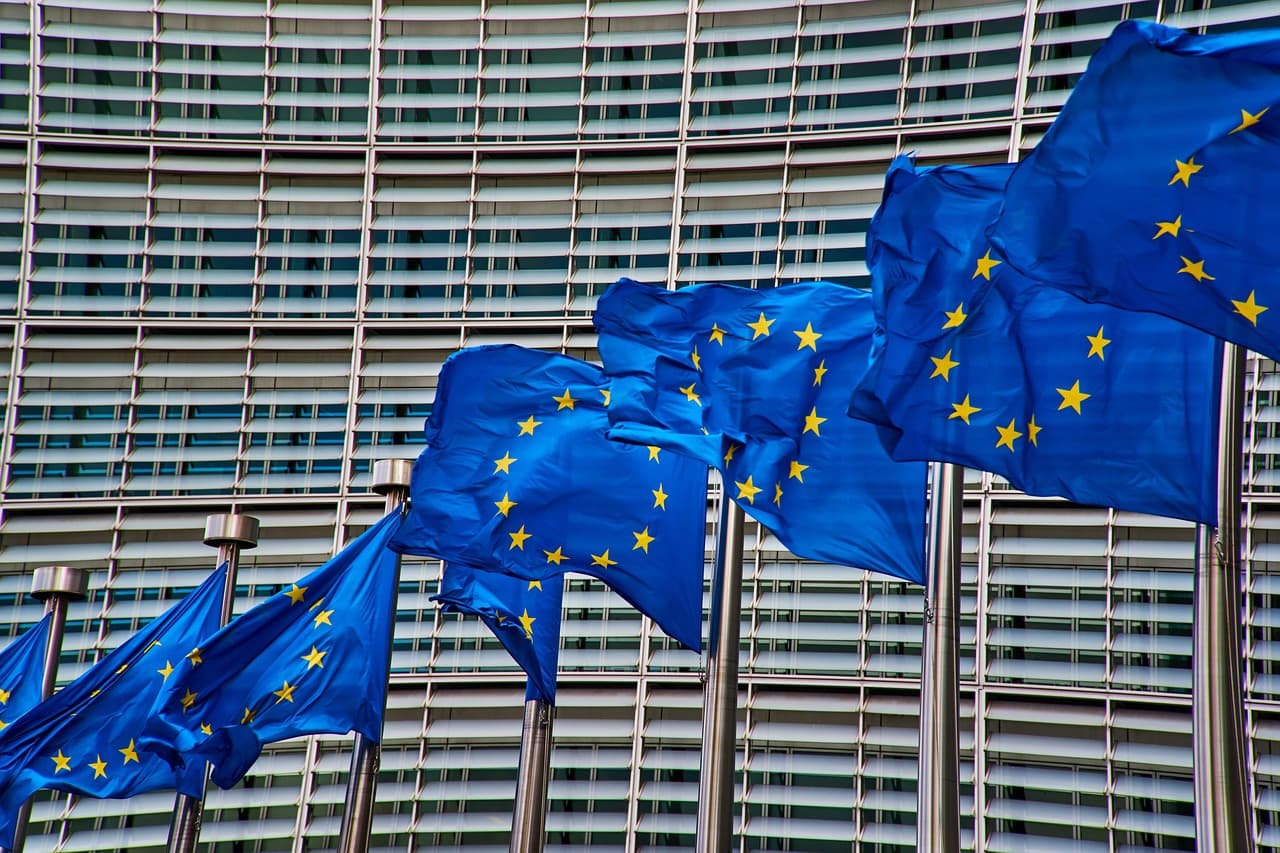
The European Alternative
The European Alternative is a series about European tech solutions that prioritize privacy, digital sovereignty, and sustainability. Instead of relying on major American platforms, we highlight the alternatives Europe itself has to offer—transparent, secure, and aligned with European values.
The Netherlands: 100% dependent on American systems
The Netherlands is one of the few countries in Western Europe without its own payment system. Yet it was once a frontrunner. In 1990, the banking sector introduced PIN as a uniform system for magnetic stripe cards, but in 2012 it was discontinued in favor of international alternatives. The reason? The switch to EMV chip cards, which were better protected against fraud such as skimming.
Since then, the Dutch have used only Maestro (Mastercard) and V PAY (Visa), and now Debit Mastercard and Visa Debit. These new cards offer worldwide acceptance, but everything runs through the US. If you pay with a Rabobank card in a store that itself banks with Rabobank, that transaction still goes through the US.
Europe does it differently: domestic systems as the standard
While the Netherlands depends on Visa and Mastercard, most European countries have kept their own payment systems. France has Cartes Bancaires (CB), with 70 million cards accounting for 85% of all domestic transactions. Germany uses Girocard, with more than 100 million cards and broad acceptance at ATMs and stores. Italy, Denmark, Portugal and Norway have PagoBancomat, Dankort, Multibanco and BankAxept, respectively.
These countries continued developing their own PIN systems. These systems are united in the European Card Payment Association (ECPA), which works on common standards and interoperability. The European Court of Auditors confirms that these national systems handle a large share of domestic transactions in their countries, while Visa and Mastercard together dominate nearly 90% of cross-border payments.
The breakthrough at the checkout: from QR to Tap & Pay
Our dependence on American companies stems partly from past technological barriers, but these are now disappearing rapidly. Alternative payment methods in physical stores used to be at a disadvantage: they had to work around the card terminal. The usual solution was a QR code, which couldn’t compete with a debit card for ease of use. That is now a thing of the past.
Thanks to firm intervention by the European Union (through the Digital Markets Act), Apple has been forced to open up the coveted NFC chip in the iPhone to third parties. This means a true revolution on the shop floor: consumers can now simply use“tap & pay”with local, European payment apps too, with exactly the same frictionless experience as Apple Pay.
Spain: Bizum as a pioneer in real-time payments
Spain shows how a country without its own card network can still develop a sovereign payment system. Bizum, launched by Spanish banks, uses SEPA Instant for direct account-to-account payments. With 31.5 million active users and 5.5 billion transactions per year, it is one of the most successful mobile payment apps in Europe. Users can send money using a phone number, pay in online and physical stores, and even donate to charities.
Bizum is a driving force behind the EuroPA alliance, a partnership with other European payment platforms to create an interoperable European payment system. Since March 2025, users of Bizum, Bancomat (Italy) and MB WAY (Portugal) have been able to make cross-border payments in Spain, Portugal, Italy and Andorra.
Sweden: Swish as the everyday standard
In Sweden, Swish is the undisputed leader in mobile payments. Developed by Swedish banks, it is used by 80% of the population for everyday transactions, from P2P payments to purchases in stores and online. Swish uses mobile phone numbers for fast, secure payments, with transactions processed within seconds.
The system is deeply integrated into the Swedish payment ecosystem and is a member of the European Mobile Payment Systems Association (EMPSA), which works toward greater European interoperability. Swish is an example of how a country can create its own innovative payment system that others around the world follow.
European cooperation: ENP and EuroPA as a blueprint
Europe is actively working on a shared payment infrastructure to reduce its dependence on Visa and Mastercard. The European Network for Payments (ENP), founded in September 2026, connects national systems such as Bizum, Bancomat and Vipps MobilePay through a central interoperability hub in Madrid.
ENP reaches 130 million users in 13 countries, covering 70% of the EU population, and is focusing first on cross-border person-to-person payments, followed by e-commerce and physical stores. The EuroPA alliance, signed in February 2026, connects five major European payment platforms and aims to achieve seamless cross-border payments by 2027 at the latest. These initiatives show that Europe is serious about payment autonomy.
Opportunities for the Netherlands: time for a system of its own
The Netherlands has a unique opportunity to join the European movement toward payment autonomy. The opening of the NFC chip on iPhones, together with the mandatory SEPA Instant standard for direct account-to-account payments within 10 seconds since January 2025, makes it technically feasible to develop a domestic payment system. Open Banking under the PSD2 legislation also creates room for innovative solutions. For businesses, this means lower transaction costs, immediately available funds and less dependence on foreign parties. Consumers benefit from more freedom of choice, lower costs and better privacy protection, since European payment systems are subject to strict EU privacy legislation.
While the replacement of iDEAL by the clunky Wero is meeting a lot of resistance, Payment Service Providers are fortunately already filling the gap online with“pay by bank.”Now we’re waiting for a sovereign, successful solution at the checkout.