
The Moon mission: Why the Orion capsule is so groundbreaking
After more than fifty years, humanity is returning to the moon with the groundbreaking Orion capsule.
Published on March 30, 2026
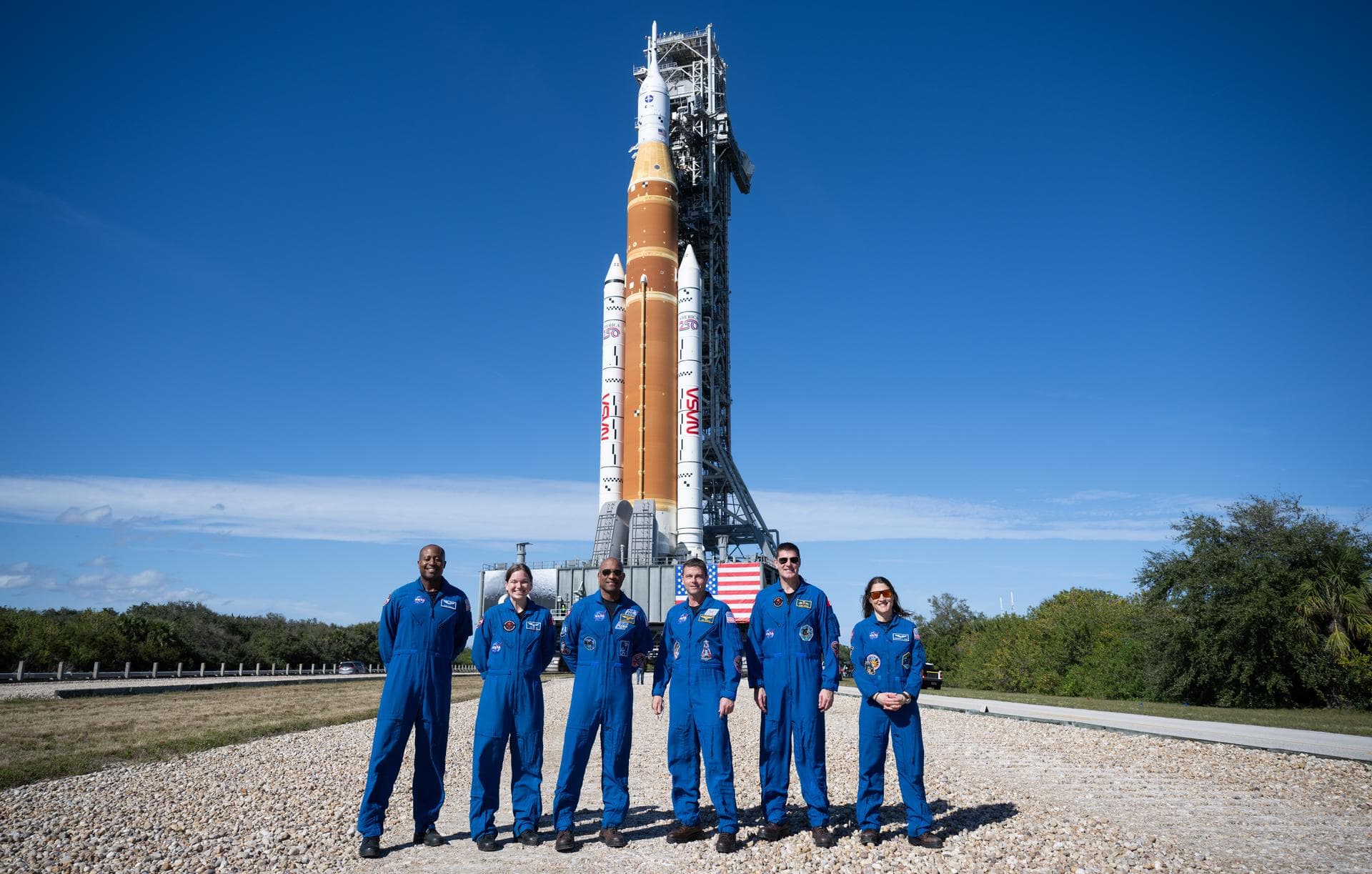
Image Credit: NASA/Joel Kowsky

Team IO+ selects and features the most important news stories on innovation and technology, carefully curated by our editors.
After more than fifty years, humanity is returning to the moon. The Artemis 2 mission marks a turning point in space exploration. On April 1, 2026, four astronauts will board the Orion capsule for a journey that will test the limits of our technology. Orion is revolutionary; designed for the unforgiving extremes of deep space. In this article, we’ll take a closer look at why the brand-new capsule is so groundbreaking.
Ten-day journey
For the first time in over fifty years, humans are traveling to the moon again. Four astronauts will board the Orion capsule for a ten-day journey. The crew consists of three Americans and one Canadian. Preparations are in full swing. The astronauts are already in quarantine, and the rocket is ready on the launch pad.
Past the far side of the moon
The capsule will make a flyby past the far side of the moon. The Orion capsule is currently the only spacecraft built for this type of crewed deep-space travel. During the earlier Artemis 1 mission in 2022, the capsule flew unmanned. That test flight served to validate the systems. The launch will be carried out using the colossal Space Launch System (SLS). This rocket is nearly 100 meters tall and weighs about five million kilograms.
Resistant to extreme conditions
Traveling beyond Earth’s protective magnetic field is life-threatening. But Orion is equipped with advanced radiation shielding to protect the crew from solar flares and cosmic radiation. This protection is crucial for missions that extend beyond the International Space Station.
Another danger is re-entry into Earth’s atmosphere. The capsule plunges into the atmosphere at a speed of about 32,000 kilometers per hour. The friction generated during this process produces an enormous amount of heat. However, Orion’s heat shield can withstand temperatures of up to 2,700 degrees Celsius. This shield uses a special material that burns away in a controlled manner. In this way, the heat shield dissipates the heat from the cabin.
The manufacturing process has also been significantly modernized compared to the past. Engineers now use advanced 3D printing techniques to make parts more efficient and lighter. The capsule is also 30 percent more spacious than the old Apollo modules.
Life-saving system
In human spaceflight, failure is not an option. Orion’s safety protocols are therefore exceptionally strict. The most notable safety system is the Launch Abort System (LAS). This “tower” is mounted directly atop the crew module.
The system activates in the event of a catastrophic failure during launch. The LAS reacts in milliseconds. Three powerful solid-fuel engines rapidly pull the capsule away from a malfunctioning rocket. The escape engine accelerates the capsule from zero to over 650 kilometers per hour in two seconds. This ensures that the crew immediately exits the danger zone. A second engine then guides the capsule into the correct position for landing. Once the capsule is safe, a third engine jettisons the LAS.
ESA is indispensable
The Orion capsule is not a purely American project. Europe plays an indispensable role in this technological leap. The European Space Agency (ESA) is supplying the so-called European Service Module (ESM). The ESM is located directly below the crew module. It provides electricity, propulsion, and thermal control. More importantly, the module supplies the astronauts with oxygen and water.