
The Netherlands ranks 11th, but climate goals remain out of reach
The Netherlands ranks 11th in sustainability progress, but grid congestion and fossil fuel dependence slow the transition.
Published on November 12, 2026
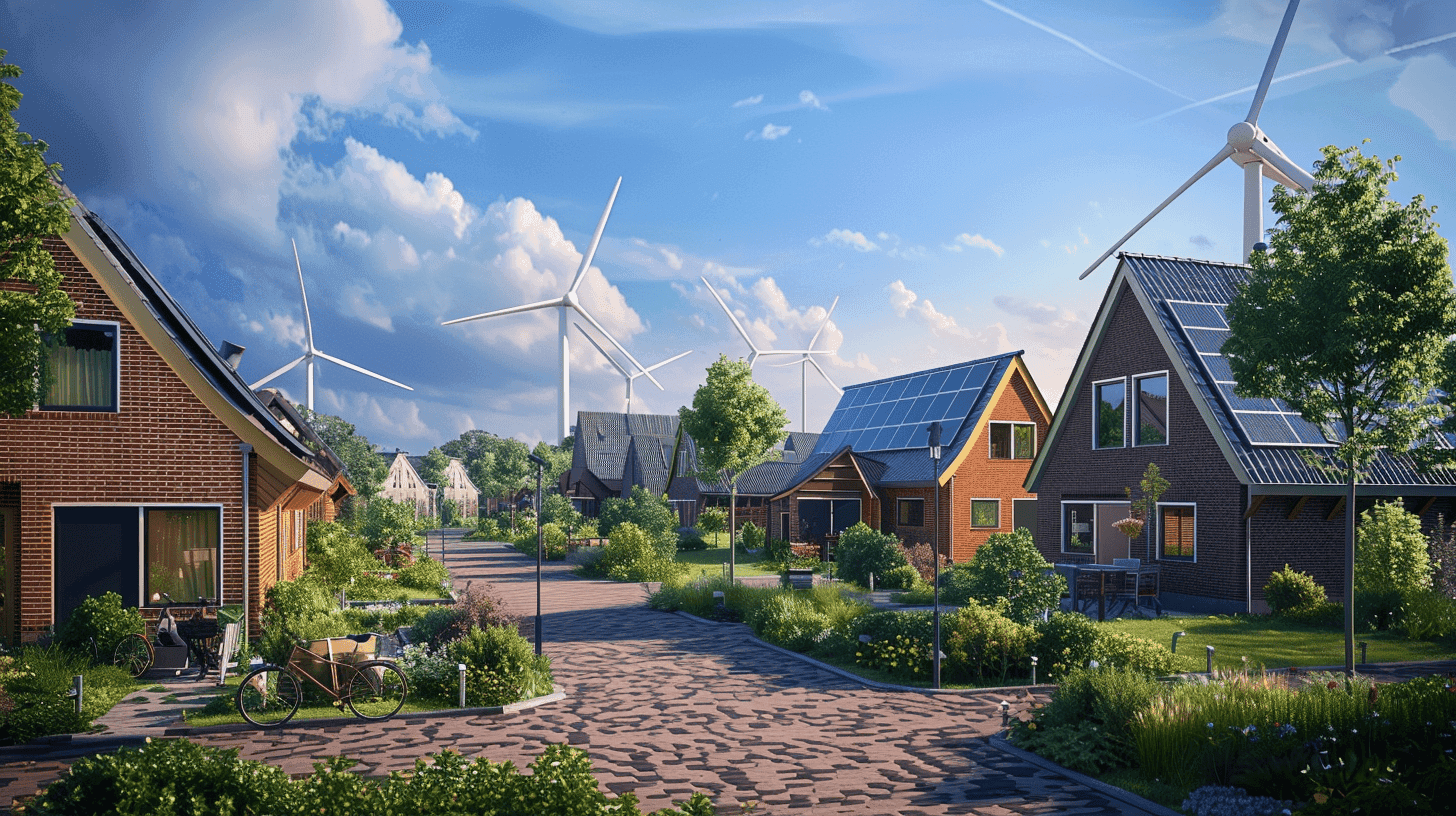
The Netherlands is among the countries that have made the most progress in sustainability since the Paris Climate Agreement. It ranks eleventh in an international ranking of 65 countries, outperforming major European economies such as Germany, France, Italy and Spain. However, credit insurer Allianz Trade warns that the energy transition is not progressing fast enough to meet climate targets.
This is according to Allianz Trade's new Green Transition Tracker 2026. The study compares the climate performance of 65 countries, which together account for more than 80 percent of global greenhouse gas emissions. The Netherlands has dropped one place compared with the previous ranking. Its progress score did improve, but less than the global average. With 38 points, the Netherlands ranks ahead of Germany (36), France (30) and Belgium (26).
“A lot has been achieved in the Netherlands over the past ten years. We are using energy more efficiently and generating an increasing share of our electricity from renewable sources. But most of the easy steps have now been taken,” says Johan Geeroms, Director Risk Underwriting Benelux at Allianz Trade. “The next phase is more complicated. It is not just about building more wind turbines and solar panels, but also about ensuring sufficient electricity grid capacity, energy storage and making businesses and homes more sustainable.”
Progress does not mean being ready for the future
Since 2015, greenhouse gas emissions per capita in the Netherlands have fallen by 34 percent, from 9.68 to 6.38 tonnes of CO₂ equivalent. In Germany, emissions fell by approximately 30 percent over the same period. Emissions per unit of economic output have also declined. For every million dollars of economic output, the Netherlands now emits almost 39 percent less than in 2015.
However, this progress does not mean that the Netherlands is performing well in terms of its current climate impact. France, for example, emits 3.85 tonnes of greenhouse gases per capita, compared with 6.38 tonnes in the Netherlands. Italy (5.12 tonnes) and Spain (4.51 tonnes) also have lower per capita emissions.
“This shows that making progress is not the same as being ready for the future,” Geeroms says. “The Netherlands has made significant strides, but our economy is still heavily dependent on fossil fuels. Industry, transport and electricity generation remain major sources of emissions. For businesses, sustainability is therefore not just a climate issue, but also a matter of competitiveness and future energy costs.”
Sustainability transition is not moving fast enough
A major shift is taking place in global electricity generation. In 2025, renewable sources accounted for 33.5 percent of global electricity generation, compared with 33.2 percent for coal. However, the transition is still not moving fast enough. At the current rate, the world will not reach an emissions level compatible with climate neutrality until around 2064, fourteen years later than the 2050 target.
Europe is also losing momentum. Emissions across the European Union fell by just 0.2 percent in 2025, compared with an average annual decline of 4 percent in previous years. If the current pace continues, the EU will not reach an emissions level aligned with its 2050 climate targets until around 2057.
According to Geeroms, the main challenge lies in implementation. “Europe has ambitious plans, but is increasingly running into practical limitations. Businesses want to electrify their operations, but cannot always secure a connection to the electricity grid. At the same time, major investments are needed, while companies are already facing high energy prices and international competition. This is slowing down the transition.”
More investment in electricity grids and batteries
Global investment in clean energy is expected to reach 2.2 trillion dollars in 2026, an increase of 6.5 percent compared with last year. Investment in the infrastructure needed for renewable energy is growing particularly strongly. Spending on electricity grids is expected to rise by almost 21 percent, while investment in battery storage is set to increase by 36 percent. These investments are essential not only to generate renewable electricity, but also to ensure it is available at the right time.
“Generating renewable electricity alone is not enough. That electricity must also be available at the right time and reach businesses and households. This is a particularly major challenge for the Netherlands because of the strain on its electricity grid. If we fail to resolve these problems, the sustainability transition risks grinding to a halt,” Geeroms concludes.