
The Netherlands to build first commercial molten salt reactor
Thorizon and partners aim to deliver an innovative nuclear reactor in Zeeland by 2034, powered by nuclear waste.
Published on April 20, 2026
Masterstudente journalistiek aan de RUG, stagiair bij IO+, schrijft graag over de integratie van AI in het dagelijks leven
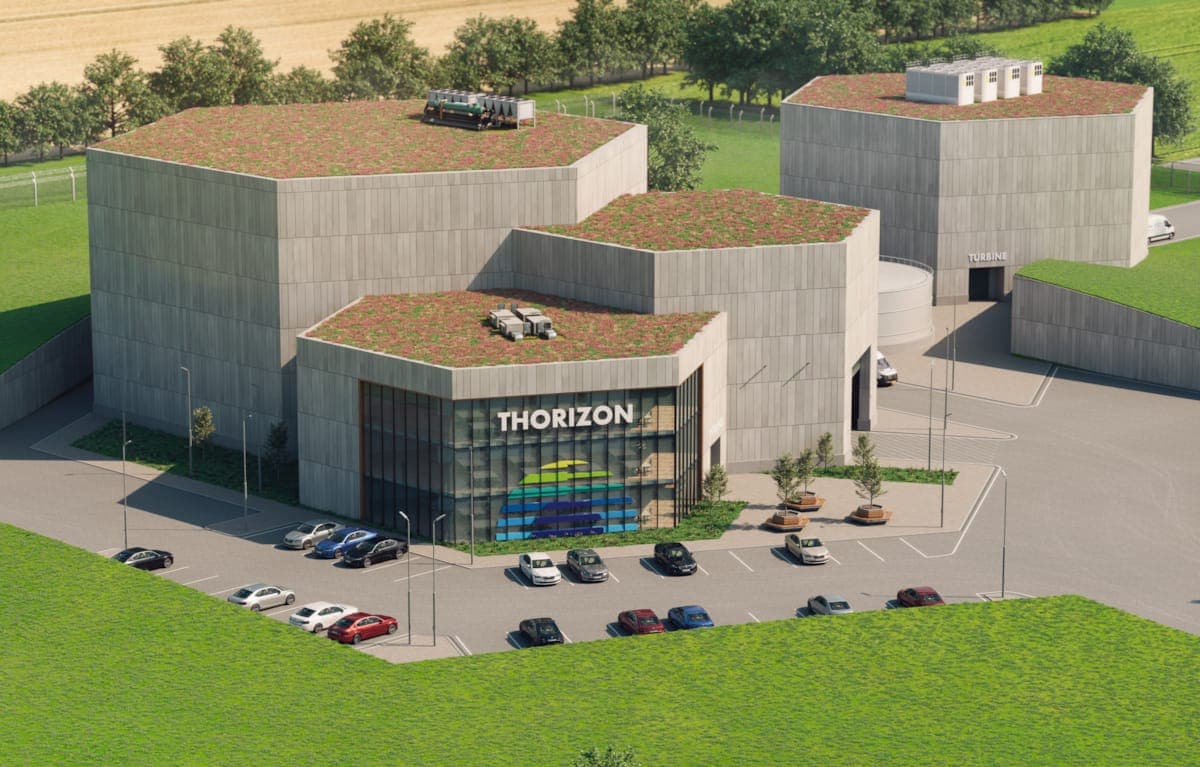
The Netherlands is taking a major step in nuclear innovation with plans for Europe’s first commercial molten salt reactor (MSR). The French-Dutch startup Thorizon is collaborating with EPZ, NRG PALLAS, the provinces of Zeeland and Noord-Holland, and various investors to make this project a reality.
Molten salt technology differs fundamentally from traditional nuclear power plants. Instead of solid fuel rods, it uses liquid salt, resulting in a more stable and inherently safer system. In addition, the reactor can run on existing nuclear waste, making the nuclear cycle more circular and reducing dependence on newly mined uranium. Some designs can also use thorium, a relatively abundant resource that could enable long-term, CO₂-free energy production.
Development will take place in phases: a test facility in 2027, a demonstration reactor in 2030, and then construction of the commercial plant to be completed in 2034. With an investment of over €1 billion and support from both public and private parties, the Netherlands also aims to strengthen Europe’s energy independence this way.
Safe and sustainable
While traditional nuclear reactors rely on solid fuel that must be continuously cooled and must not deform, an MSR uses liquid salt in which thorium is dissolved. This salt can safely expand as temperatures rise and will automatically drain into a containment system at the bottom of the building in the event of overheating. This results in an inherently safer design, significantly reducing the risk of a nuclear meltdown. In a meltdown, the reactor becomes so hot that it risks melting through containment, potentially releasing radioactive material, as seen in Fukushima.
A key advantage is the use of existing nuclear waste as fuel. This turns a long-term storage problem into a valuable energy source while reducing the need for new uranium. Europe has decades of nuclear waste that can be used by the MSR
The technology is also highly efficient, producing both electricity and high-temperature industrial heat (up to approximately 550°C), according to Thorizon. This makes it suitable for supplying process heat to industries such as chemical manufacturing and steel production.
Drawbacks: emissions, costs, waste, and knowledge
An MSR operates at low pressure and produces minimal CO₂ emissions, supporting climate goals. Though, it must be understood that building the reactor does emit greenhouse gases.
The required investments are high and depend on subsidies and long-term planning. According to CEO Kiki Lauwers, building a commercial reactor is expected to cost more than €500 million. Thorizon aims to have a commercial MSR running on the European grid in 2034, but nuclear physicist Martin Rohde at Delft University of Technology, who is also in contact with Thorizon, thinks 2040-2050 is a better guess for when a commercial MSR will be fully operational in Europe.
Public acceptance remains another concern, particularly regarding nuclear energy and radioactive waste. While waste from an MSR is radioactive for a shorter time than uranium reactor waste, it remains harmful for at least 300 years.
Salt is highly corrosive, and its corrosiveness increases at high temperatures, which can pose challenges for the materials it comes into contact with inside a reactor. Rhode notes that there is still limited research on how reactor structures will hold up over multiple decades of continuous operation under such conditions.
Early insights come from the Oak Ridge Laboratory in 1965, where the first test of a molten salt reactor took place, which ran in the United States for four years. During this period, only minimal damage was observed in the graphite rods used as moderators in the reactor core. However, while short-term results were promising, the experiment also highlighted the need for further research into the long-term effects of prolonged exposure to molten salt over several decades.
Old techniques re-emerge
Although the technology may seem modern, the concept of molten salt reactors dates back decades, even to before the end of World War II. After the war, reactor development was largely centered at Argonne National Laboratory in Chicago. However, American nuclear physicist Alvin Weinberg secured a role for the Oak Ridge laboratory in Tennessee after meeting Argonne director Walter Zinn. This led to projects such as the Homogeneous Reactor Experiment and the Aircraft Reactor Experiment in the 1950s, both of which used liquid fuel and paved the way for the Molten Salt Reactor Experiment (MSRE).
In the 1960s, the MSRE was carried out in the United States under Weinberg’s leadership. The experimental reactor operated successfully from 1965 to 1969, demonstrating the technical feasibility of liquid-fuel reactors. It ran stably for about 13,000 hours over four years and showed that molten salt could function as both fuel carrier and coolant—an approach that underpins modern designs.
After the 1970s, attention shifted to other nuclear technologies, and molten salt research faded into the background. Now, more than fifty years later, this promising technology is being revived as a solution to today’s energy and climate challenges.