
The sand battery that could stop wasted wind and solar
The Netherlands wasted 2 years of Groningen's power in 2025. A Finnish sand battery shows how that energy could be saved.
Published on June 24, 2026
© Polar Night Energy

Mauro swapped Sardinia for Eindhoven and has been an IO+ editor for 3 years. As a GREEN+ expert, he covers the energy transition with data-driven stories.
In 2025, the Netherlands switched off enough solar panels and wind turbines to waste nearly twice as much energy as the city of Groningen uses in a year. The reason was simple: on sunny, windy days, the grid was producing more renewable power than it could use, so turbines and panels were curtailed rather than left running. Sand batteries connected to the grid could have stored that surplus and used it to provide steam for factories or warm houses instead of throwing it away.
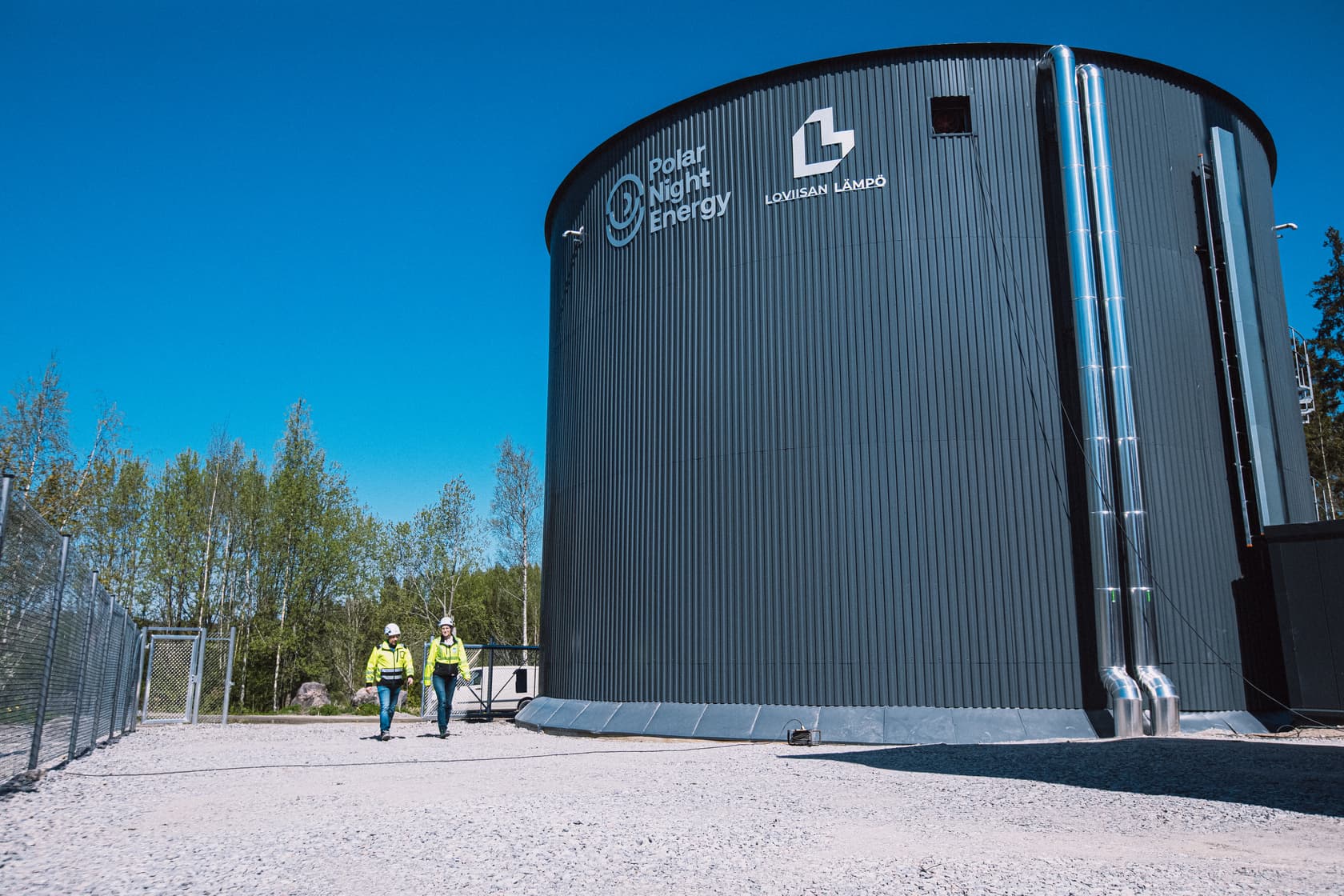
Pornainen is a 5,000-person municipality 50 kilometers north of Helsinki, and a year ago it installed the world’s largest sand battery, using it as the main production facility for the local district heating network. By storing excess renewable power and converting it to thermal energy, the system not only provided heating but also reduced network emissions by 70% by eliminating oil use and limiting biomass use.
Beyond Borders
Innovation doesn’t stop at the border! In Beyond Borders, we spotlight disruptive innovations worldwide that can help tackle societal challenges in the Netherlands. How are they making an impact? How can they help?
How does the sand battery work?
The battery, commissioned by the utility company Loviisan Lämpö, has been developed by Polar Night Energy. 13 meters high and 15 meters wide — approximately half a tennis court — the system stands as a giant silo. Inside it, 2,000 tonnes of crushed soapstone do the job, storing energy for up to 100 MWh.
Charging and discharging occur through heat-transfer pipes that circulate air in a closed-loop system. Resistive heaters warm the air, while industrial blowers and dampers regulate its flow; during discharge, the air passes through a heat exchanger.s
Disruptive yet easy to integrate
Mikko Paajanen, CEO of Loviisan Lämpö, is very satisfied with the installation. The battery has effectively replaced a wood-chip boiler, which was nearing the end of its life. With no nearby waste heat to justify a heat pump and the much more space required to store the same amount of energy using water, the sand battery was the chosen option.
"Although Polar Night Energy was a startup at the time, we weren't afraid to enter a project with them," Paajanen says. "The calculations looked very good, and the solution itself was simple enough that we were glad to invest."
That simplicity is also the point, says Annette Höglund-Dönnes, Chief Commercial Officer at Polar Night Energy. "The newcomer on the block has to be simple to use," she says. "Your staff can easily be trained to use it as the automation makes it easy to operate — for a smaller organization, adding headcount just to operate a new plant isn't good economics."
Making the most out of electricity markets
Unlike lithium-ion batteries, the sand battery can store energy for weeks, but profitability comes only with frequent use. The system’s trick is arbitrage. A forecasting platform blends seven-day heat demand projections with spot electricity prices and Finland's ancillary services markets, then automatically buys the cheapest available power — switching to wood chips whenever electricity is more expensive. In ancillary service markets, Transmission System Operators (TSOs) or Independent System Operators (ISOs) procure services necessary to maintain grid stability, reliability, and power quality beyond the standard delivery of energy.
The results have outperformed expectations. Pornainen's average spot price last year was under €10 per MWh, compared with a national average of € 40–50 per MWh. Polar Night Energy says the battery has been charged at prices 70 to 80% below the market average, and in some months that gap has exceeded 90%.
.jpg&w=2048&q=75)
© Polar Night Energy
"The whole idea is that you need those windows of cheap electricity," Höglund-Dönnes explains. "If prices are consistently high, you won't find the pockets where you can charge cheaply. That’s why. In our expansion process, we pay close attention to countries with a high share of renewable energy, where excess generation may otherwise be curtailed."
Reliability has matched the financial case. "We've had zero unplanned maintenance interruptions in district heating production," Paajanen says. Commissioning took about three weeks. The real learning curve, both agree, was less about sand and steel and more about navigating Finland's evolving electricity markets.
A battery built to last
Another advantage the sand battery has over lithium-ion ones is that it doesn’t degrade over time. Polar Night Energy estimates a 25- 30-year lifespan, but Paajanen and Höglund-Dönnes suggest the real number could be far higher. The silo has no moving parts beyond a resistor heater — "basically a toaster," Höglund-Dönnes says — and a blower fan, both of which are standard industrial components easy to replace if needed.
"I expect it to be much longer," Paajanen says. "Sand that hot means water simply can't get in. This silo is more or less eternal — at least 80 to 90 years." Electrical parts will need partial replacement after about 25 years, he adds.
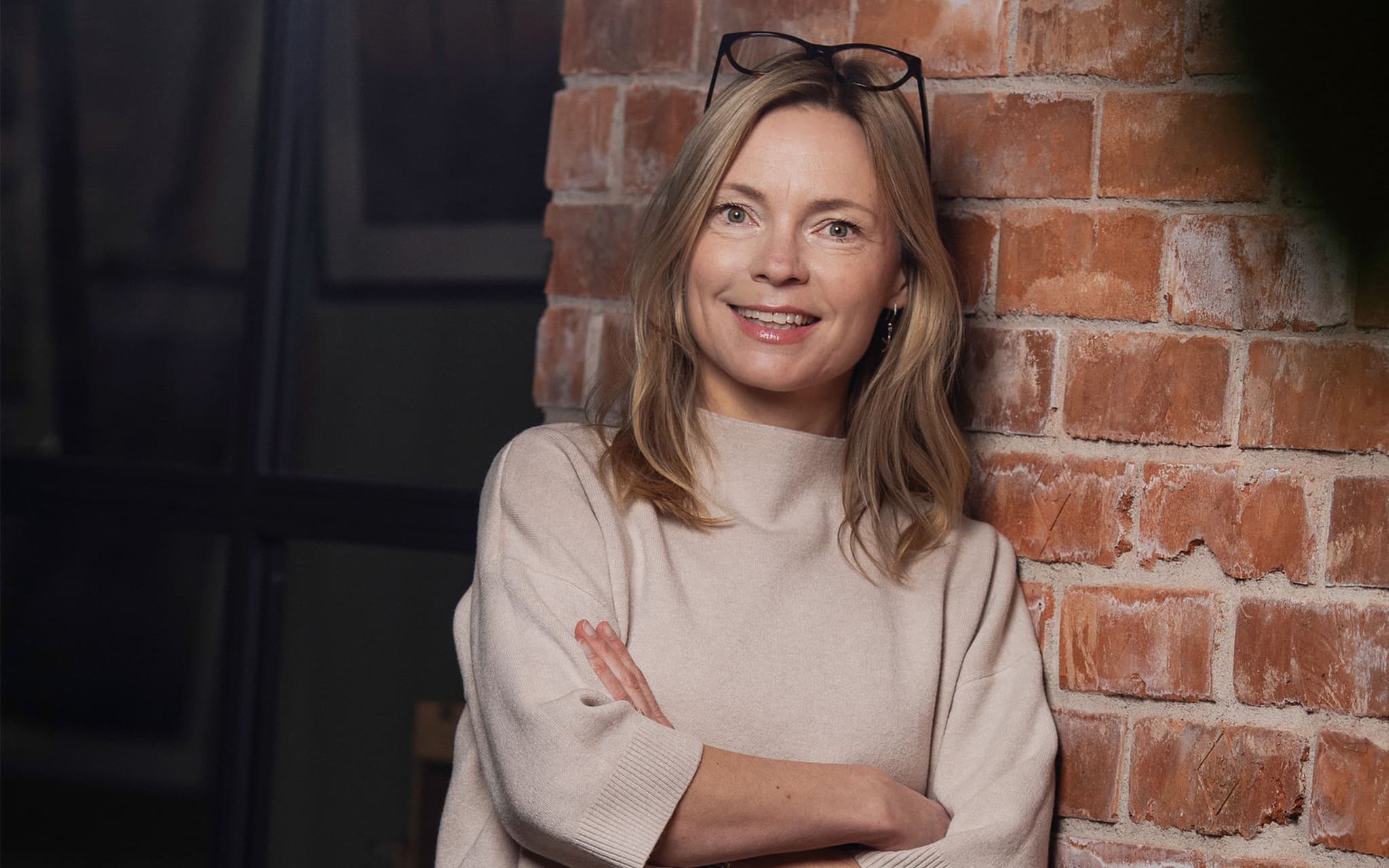

Annette Höglund-Dönnes and Mikko Paajanen - © Polar Night Energy
What comes next
Polar Night Energy is already building a second, larger installation in Vääksy, with double the capacity of the one in Pornainen. International expansion is underway too, starting in the Baltics, with interest in Central Europe and gas- or coal-reliant heating markets further afield.
The next frontier is industrial heat. District heating only needs output temperatures up to 100°C, but many industrial processes require much higher steam temperatures. Polar Night Energy says it can sustain 250°C with the current design and is now developing the heat exchangers needed to deliver steam at that temperature reliably.