
"We are already losing ground" – data centers call for space
Data centers are full, permits are stalled, and Dutch companies are moving their IT abroad. Michiel Eielts on a sector under pressure.
Published on May 18, 2026
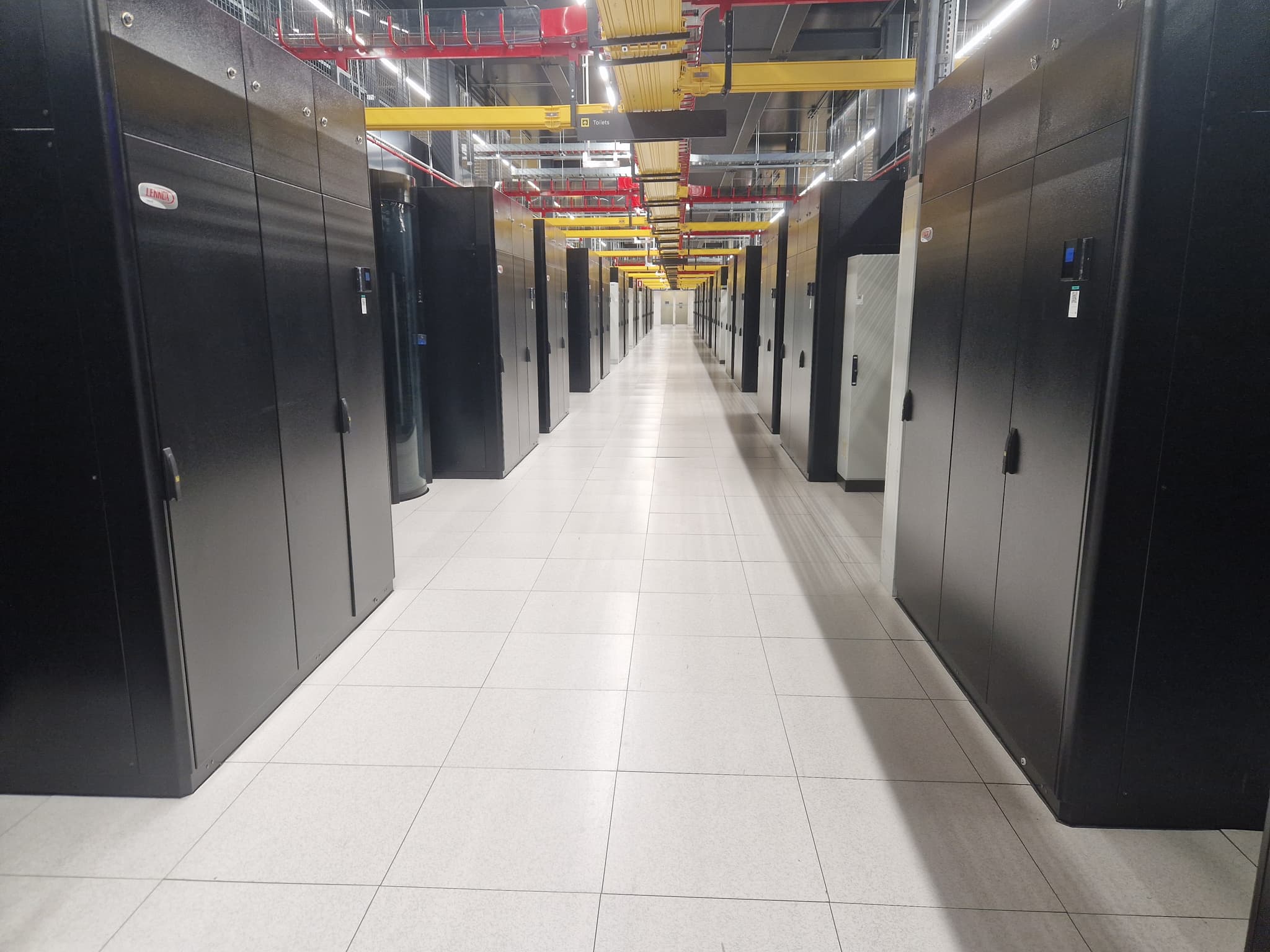
A view of one of the datacenter levels - © IO+

Mauro swapped Sardinia for Eindhoven and has been an IO+ editor for 3 years. As a GREEN+ expert, he covers the energy transition with data-driven stories.
Michiel Eielts has been at the helm of Equinix's Dutch division for the past 17 years. The American multinational company operates a global network of colocation data centers — facilities where multiple customers can rent computing power.
Before taking a tour of one of Equinix’s data centers at the Amsterdam Science Park, IO+ sat down with the director to take stock of the current scenario. Demand for computing is surging — and so are people’s concerns about data center construction.
Bans to build in some municipalities and zoning concerns limit data center development. “Recently, I spoke with an AI professor who works here at the Amsterdam Science Park. All of his compute workloads are now processed in Finland, because there is no AI capacity available here. We are already losing ground, and most people don’t realize it yet,” states Eielts.
17 years feels like a long time, especially in digital technology. How have things changed for you since then?
“When I joined Equinix, our customers were primarily IT companies, with people who knew exactly how this infrastructure works. Now IT is much more democratized, as every business depends on it. In the past, early adopters would gain an advantage by embracing a new technology; nowadays, not keeping up might become a threat.”
“When we set foot in Amsterdam, right after the 2008 banking crisis, everyone was happy and welcoming, and happy about the possibility of building data centers. Now the municipality wants to build no more. The tide turned quickly.”
The city of Amsterdam decided against constructing new data centers. How has this decision impacted your plans?
“Equinix had two projects that started before the moratorium took effect. One is paused, and one is awaiting the final permit. Given our significant investment in the Lelystad facility, we are reconsidering the scale of the Amsterdam projects.
We are not building data centers because we like them; we are building them to address the soaring demand for computing from businesses, governments, and individuals. The digitalization of society is driving their growth. Society hasn’t carved out a role for us yet.”
What do you mean by that?
“The national spatial planning report — a document that clarifies where infrastructure such as roads and bridges should be built — doesn’t include where the space for data centers or new fiber connections should be. Not mentioning this key infrastructure in a 2025 report is like building a house, forgetting to plan an internet connection — on a national level.
There are some areas in the Netherlands where there is available capacity on the electricity grid. However, because of zoning restrictions, we can’t build there. Aligning land use policy with grid availability would accommodate more data center capacity without the current bottlenecks.”
Critics say data centers worsen grid congestion. Do they?
“The grid works similarly to public transportation. The national high-voltage grid, which is where we connect, is the intercity train lines. The local distributor network, where houses plug in, is the local bus service. In the data center that we are constructing in Lelystad, we are also building our own high-voltage substation: there is room at the national level.
The local grid is genuinely full in many places, but it is not because of data centers. Local distribution operators face their own investment backlogs. Actually, data centers can help provide more grid stability. We have battery storage to send back power to the electricity grid and diesel generators to be used in the case of blackouts to keep the network running.”
Beyond the grid, there are concerns about space, water use, and pollution. How do you respond?
“I understand them. However, data centers take up about 10% of the space that logistics warehouses occupy in the Netherlands. The issue is not space but zoning rules. Dutch data centers use less than 3% of the country’s energy — a single steel smelter 17%. What energy is better spent? Data centers generate economic value per megawatt of capacity. Finally, we use less water than the printing industry. If we are so concerned about water usage, the more relevant question might be why we’re still printing so much paper.”
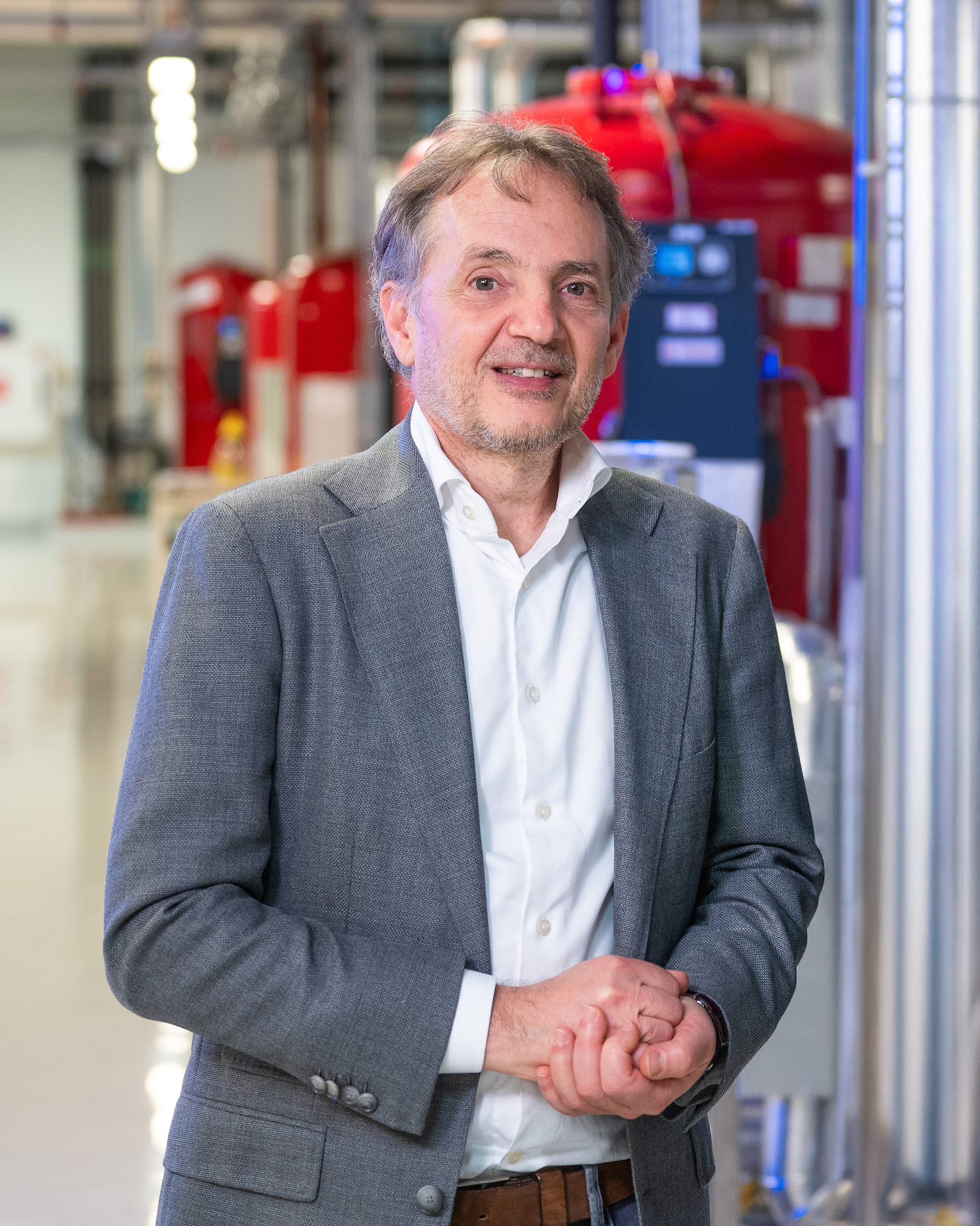
Michiel Eielts
Managing director at Equinix Netherlands
Next to his role at Equinix, he is also the chairman of the Dutch Data Center Association.
Recently, you told the NOS that achieving a European digital autonomy is a utopia. Why is it so?
“As a European, I genuinely believe that Europe should be more self-sufficient — we have been too passive. However, when looking at the full technology stack — from chips, to servers, to AI — almost every layer is either American or Chinese. Even clouds labeled as sovereign are running on American hardware, software frameworks, or AI. ASML is the only world-class player in the deep tech stack.
Germany is spending billions to subsidize a TSMC chip fabrication plant. Who buys the chips? NVIDIA. European taxpayers are funding American profits; that’s the same logic as building ‘sovereign’ data centers on American infrastructure.
Rather than replicating what US companies do better, we should identify where Europe can lead. Quantum computing and photonics are areas where European research is world-class. If we invest significantly in these areas, we could be globally relevant in the coming years – and create real dependencies for others on European tech. In the realm of AI, for instance, Europe should focus on specialized, smaller, domain-specific models, where there are still possibilities.”
Still, there is a concern about the data processed by American providers subject to US jurisdiction.
“In light of the current geopolitical scenario, I understand the concern. In my 17 years running this facility, there has never been a request for data that didn’t pass through the appropriate channels. The US and the EU have legal frameworks, and an American court must obtain approval from a Dutch court to acquire information about a Dutch company.
Realistically, Europe cannot disentangle itself from US tech in the short term. The only alternative full-stack technology provider is China, with all the concerns it entails. A truly European alternative would take at least 10 years to develop, possibly 20.“
What is your priority at the moment?
“Providing customers with the capacity they need is my concern. Government agencies and companies in Amsterdam cannot expand. Their IT needs are growing, but we cannot provide it. Dutch companies, including ASML and Booking, are now moving their IT workloads to Germany, France, and other countries.
The Dutch data center network was once the second-largest in Europe by capacity. Now we are fourth. Paris has overtaken us, and Dublin is following closely. If we don’t address this problem, the Netherlands will no longer be a relevant technology hub.”