
What if your glasses could help you see ánd hear better?
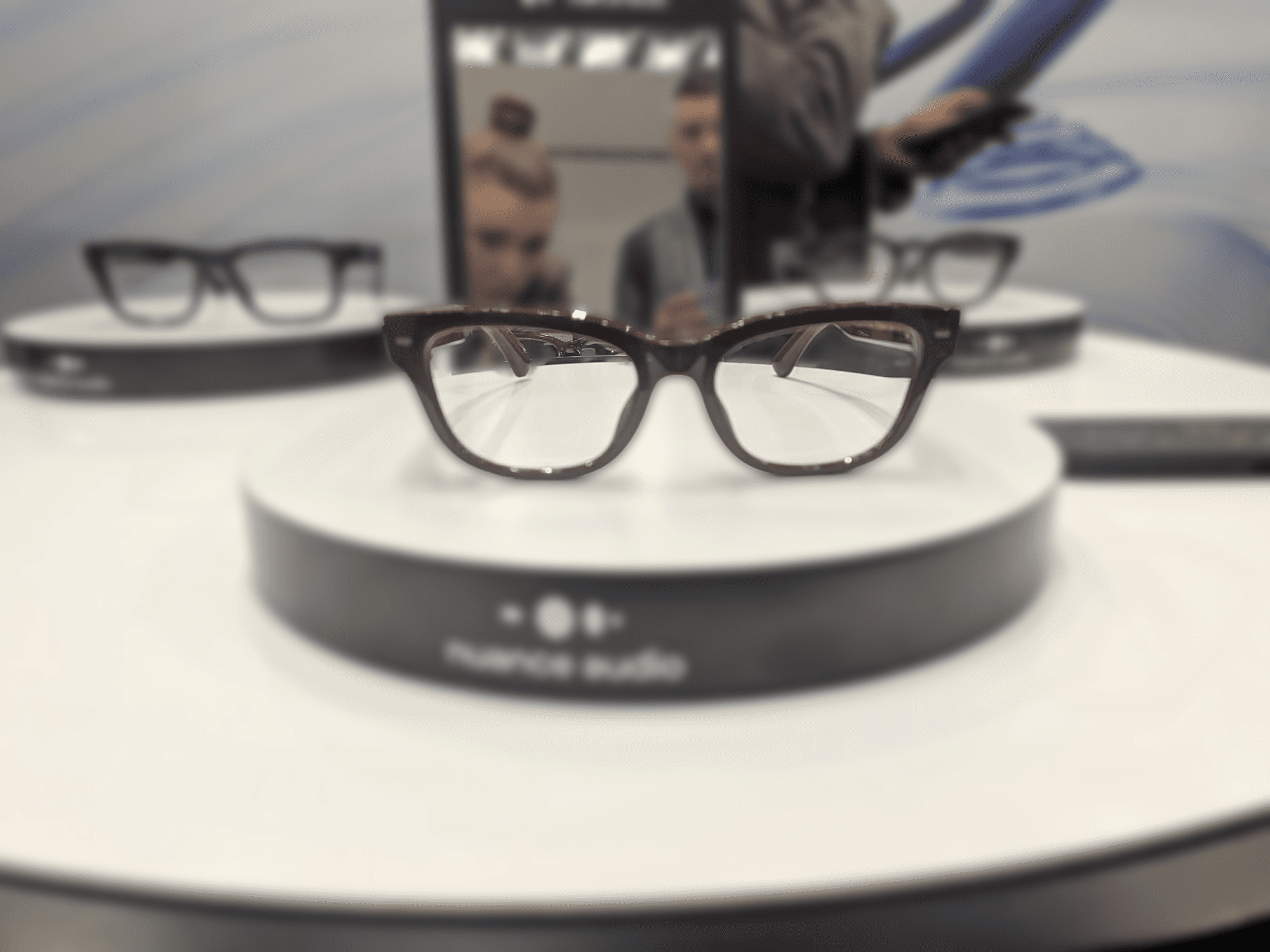
At CES Unveiled Milan, Elcke Vels got to try Nuance Audio, a pair of glasses designed to help people see ánd hear better.
Published on October 27, 2026

Team IO+ selects and features the most important news stories on innovation and technology, carefully curated by our editors.
Let’s face it: as we get older, our eyes and ears don’t always keep up. Glasses help us see the world a little more clearly, while hearing aids help us make sense of the sounds around us. But what if one device could do both? At CES Unveiled in Milan, I got to try Nuance Audio, a pair of glasses designed to help people see ánd hear better. After all, with mild hearing loss myself, I had a personal reason to be curious.
Playing electric guitar in a band and going to countless dance parties without earplugs in my twenties were great experiences. But they also came at a cost: mild hearing loss and tinnitus.
And I’m certainly not alone. More than 1.5 billion people worldwide — nearly 20% of the global population — live with some degree of hearing loss. Hearing loss among young people has increased in recent years, which is deeply concerning. But the problem is particularly common among older adults. Many of them already wear glasses. Therefore, for them, Nuance Audio offers a practical two-in-one solution: glasses that correct their vision while also helping them hear better.
'Many people don't realise they lost their hearing'
At the CES exhibition floor, I head over to the Nuance Audio stand, where I speak with Chiara Nicolai from the company behind the brand: EssilorLuxottica Italy. EssilorLuxottica is a Franco-Italian eyewear company. The group owns well-known eyewear brands such as Ray-Ban and Oakley. “I do a lot of demos, and you’d be surprised how many people don’t realise they’ve already lost some of their hearing in the higher frequencies”, Nicolai says.
She explains for whom exactly these audioglasses could be a solution. “It’s designed for people with moderate hearing loss, who often struggle to follow conversations in noisy environments. Its directivity feature really helps you focus on the person you’re talking to, rather than amplifying everything around you.”
Pleasantly surprised
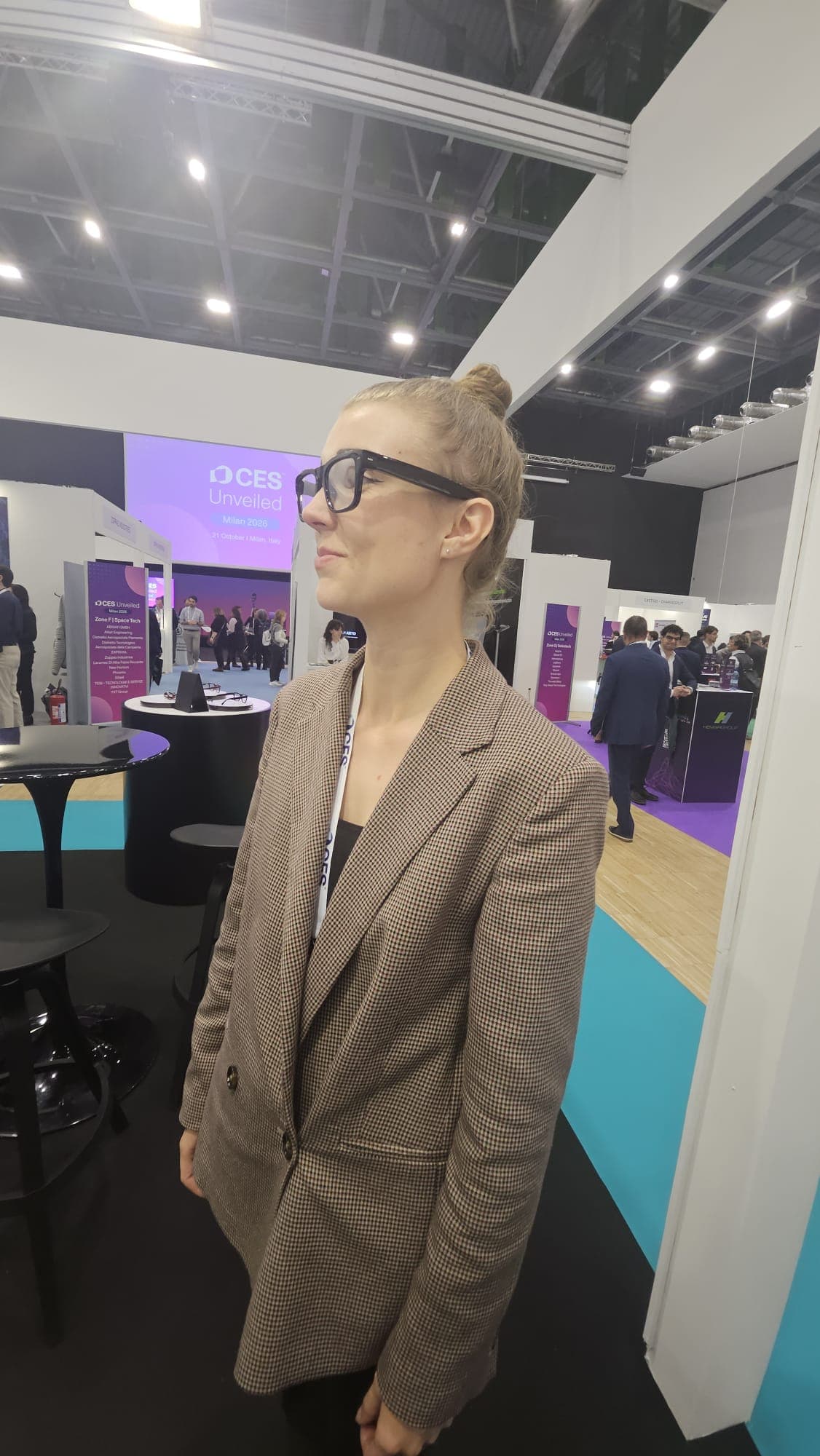
I tried on the glasses and discovered how they work firsthand. Tiny speakers built into the frames amplify the sounds you want to focus on, helping you follow conversations more easily. Given their small size, I expected the audio quality to be underwhelming. I was, however, pleasantly surprised. The sound felt natural, only a little louder. I tell Nicolai about my mild hearing loss and tinnitus. She replies: “Some people with tinnitus also report they have some relief when using these glasses.”
Choose your profile
The glasses have four different sound profiles, labelled A to D, designed for different types and levels of hearing loss, Nicolai explains. Where one sound profile provides mild amplification across all frequencies, another one focuses more on higher frequencies. “This allows users to choose the profile that best suits their hearing needs”, says Nicolai.
The newest version
On the exhibition floor, I came to know that I tried the newest version of Nuance Audio. Nuance Audio Plus was introduced in September 2026, an updated version of its original hearing-assistance glasses. The new model offers improved speech clarity in noisy environments. Battery life has also increased from up to 8 hours in the original model to up to 10 hours in the new version. Pretty impressive.
Still not entirely sure
One thing is for sure. Audio glasses are an impressive piece of technology. Whether I would use something like this myself, I’m still not entirely sure. In noisy environments, I sometimes struggle to follow conversations, but my hearing loss is still manageable. And luckily, my eyes are doing just fine, so I don’t need glasses for that either. Still, it’s reassuring to know that solutions like this exist.