
Who's watching? 6 alternatives to the Ring doorbell
The Ring doorbell is popular, but it shares your data with US authorities. Discover secure European alternatives that respect your privacy.
Published on February 16, 2026

Merien co-founded E52 in 2015 and envisioned AI in journalism, leading to Laio. He writes bold columns on hydrogen and mobility—often with a sharp edge.
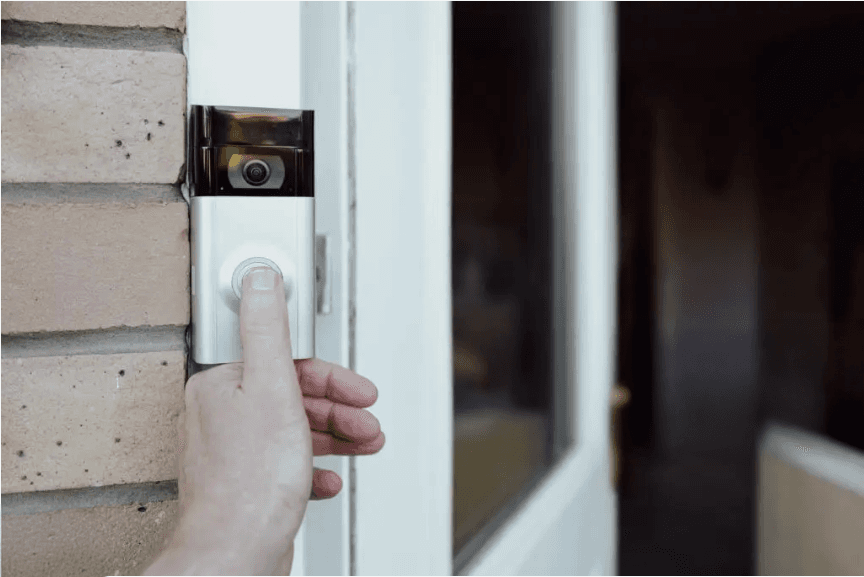
One push of a button, a chime in the hallway. It seems so simple. But the modern video doorbell is no longer a passive piece of electronics. It is an advanced device that stores everything it sees and hears in the cloud, often with American or Chinese big tech companies. What appears to be a piece of security is sometimes actually a data breach. In this episode of ‘The European Alternative’, we look at how you can regain control. Because digital sovereignty literally starts at your own doorstep.
The silent witness that tells all
The biggest risk of American doorbells such as Ring (owned by Amazon) is not that they don't work, but that they work too well for the wrong parties. Your images don't stay in the hallway. They are stored in the cloud, often on servers subject to U.S. law. This makes them vulnerable to the infamous CLOUD Act. This law forces American companies to hand over data to intelligence services, regardless of where those servers are physically located. Even more worrying is the intertwining with law enforcement. With Ring, Amazon has established a surveillance network that provides police forces in the US with access to images without always requiring a court order. Recent partnerships with companies such as Flock Safety further integrate Ring cameras into police networks. You install the camera for your own safety, but you are unwittingly contributing to a dragnet over which you have no control.

The European Alternative
The European Alternative is a series about European tech solutions that prioritize privacy, digital sovereignty, and sustainability. Instead of relying on major American platforms, we highlight the alternatives Europe itself has to offer—transparent, secure, and aligned with European values.
The controversial ‘Search Party’: cute or creepy?
Just how far this surveillance can go became painfully clear during the 2026 Super Bowl. Ring launched a commercial for its ‘Search Party’ feature. In the commercial, a lost dog is reunited with its owner thanks to software that links images from various Ring cameras in the neighborhood. At first glance, this is heartwarming. But privacy experts and critics immediately saw the danger: if an algorithm can track a dog through a whole neighborhood via neighbors' cameras, it can do the same with people.
It transforms a neighborhood with individual cameras into one large, centrally controlled eye. It is a textbook example of ‘function creep’: technology that is sold for an innocent purpose (finding pets), but the infrastructure lays the groundwork for mass surveillance. The uproar was huge, but the technology is out of the bottle.
External Content
This content is from youtube. To protect your privacy, it'ts not loaded until you accept.
The European escape route: Local or EU Cloud
Fortunately, you don't have to choose between convenience and privacy. There is a way out. To ensure your digital autonomy, there are two options. The first and safest option is ‘everything local’. This involves storing images on an SD card in the doorbell itself or on your own hard drive (NAS) in the meter cupboard. No cloud, no subscription, no prying eyes. The data never physically leaves your home. The second option is to choose a ‘European Cloud’. You enjoy the ease of an app and online storage, with data stored on EU-based servers, protected by strict GDPR regulations and beyond the reach of the US CLOUD Act. Below, we present five European alternatives that prove that smart technology can also be secure.
1. Netatmo (France): User-friendly without a subscription
For those who want to make the switch without compromising on design and ease of use, French manufacturer Netatmo is the most logical first step.
Netatmo, now part of Legrand, has a strict policy: your images remain yours. The doorbell stores videos locally on an encrypted microSD card. There is no mandatory cloud subscription, saving you hundreds of euros over the long term compared to Ring. The cloud is used only for the ‘handshake’ to activate the app on your phone; after that, the video stream goes directly and encrypted from the doorbell to your phone. Would you still like a backup? Then you can connect the doorbell to your own Dropbox or FTP server. It's the golden mean between ‘plug-and-play’ and privacy.
2. DoorBird (Germany): The choice for perfectionists
While Netatmo focuses on consumers, Berlin-based DoorBird is preferred by installers and tech enthusiasts. The build quality is solidly German, but the real power lies in the software. DoorBird offers a unique ‘LAN-only’ mode. This allows you to set the doorbell to have no internet access at all, yet still function fully within your home network. If you want to view from outside, you can do so via your own VPN. It doesn't get any safer than this, although this setup does require some technical knowledge and is certainly not ‘plug-and-play’. DoorBird also offers an open API, enabling seamless integration with third-party systems, including Synology NAS and home automation platforms such as KNX. The owner is the Swedish company Assa Abloy, which means the product remains firmly in European hands.
3. Robin Telecom (Netherlands): High-end from our own soil
Top technology is also being developed in the Netherlands. Robin Telecom targets the higher segment and is one of the few manufacturers offering native support for Apple HomeKit Secure Video. This is interesting for iPhone users: the images are analyzed by your Apple TV or HomePod at home and stored in iCloud, encrypted. Although Apple places great importance on privacy, it remains an American service. Robin itself sees nothing; they only supply the hardware. The Robin ProLine series also works excellently with professional SIP systems (VoIP). Because Robin does not provide its own cloud service, the revenue model is not based on your data but on the sale of a product. A breath of fresh air in today's tech market.
4. Lupus Electronics (Germany): No cloud, no data leaks
German company Lupus Electronics' motto is ‘No cloud, no data leeches’. This company has its roots in the security world and therefore approaches the video doorbell as a security product, not a gadget. Their systems are designed to store images locally on an SD card or integrate with their own recording stations. Lupus is particularly strong if you want to integrate the doorbell into a broader alarm system without relying on external servers. It is a pragmatic choice for those who value functionality and German privacy legislation over flashy marketing.
5. Metzler (Germany): Stainless steel and privacy
If you're tired of plastic boxes on the facade, Metzler offers an alternative. This German manufacturer produces industrial stainless steel wall-mounted intercoms. Technically speaking, these are often ‘dumb’ devices in the best sense of the word. They behave like standard network cameras that you connect to a local screen, a FRITZ!Box router, or a tablet on the wall. There is no Metzler app that tracks your location or collects data. You are the system administrator. This requires a little more technical knowledge during installation, but guarantees that your front door will never become part of an international surveillance network.
6. Gira (Germany): Premium integration for the smart home
For those who want to go beyond a separate doorbell, the German company Gira offers a solution. Their ‘System 106’ is not a gadget, but an integral part of the home. The Gira S1 module securely connects the intercom to your KNX home automation system. This allows you to control not only the door, but the entire house via a single app. The connection is encrypted and routed through servers located in Germany. This means that the system fully complies with strict European privacy legislation (GDPR). It is a premium solution in which your data, like the hardware, is of German quality.