
Why Europe must stop seeking consensus on cognitive robots
From potential to productivity: Albert Maas calls for faster prototyping, a willingness to fail and big investment in complete value chains.
Published on October 9, 2026
Bart, co-founder of Media52 and Professor of Journalism oversees IO+, events, and Laio. A journalist at heart, he keeps writing as many stories as possible.
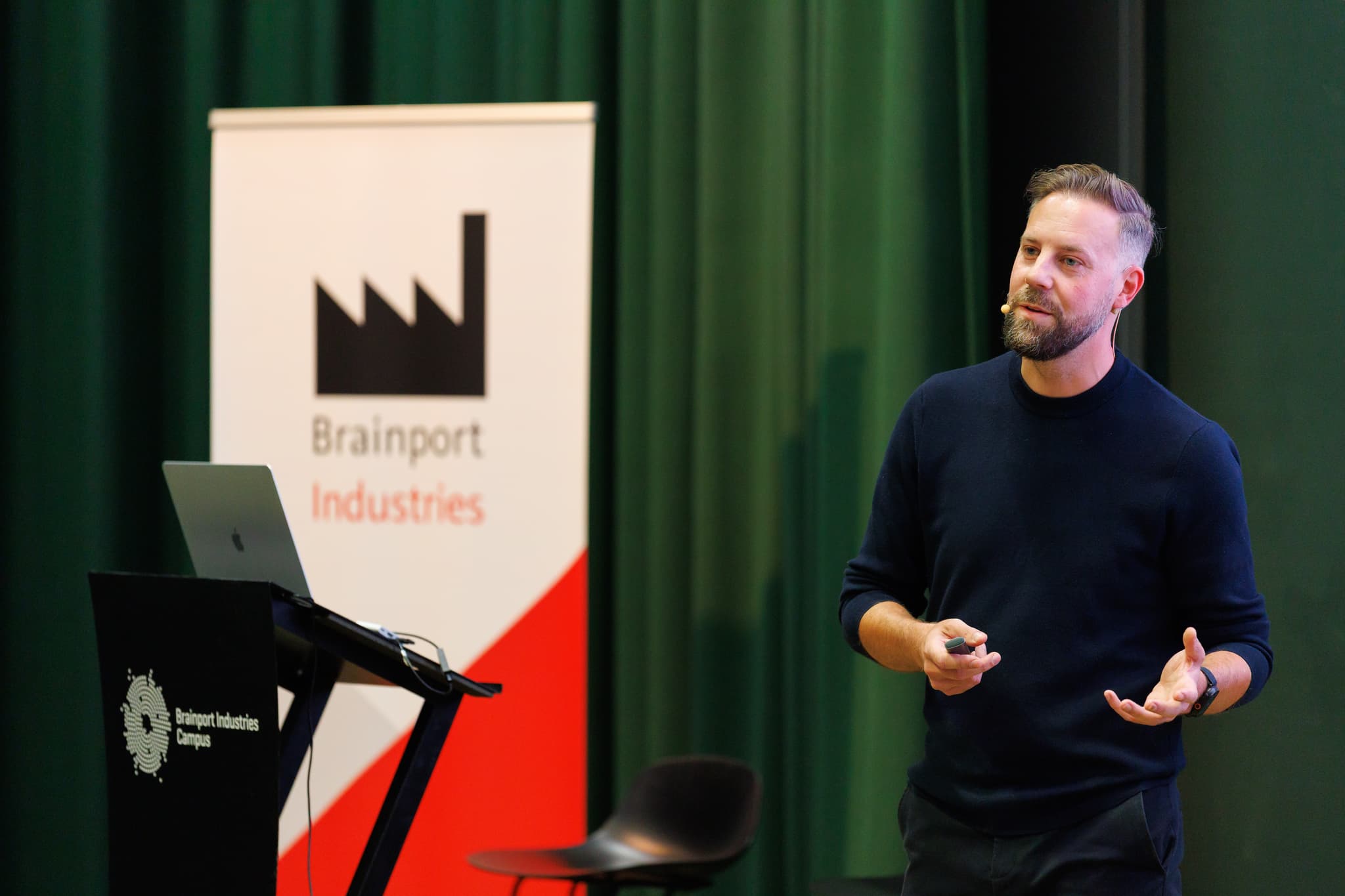
At Brainport Industries’ annual conference, held on Thursday at Brainport Industries Campus, one pressing question took centre stage: how do we finally turn the enormous potential of cognitive robotics and physical AI into tangible industrial productivity? According to Albert Maas, CEO of Avular, Europe needs a radical change: faster prototyping, a willingness to fail, and major investment across complete value chains. Leo Warmerdam of Holland High Tech outlines how a National Agenda should unite the industry behind this effort.
While generative AI and large language models (LLMs) have taken the virtual world by storm in recent years, Albert Maas believes the real disruption will soon unfold in the physical world. “Globally, we spend between $15 trillion and $23 trillion a year on physical labour,” says the founder of Eindhoven-based Avular. “Once you connect AI to the physical domain — physical AI, or robotics — we are talking about the potential automation of an estimated 74 per cent of today’s physical tasks. If you can become the Microsoft or Apple of robotics, you have an unprecedented market at your fingertips.”
Yet Europe risks missing the boat unless it dramatically picks up the pace. While the US pours capital into humanoid platforms and China invests hundreds of billions to roll out entire “dark factories” and tens of thousands of robots, Maas surveys the European landscape with understandable frustration.
The bottleneck: “Waiting three weeks for a quote”
The urgency is clear. Population ageing is taking a heavy toll, three-quarters of employers face unfilled vacancies, and geopolitical tensions make strategic autonomy essential. But according to Maas, the transition from technological potential to productivity too often stalls because of the way we work.
“What is killing the German automotive industry is simply a lack of speed,” Maas warns. “They take three years to develop a new model; China does it in one year, at significantly lower cost and with high quality. As an engineer, I want a prototype in my hands within 24 to 72 hours so I can see whether it works, not in two months. If I request a quote for a component here, I only hear back weeks later, told the schedule is full or it will cost €800. That needs to change radically: fast learning, fast prototyping and a willingness to fail.”
Maas criticises Europe’s tendency to scatter subsidies across small projects without making clear choices. “In the US, startups with billions in the bank wait for the perfect moment to scale up. The government provides a safety net that allows them to fail. Here in the Netherlands, we need to stop handing out €100,000 here and there. Have the courage to choose a handful of companies and fund them substantially.”
Smart cranes and autonomous asphalt rollers
Avular is already demonstrating that cognitive robotics is far from a distant prospect, through its mobile platforms and what it calls co-creation projects. For example, together with SGL, the company developed an autonomous UV-C robot that travels across golf courses at night to combat fungal diseases in the grass, eliminating the need for pesticides. Just two weeks ago, the first robots even appeared in New York’s Central Park.
Another striking example is its collaboration with construction company Heijmans to develop an autonomous asphalt roller. Maas: “Heijmans anticipated a huge shortage of skilled workers over the next ten to fifteen years. Asphalt paving often happens at night or on weekends. If something goes wrong, they have to remove the entire road surface again. By digitising the roller operator’s expertise and incorporating it into the vehicle’s intelligence, you automate the task and improve reliability. But that only works through intensive co-creation: our people joining them out in the field, and their asphalt experts spending two to three days a week at our office.”
According to Maas, this represents a huge opportunity for the region: “We don’t need to fear China or the US, as long as we make the most of our own strengths. Here in the Brainport region, we have a unique combination of advanced technological systems engineering — the ASML DNA — manufacturing and outstanding design. But we need to regain the confidence to build our own brands and finished products, rather than simply supplying components.”
Holland High Tech: From fragmented consensus-building to decisive action
Holland High Tech is taking up that challenge. Speaking at the conference, Leo Warmerdam, the organisation’s operations director, acknowledged the instinct to follow the Dutch consensus-based “polder model”, while also identifying a turning point.
“In the Netherlands, we often need time to get everyone on board and assign roles,” Warmerdam says. “But when we have pioneers like Avular raising the pace, the government can provide an enormous boost. We need to work with the resources we have and pool them.”
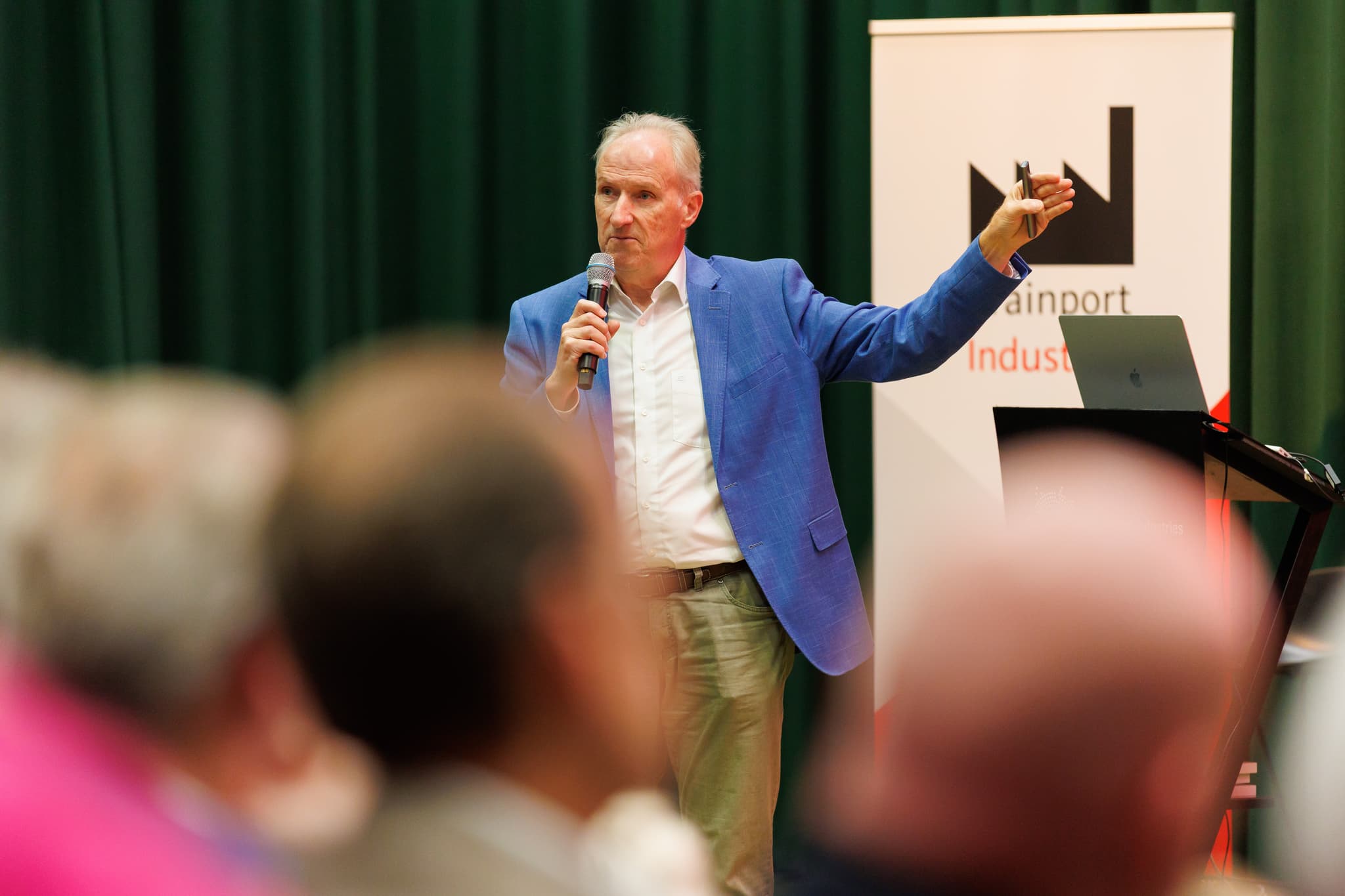
Leo Warmerdam, © Bram Saeys
Warmerdam announced that Holland High Tech is working with industry partners and the Ministry of Economic Affairs on a National Agenda for Cognitive Robotics. Whereas robotisation in previous decades primarily revolved around fixed industrial arms performing high-volume, repetitive tasks, today’s market demands “high-mix, low-volume” flexibility.
“The national agenda has an ambitious goal: we aim to double labour productivity in manufacturing over the next ten years,” Warmerdam says. “Manufacturing already accounts for around 12 per cent of our GDP and makes a huge contribution to our industrial economy. To maintain that level while labour shortages bite, cognitive robotics has become an absolute necessity.”
Action, not a talking shop
According to Warmerdam, the agenda should prevent initiatives from becoming fragmented across separate subsidies and bureaucracy. “We don’t want delays. A small working group is ready, made up of frontrunners who know what they want and how to achieve it. We are linking the agenda directly to the National Growth Fund and investment funds.”
The National Agenda is expected to receive formal endorsement in spring 2027, including at Hannover Messe, paving the way for immediate, tangible implementation in factories and workshops.