
Why Nestlé didn't buy a recipe, but speed
In a series of blog posts, Marco Coolen offers a glimpse into his work as a Dutch and European patent attorney at AOMB.
Published on October 18, 2026

Marco, a patent attorney at AOMB since 2013, shares his expertise on IO+ about patents—how they work, why they matter, and when they lose their value.
The most famous cookie deal in American history didn’t start in a factory, but in an inn.
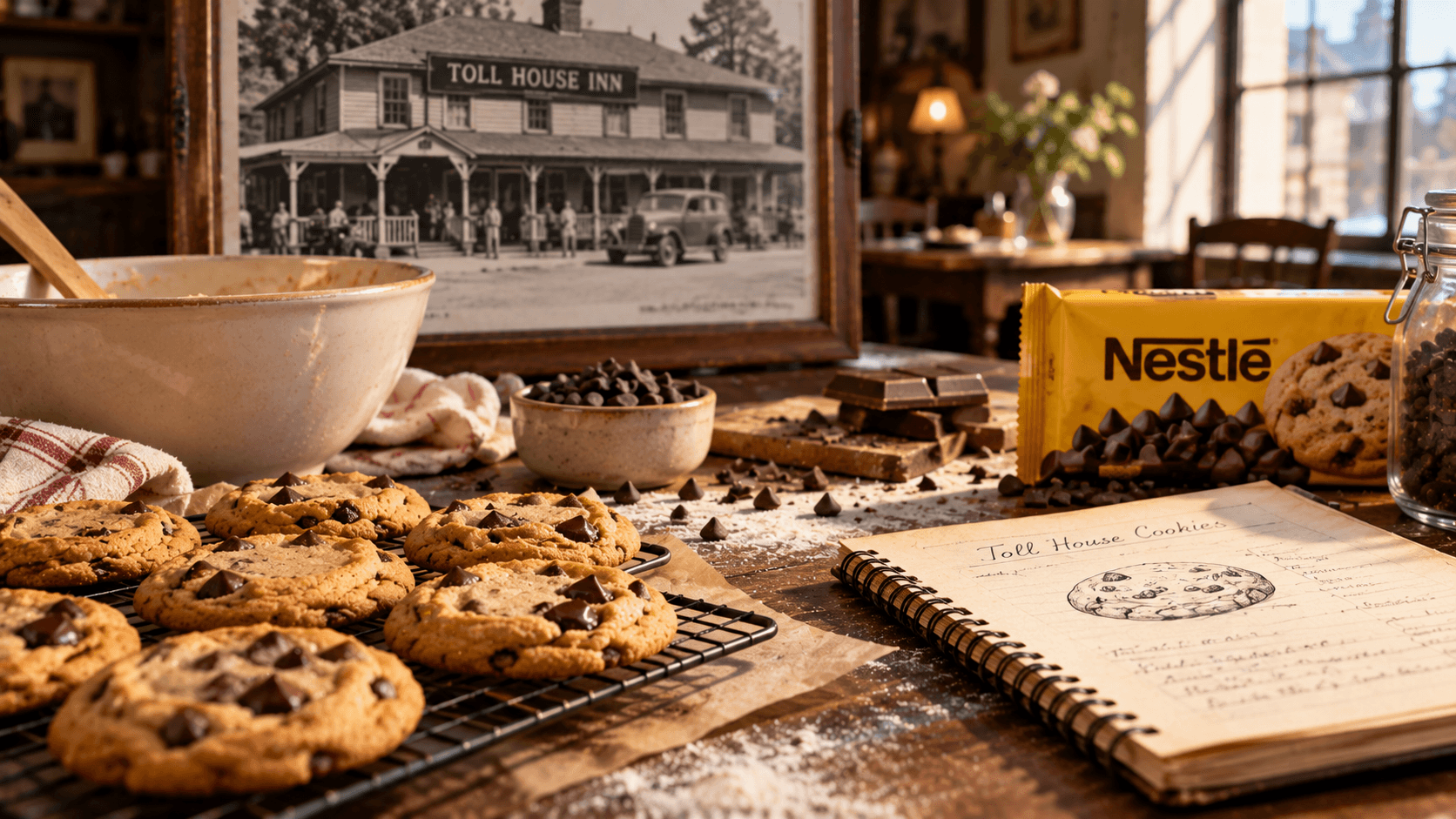
In the 1930s, Ruth Wakefield ran the Toll House Inn in Massachusetts with her husband. She cooked and baked for her guests, experimented with recipes, and one day added chocolate chips to cookie dough. What now feels like a given was new enough back then to stand out.

The chocolate chip cookie wasn’t yet an American classic. It was simply a good idea that resonated with real people sitting at real tables. That’s important. Because many innovations start exactly there—not in a grand strategy presentation, but in a concrete application that visibly works. Someone tries something, users respond enthusiastically, and suddenly it’s more than just an idea. There’s proof.
And then Nestlé entered the picture. Not because Nestlé couldn’t have replicated the recipe on its own. A cookie recipe is hard to keep secret once people taste it, discuss it, and pass it on. Moreover, the technique of baking cookies isn’t, in and of itself, the major barrier.
What Nestlé saw was something else: proven demand. A story people could pass on. And a logical connection to their own chocolate bars. According to the well-known story, Ruth Wakefield received one dollar, a lifetime supply of chocolate, and her recipe featured on Nestlé’s packaging. Whether all the details historically played out exactly that way is a matter of debate. But for the business lesson, that matters little.
Nestlé didn’t simply buy a recipe. Nestlé bought speed. With distribution, packaging, brand trust, and reach, the company was able to turn a popular local recipe into a national—and later international—classic. That’s something a Massachusetts inn could never have done on its own.
There’s a lesson there that’s still relevant for innovative entrepreneurs. You can have the best product in the world, but without reach, it sometimes remains small. Then it stays something that customers within a limited circle are enthusiastic about, while the broader market never discovers what you have to offer.
That doesn’t mean you should just give your idea away. On the contrary. It means you need to think carefully about what you can do yourself—and where you need a partner. Sometimes your strength lies in devising and proving the solution—in showing that customers respond to it—and in finding the first application.
A larger company’s strength, in turn, may lie in production, distribution, branding, marketing, and scale. That’s not a weakness. That’s strategy. Many entrepreneurs want to do everything themselves—develop it themselves, produce it themselves, sell it themselves, scale it up themselves. That’s possible, but it’s rarely the fastest route.
The Toll House cookie shows that an innovation only truly becomes a hit when the product, the story, and the reach come together. Ruth Wakefield had the cookie. Nestlé had the fast track to market. And sometimes, that exact combination is what it takes to turn a good idea into a classic.

The World of Patents
With the help of Dutch and European patent attorney Marco Coolen (AOMB), we can better understand the world of patents. How do they work, why are they important, and when do they lose their usefulness?